




Compartmentalized Design of Multi-functional EVA Tool Bags: Crafting Efficient Solutions for Professional Storage
In numerous professional fields—including industrial manufacturing, outdoor operations, electronics repair, and the maintenance of precision instruments—the efficiency of tool storage and transport directly impacts workflow pace and equipment safety. Thanks to their shock-resistant, water-repellent, and abrasion-resistant material properties, multi-functional EVA tool bags have become the preferred storage solution for professional buyers worldwide. Their core competitive advantage, however, lies in their scientifically engineered compartmentalized design. This design not only facilitates the orderly organization and rapid retrieval of tools but also fundamentally minimizes the risk of tools being bumped, lost, or worn down, thereby extending the service life of both the tools and the bag itself. Drawing upon the specific requirements of professional users, this article analyzes the core principles, classic layout configurations, and customization strategies behind the compartmentalized design of multi-functional EVA tool bags, offering global wholesale buyers a product reference that is both highly practical and adaptable.
I. Core Principles of Compartmentalized Design for Multi-functional EVA Tool Bags
Tailored to professional use scenarios across various global industries, the compartmentalized design of EVA tool bags is far more than a simple division of space. Instead, it revolves around four core principles—*Adaptability, Efficiency, Protection, and Flexibility*—balancing the unique characteristics of different tools with the specific operational demands of diverse environments. These principles constitute the critical criteria that international buyers prioritize when selecting products.
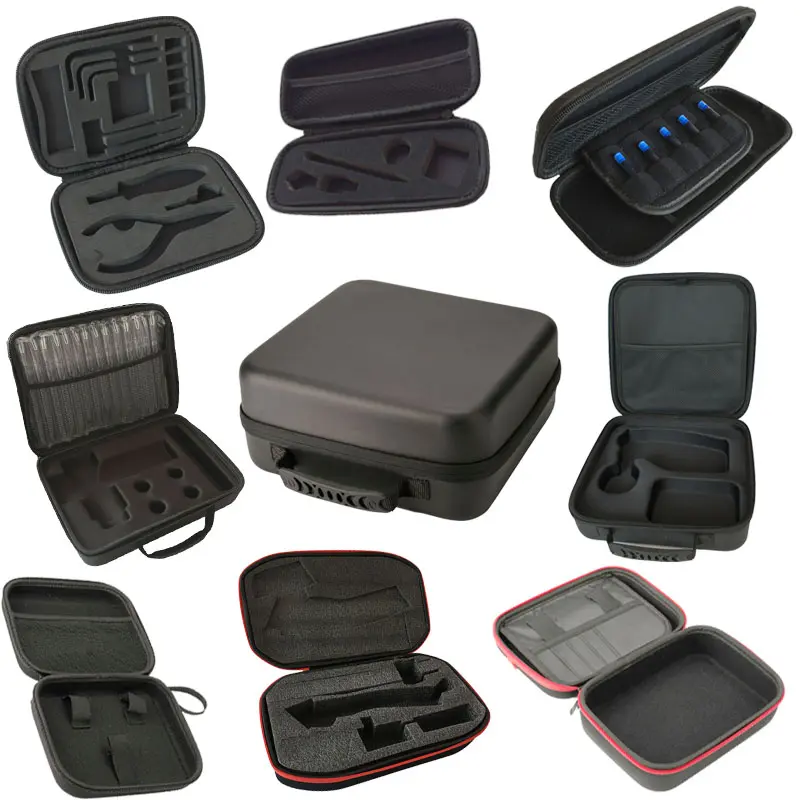
The Principle of Adaptability: This principle focuses on conforming precisely to the external shapes and dimensions of tools. By utilizing custom-molded foam inserts to create precise compartments, the design prevents tools from shifting or rattling inside the bag. Whether the contents are hardware tools (such as wrenches and screwdrivers), electronic accessories (such as multimeters and data cables), or precision instruments (such as endoscopes and diagnostic testers), the design ensures a “one-item, one-slot” fit. This precise alignment effectively eliminates—at the source—the risk of component damage caused by internal collisions.
The Principle of Efficiency: Compartmentalization is organized based on tool usage frequency and operational logic. Frequently used tools are positioned in easily accessible primary layers or side pockets, while auxiliary tools and accessories are assigned to secondary storage zones. This arrangement ensures that users do not need to repeatedly rummage through the bag during operations, thereby significantly boosting work efficiency. Furthermore, the rational design of compartment labeling and identification systems facilitates the rapid sharing and proper return of tools within team-based work environments. **Protection Principle:** Protection levels are categorized based on the precision of the tools being stored. For precision instruments and fragile components, thickened EVA cushioning layers and independent sealed compartments are provided; for sharp metal tools, dividers and securing latches are utilized; and for electronic tools, dedicated anti-static zones are reserved. This approach ensures “compartmentalized protection and precision safeguarding,” effectively meeting the protective requirements of diverse environments—including outdoor settings, construction sites, laboratories, and vehicle-based applications.
Flexibility Principle: Balancing general storage needs with personalized requirements, the design incorporates features such as removable foam inserts, adjustable dividers, and Velcro fastening straps. This allows storage compartments to be flexibly reconfigured as the tool assortment changes, enabling a single tool bag to accommodate the storage needs of various operational scenarios, thereby enhancing the product’s versatility and cost-effectiveness.
II. Classic Compartment Layouts for Multifunctional EVA Tool Bags
Based on mainstream usage demands across various global industries, market-validated classic compartment layouts can be broadly categorized into three types: partitioning by tool type, partitioning by usage scenario, and partitioning by operational workflow. Each layout style caters to distinct procurement requirements and serves as a core guiding principle for EVA tool bag manufacturers in their product R&D and customization efforts.
(I) Partitioning by Tool Type: The Fundamental Layout for General Storage
This layout method aligns most closely with universal global procurement demands. It is ideal for the mixed storage of diverse tool categories—ranging from hardware tools and electronic repair kits to crafting supplies. The core concept involves segmenting the space based on the classification of “hard tools,” “soft accessories,” and “precision instruments,” thereby ensuring the isolated and secure storage of tools with differing physical properties. Hardware Tool Zone: Situated at the core of the bag’s main compartment, this zone features a one-piece molded EVA foam insert. It utilizes precision-cut slots—customized to the specific contours of tools such as wrenches, screwdrivers, pliers, and tape measures—combined with snap-lock fasteners. This design prevents sharp tools from scratching other accessories while ensuring that the tools remain securely in place without shifting during transit.
Electronic Accessories Zone: Located within the main compartment’s interlayer or a dedicated side pocket, this zone employs a combined design of mesh pouches and elastic straps. It provides compartmentalized storage for small electronic accessories such as data cables, charging adapters, batteries, and fuses. Certain premium models incorporate anti-static fabrics, making them ideally suited for applications involving electronics repair, instrument testing, and similar scenarios.
Precision Instrument Zone: Typically comprising independent, sealed compartments, this zone is positioned in the bag’s upper section or in the area offering maximum shock protection. It features thickened, high-density EVA foam with a custom-molded insert designed to precisely fit the contours of precision instruments—such as diagnostic testers, multimeters, and endoscopes. Enhanced by water-resistant zippers, this zone delivers a triple-layer defense against moisture, shock, and drops.
(II) Categorization by Usage Scenario: A Precise Layout for Scenario-Specific Solutions
For specialized tool kits tailored to vertical applications—such as vehicle maintenance, outdoor camping, industrial inspection, and beauty/nail care—compartmentalization based on specific usage scenarios offers a highly effective design approach. This method enables “one-stop storage for scenario-specific tools” and represents the preferred layout strategy for international buyers operating within these specialized vertical sectors. **Vehicle Maintenance EVA Tool Kit:** The internal layout is organized around the dual themes of “Emergency Repair” and “Routine Maintenance.” The main compartment features dedicated sections for tire repair tools and wrench sets, while the side compartments house emergency supplies such as lighting devices, tow ropes, and tire repair plugs. A small accessory compartment is included to store easily misplaced small parts—such as screws, nuts, and O-rings—while the bag itself features integrated mounting points to ensure secure placement and stability within a vehicle interior.
Outdoor Operations EVA Tool Kit: Designed with enhanced water-resistance and drop-protection features, this kit’s layout balances the storage needs for “Tools,” “Consumables,” and “Protective Gear.” The main compartment accommodates outdoor work tools, while the secondary compartments store consumables and safety equipment—such as waterproof pouches, non-slip gloves, and safety goggles. The base of the bag features a durable, wear-resistant hard-bottom section capable of holding heavy-duty tools—such as hammers or machetes—thereby meeting the rigorous demands of outdoor camping and construction projects.
**Precision Instrument Inspection Tool Kit:** Centered on the core principle of “Protection,” the entire interior is constructed from high-density, shock-absorbing EVA material. The design features a dedicated, independent compartment for the main instrument body, specialized slots for probes and data cables, and a sealed compartment for calibration accessories. Certain models also incorporate an additional thermal buffering layer, making them ideally suited for environments with extremely stringent requirements for instrument protection—such as laboratories, chemical facilities, and medical settings.
(III) Partitioning Based on Operational Workflow: An Efficient Layout for Professional Tasks
This design approach is tailored for professional fields characterized by fixed operational sequences—such as assembly lines, equipment maintenance, and home appliance installation. The internal layout is segmented according to the workflow stages of “Preparation,” “Core Operation,” and “Finalization.” This arrangement allows users to access tools in the precise order required by the process, thereby significantly boosting the efficiency of standardized operations—a key priority for industrial-scale buyers.
For example, the layout of a Home Appliance Installation EVA Tool Kit is structured as follows: The “Preparation” zone houses positioning tools (e.g., tape measures, spirit levels, marking pens); the “Core Operation” zone stores installation tools (e.g., screwdrivers, wrenches, power drills); and the “Finalization” zone contains organizational tools (e.g., cable ties, electrical tape, cleaning cloths). With these three zones arranged sequentially according to the workflow, users are spared the need to constantly reorder their tools, enabling a streamlined, “assembly-line-style” workflow.
III. The Direction of Customized Upgrades for Multi-functional EVA Tool Kit Partition Designs
As the global demand for tool storage solutions becomes increasingly sophisticated across various industries, standardized partition designs are no longer sufficient to meet the unique requirements of certain buyers. Consequently, the development of customized partition designs has emerged as a significant growth driver within the export market for EVA tool kits. Leveraging the unique molding characteristics of EVA material—and integrating the buyer’s specific tool assortment, usage scenarios, and brand requirements—we offer a multi-dimensional approach to compartment customization, ensuring the tool bag integrates seamlessly with the buyer’s product ecosystem.
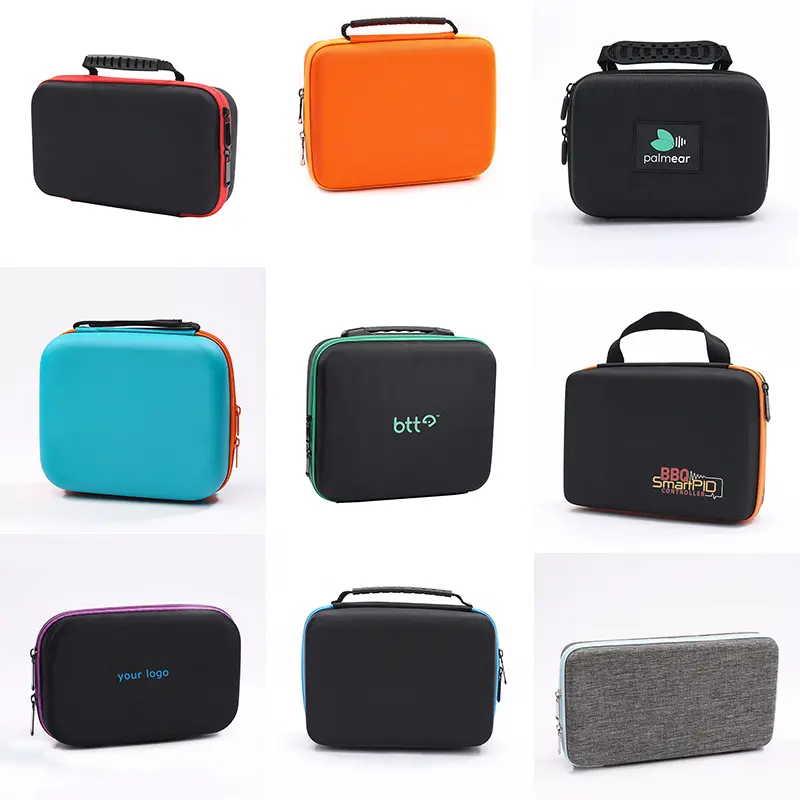
Custom Molded Inserts:Based on the buyer’s provided tool inventory and dimensions, we create custom-molded EVA foam inserts. This process ensures precise, tool-specific cutouts and dedicated compartments, and even allows for the embossing of brand logos directly onto the insert to enhance brand recognition.
Custom Bag Structure: We adapt the bag’s internal layout to suit specific usage scenarios—for instance, designing multi-layered, foldable compartments for maximum portability; creating a dual-compartment main storage area with a reinforced base for heavy-duty tools; or implementing high-capacity, tiered layouts for team-based operations, thereby balancing ease of transport with storage volume.
Custom Protective Features:We incorporate specialized protective compartments tailored to the demands of specific industries—such as corrosion-resistant sections for the chemical sector, sterile sealed compartments for the medical field, or thickened, shock-resistant zones for the defense industry—ensuring the compartment design fully aligns with industry-specific safety and protection standards.
Multi-functional Expansion Zones:We integrate user-centric expansion features—such as compartments for electronic tools with dedicated charging port access, tool management sections designed to accommodate identification labels, or storage zones for consumables featuring thermal insulation layers—transforming the tool bag from a mere storage vessel into an active aid for enhancing operational efficiency.
IV. Conclusion
The compartment design of multi-functional EVA tool bags represents a profound fusion of “product utility” and “user requirements.” Its core value lies in transforming tool storage from “disorderly piling” into “scientifically organized placement,” and from “mere transportation” into “precise protection.” For global wholesale buyers, selecting an EVA tool bag with a scientifically engineered compartment design not only adds a cost-effective storage solution to their own product portfolio but also delivers an efficient and safe tool-handling experience for their end users.
Furthermore, superior compartment design in EVA tool bags is inextricably linked to the manufacturer’s mastery of material processing and their deep insight into market demands. From the precision of the integrally molded EVA foam to the functional implementation of water-resistance, shock-absorption, and anti-static properties—and extending to the flexible adaptability of customized layouts—every single detail plays a decisive role in determining the ultimate effectiveness of the compartment design.
Post time: Mar-23-2026