




Considerations for Bulk Purchasing EVA Tool Kits
As a buyer, are you often troubled by issues like inconsistent quality, delayed delivery, and difficult customs clearance when purchasing EVA tool kits in bulk? Especially when faced with varying certification standards, logistics timelines, and customized requirements across different countries, even the slightest oversight can lead to cost overruns or order losses. This article will examine the entire purchasing process and analyze 10 key considerations to help you mitigate risks and improve procurement efficiency. It also includes practical advice—helping you select the EVA tool kit that meets your needs while laying the foundation for subsequent inquiries and long-term partnerships.
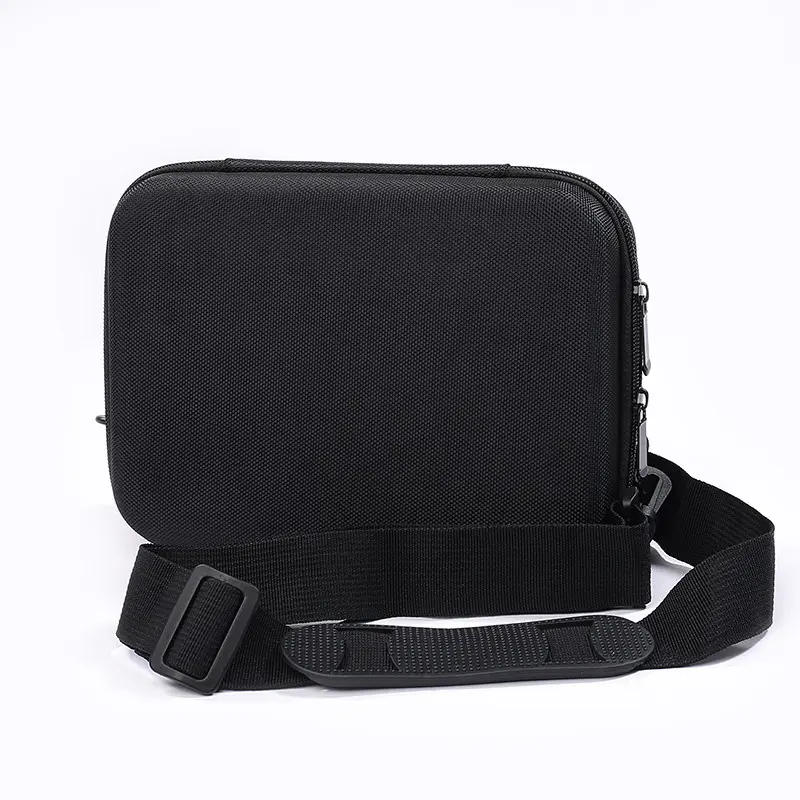
I. Clarify Purchasing Requirements First: Avoid “Discovering Discrepancies After Mass Production”
The first step in bulk purchasing isn’t finding a supplier, but accurately defining your requirements—this can reduce subsequent communication costs by 90%. International buyers should focus on three key areas to avoid unclear requirements that could lead to product mismatches in the target market.
Clearly define the application and scenario: The EVA tool kit’s application directly determines the material and craftsmanship used. For example, the industrial sector requires high-density EVA (38D-45D) that’s “wear-resistant and impact-resistant,” the medical sector requires environmentally friendly EVA that’s “FDA-certified, antibacterial, and easy to clean,” and the electronic component sector requires low-density EVA (18D-25D) that’s “anti-static and highly cushioning.” Clearly mark the specifications before purchasing to avoid suppliers defaulting to standard materials.
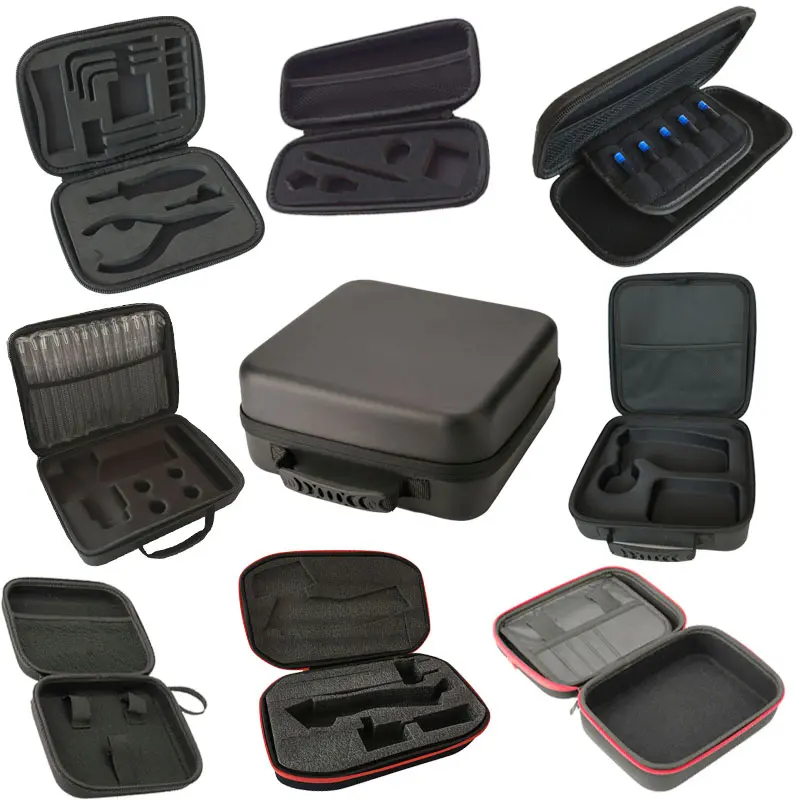
Lock in core specifications: Don’t just mention “standard dimensions”; specify specific data. This includes the tool kit’s external dimensions (length × width × height), the number and dimensions of internal partitions (to accommodate specific tools), EVA thickness (usually 2-10mm, thicker for higher load-bearing requirements), and hardness (Shore C 30-80, adjustable as needed). These parameters should be included in the purchase order.
Confirm customization details: If customization is required (such as logo printing, dedicated partitions, or special accessories), specify these details in advance. For example, consider the logo printing process (silk screen printing is suitable for simple designs, while heat transfer printing is suitable for complex, multi-color designs. Ensure that the product is wear-resistant and does not fade), accessory materials (whether the zipper is metal or nylon, and whether the handles require corrosion protection), and packaging requirements (whether neutral packaging or target market labels are required). It’s recommended that suppliers provide samples first and confirm that they are correct before mass production.
II. Selecting High-Quality Suppliers: Avoiding the Pitfalls of “Inadequate Qualifications and Insufficient Production Capacity”
When purchasing EVA tool kits internationally in bulk, the supplier you choose directly impacts your order success rate. You need to screen based on four criteria: qualifications, production capacity, experience, and service to avoid pitfalls.
1. Prioritize Supplier Qualification Review
Basic Qualifications: Verify whether the supplier has a business license and production license, and whether they are ISO 9001 (Quality Management System) and ISO 14001 (Environmental Management System) certified—these are essential for ensuring consistent quality in mass production.
Export Certification Capabilities: Require suppliers to provide relevant certifications based on your target market. For example, exports to the EU require CE certification, exports to the US require FDA certification (if used for medical/food-related tools), and exports to major global markets require RoHS (Restriction of Hazardous Substances) and REACH (Registration of Chemical Substances) certification to avoid customs clearance delays due to lack of certification.
Third-party test reports: Require suppliers to provide recent third-party test reports (such as those from SGS or Intertek) on EVA materials to confirm that the material does not contain harmful substances such as formaldehyde and heavy metals and meets the environmental standards of the target market.
2. Assess production capacity and delivery schedules
Capacity compatibility: Inquire about the supplier’s monthly production capacity (e.g., “Can it produce more than 50,000 EVA tool kits per month?”), the number of production lines, and whether they have backup lines. This will help avoid delays in large orders due to insufficient supplier capacity. Delivery Commitment and Plan: Clarify the supplier’s production cycle (e.g., “15 days for standard items, 25 days for custom items”), logistics capabilities (whether they can handle sea/air freight, and whether they have a long-term freight forwarder relationship). Also, require the supplier to provide a plan for delivery delays (e.g., “If the delay exceeds 3 days, compensation will be 1% of the order value”).
3. Investigate Export Experience and Case Studies
Target Market Experience: Prioritize suppliers with export experience in your target market (e.g., whether they have supplied to wholesale customers in Europe/the US). Such suppliers are more familiar with local compliance requirements and logistics processes, which can reduce communication costs.
Industry Case Studies: Ask the supplier to provide past volume cooperation cases (e.g., screenshots and customer feedback on EVA tool kits supplied to an industrial brand or medical company). Case studies related to your industry should be given priority—they demonstrate understanding of your needs and reduce partnership risks.
4. Focus on After-Sales Service Capabilities
Communication and Response Speed: Confirm whether the supplier has a dedicated foreign trade contact and can respond to inquiries within 24 hours (international procurement involves time differences, so a quick response is crucial).
After-Sales Guarantee Mechanism: Ask about “How will quality issues be handled after the bulk shipment arrives” (e.g., “Free returns and exchanges are available if the defective rate exceeds 3%)” and “Whether a warranty period is provided” (a minimum of 6 months is recommended for standard EVA tool kits). These should be clearly stated in the contract.
III. Strictly Control Mass Production Quality: Avoid “widespread defective products upon arrival”
When purchasing bulk EVA tool kits, quality control issues are one of the biggest risks. You need to establish a comprehensive quality control mechanism (pre-production, during production, and post-production) to ensure that the products meet your expectations.
1. Pre-production: Sample verification is crucial.
Full-scale sample testing: After receiving samples from suppliers, don’t just look at the appearance; perform three core tests:
Material testing: Test the elasticity of the EVA by hand (check whether it rebounds quickly after release to prevent collapse); Wipe the printed logo with alcohol to check for discoloration;
Workmanship testing: Check for neat seams (no skipped or missing seams), smooth zipper operation (no sticking), and smooth edges and corners (no burrs);
Dimensional testing: Use a tape measure to measure the sample dimensions and confirm they match the purchase order (with an error of ±1mm).
Sealing and retention: After confirming the sample is qualified, seal it with the supplier (each party retains a copy). Subsequent mass production should use the sealed sample as the standard to avoid suppliers claiming that the sample is qualified but the final product is underperforming.
2. In-production: Proactive tracking and spot checks
Progress tracking: During the production cycle, communicate with suppliers at least once a week and request photos or videos of the production progress (e.g., “cutting completed, sewing in progress”) to identify any production issues promptly. Third-party random inspection: For large orders (e.g., over $100,000 USD), we can commission a third-party testing agency (such as SGS) to conduct random inspections at the supplier’s factory. These inspections will be conducted according to AQL standards (e.g., AQL 1.0) to confirm that product quality during production is consistent with the sealed sample, avoiding problems discovered after mass production.
3. Post-production: Full inspection before warehousing
Initial arrival inspection: Upon arrival, the outer packaging is inspected for damage or moisture. The number of cartons and pieces is confirmed to match the order, preventing lost items during logistics.
Full or random inspection: The inspection method is determined by the size of the order—full inspection is appropriate for small orders, while random inspections are conducted according to AQL standards for large orders. Key inspections include: appearance (for scratches, stains, or deformation), size (for consistency with the sealed sample), functionality (for zipper functionality and handles), and material (for consistency with the inspection report). Any non-conforming products will be promptly addressed with the supplier.
IV. Accurately Calculate Total Costs: Don’t Just Focus on “Low Unit Price” and Ignore “Hidden Costs”
When purchasing EVA tool kits in bulk internationally, many buyers fall into the trap of only comparing unit prices, ultimately discovering high hidden costs (such as logistics, tariffs, and after-sales service), making the purchase less cost-effective. You need to calculate the “total cost” rather than just focusing on the unit price.
1. Breaking Down the Cost Structure (Avoiding Scams)
Cost Types
Key Focus
Optimization Suggestions
Raw Material Costs: EVA costs vary significantly depending on density, thickness, and hardness (for example, 38D EVA is approximately 20% more expensive than 18D). Verify that the supplier uses materials that meet your requirements to avoid selling inferior materials as superior. Ask the supplier to provide raw material purchase receipts or specify in the contract that “EVA material must meet XX standards.”
Customized Production Costs: Customized designs require additional mold fees (e.g., “Mold opening fee: $500, refundable for orders over 10,000 pieces”) and printing fees. Verify that these fees are reasonable. Negotiate with the supplier to split mold costs (e.g., “For long-term cooperation, mold costs will be 50% each.”). For large volumes, you can negotiate a waiver.
Logistics costs: Ocean freight is cheaper but slower (e.g., 30 days from China to Europe), while air freight is more expensive but faster (e.g., 5 days). Choose the right one based on the urgency of the order. Also, confirm whether customs clearance and tariffs are included (tariffs are calculated based on the target market rate, e.g., EU tariffs are approximately 0-8%). Negotiate trade terms with the supplier (FOB: you are responsible for shipping and customs clearance; CIF: the supplier is responsible for shipping and insurance; DDP: the supplier is responsible for delivery, including customs clearance and tariffs), choosing the most cost-effective terms based on your needs.
Post-sales costs: If a product is defective, the shipping costs for returns and exchanges, as well as the cost of re-production, should be calculated in advance. Clearly specify post-sales responsibilities in the contract (e.g., “For returns and exchanges due to supplier quality issues, shipping costs will be borne by the supplier”) to mitigate your own risks.
2. Negotiate reasonably to achieve the best value for money.
Bulk discounts: If the order volume is large (e.g., over 10,000 pieces), you can negotiate a bulk discount with the supplier (e.g., “5% discount on unit price for an order of 50,000 pieces”). Also, confirm whether the same discount will apply to subsequent restocks.
Payment negotiation: Common payment methods for international procurement include T/T (telegraphic transfer), such as “30% down payment, 70% balance upon receipt of a copy of the bill of lading”) and L/C (letter of credit), which offers increased security but higher fees. If you can accept a slightly higher down payment (e.g., “40% down payment”), you can negotiate a 1-2% price reduction.
Long-term partnership: If you plan to purchase long-term, you can agree with the supplier that “annual purchase volume of 100,000 pieces will result in an 8% annual price discount.” This reduces costs and ensures the supplier receives priority production.
V. Clarify contract terms: Use “legal terms” to mitigate cooperation risks.
For international bulk purchases of EVA tool kits, the contract is crucial for protecting the rights and interests of both parties. You need to focus on clarifying five core clauses: “quality standards, delivery time, payment method, liability for breach of contract, and dispute resolution” to avoid subsequent disputes.
Quality Standards Clauses: Include the previously agreed-upon “sealing standards,” “testing standards,” and “certification requirements” in the contract, specifying that “if the batch of products does not conform to the sealed sample or fails the agreed-upon testing, the supplier shall be responsible for returns and exchanges, and shall compensate for any resulting logistics costs and customs losses.”
Delivery Time and Logistics Clauses: Specify the specific delivery time (e.g., “Goods must arrive at the Port of Hamburg before December 31, 2024″), logistics method (e.g., “Sea freight, port of destination Hamburg”), and trade terms (e.g., FOB Shenzhen). Also stipulate the “compensation for delivery delays” (e.g., “For each day of delay, 0.5% of the order amount will be deducted. For delays of more than 10 days, the buyer has the right to cancel the order and request compensation”).
Payment Clauses: Clearly specify the payment method, percentage, and timeframe. For example, a clause might state, “30% advance payment within 3 working days after contract signing; 70% balance payment within 5 working days after the supplier provides a copy of the bill of lading.” If using an L/C, details such as the “LC issuance date, validity period, and negotiating bank” should be specified.
Breach of Contract Liability Clauses: In addition to delivery and quality breaches, clauses should also stipulate “supplier liability for providing false certification/test reports” (e.g., “If customs clearance fails due to false certification, the supplier must return the full payment and pay a penalty of 20% of the order amount”) and “buyer liability for late payment” (e.g., “If the payment is overdue for more than 10 days, interest will be paid at 0.05%/day of the overdue amount”) to ensure balanced rights and responsibilities.
Dispute Resolution Clauses: It is recommended to stipulate, “If a dispute arises, the parties shall first negotiate; if negotiations fail, the dispute shall be submitted to the China International Economic and Trade Arbitration Commission (CIETAC) for arbitration in accordance with its current rules. The seat of arbitration shall be Shenzhen, and the arbitration award shall be final and binding on both parties.” Choosing Chinese arbitration provides greater binding force on domestic suppliers and facilitates subsequent enforcement.
VI. Delivery and Logistics Management: Avoid Missing Peak Sales Seasons and Losing Goods
For international procurement of EVA toolkits, delivery and logistics are areas prone to problems. You need to plan ahead and implement progress tracking, logistics coordination, and risk mitigation plans to ensure the timely and safe arrival of goods.
1. Track Production and Logistics Progress Throughout the Process
Production Progress: During the supplier’s production period, communicate at least weekly and request a “production progress chart” (e.g., “cutting 30% complete, sewing 20% complete”). If progress is delayed, promptly urge the supplier to make adjustments (e.g., adding production lines).
Logistics Progress: After the supplier ships, request the “logistics tracking number” (ocean bill of lading number, air waybill number). Use the freight forwarder or logistics platform (such as the Maersk or DHL official website) to track the shipment’s location in real time to confirm that it is on schedule and avoid “supplier fraud.” 2. Choose a suitable logistics method.
Select logistics based on timeliness: If your order is not urgent (e.g., stocking three months in advance), choose sea freight (low cost, suitable for large shipments); if it is urgent (e.g., replenishing inventory), choose air freight (high cost, but fast delivery); if your target market is a neighboring country (e.g., Southeast Asia), consider land transport (medium delivery time, with a cost somewhere between sea and air).
Work with a reliable freight forwarder: If you are responsible for logistics yourself (e.g., using FOB terms), choose a freight forwarder with experience in EVA toolkit shipping and ensure they can handle large shipments and custom-packaged goods. Also, ask for customs clearance assistance (e.g., guidance in preparing customs clearance documents to avoid delays due to incomplete documentation).
3. Prepare a logistics risk plan.
Cargo insurance: If the cargo is valuable (e.g., an order value exceeding $50,000), it is recommended to purchase freight insurance (e.g., all-risk insurance) to cover the risks of damage, loss, and delay during transportation. Premiums typically range from 0.1-0.3% of the cargo value, making it cost-effective. Preparation of customs clearance documents: Prepare the documents required for customs clearance in advance, including commercial invoice (specify the name, quantity, unit price, total price, and trade terms of the goods), packing list (specify the quantity, weight, and dimensions of the goods in each box), certificate of origin (Form A can enjoy tariff preferences), and product certification documents (CE, FDA, etc.). Ensure that the documents are accurate to avoid customs clearance delays.
VII. After-Sales Service and Long-Term Partnership: From “Single Purchase” to “Stable Supply Chain”
Bulk purchasing of EVA tool kits is not a one-time deal. Effective after-sales service and long-term partnership management can help you establish a stable supply chain and reduce subsequent procurement costs.
1. Efficiently handle after-sales issues
Prompt feedback and communication: If quality issues are discovered after delivery (e.g., “10% of the tool kits have zippers stuck”), contact the supplier within three business days, provide photos, videos, and a count of the defective products, and require the supplier to provide a solution within five business days (e.g., “free replacement of 120% of the defective products, or a refund based on the defective product price”).
Retain evidence: All after-sales communication records (emails, chat logs), photos of the defective products, and test reports must be retained. If the supplier delays action, you can use this evidence to enforce your rights according to the contract terms (e.g., filing for arbitration). 2. Evaluate and Optimize Long-Term Partnerships
Post-Partnership Evaluation: After each bulk purchase, suppliers will be evaluated based on four criteria: quality compliance (e.g., whether 98% or more of the products meet standards), on-time delivery (e.g., whether 100% of the products arrive on time), communication and responsiveness, and after-sales service efficiency. Suppliers with high scores will be included in the “core supplier list” and prioritized for future collaborations.
Supply Chain Optimization: Negotiate long-term optimization plans with core suppliers. Examples include “jointly developing EVA tool kit styles that better suit the target market,” “reducing raw material costs through centralized procurement,” and “establishing a VMI (vendor managed inventory) model to stock up in advance and shorten subsequent delivery cycles” to achieve a win-win situation.
VIII. Your Needs, We Help You Achieve Them
As a supplier specializing in the export of EVA tool kits, we understand the pain points faced by international wholesale buyers—from demand confirmation to customs clearance and delivery, every step requires professional support. If you’re struggling with bulk EVA tool kit purchases, such as “unsure how to confirm customization details,” “unable to find a supplier with certifications that meet your target market,” or “concerned about delivery delays impacting your order,” feel free to contact us.
We can provide free sample testing to help you verify the EVA material, craftsmanship, and customization.
We are ISO, CE, FDA, and RoHS certified, and can provide all the necessary customs clearance documentation for your target market.
With a monthly production capacity of over 100,000 pieces, we can guarantee delivery dates for large orders and offer compensation for delivery delays.
For long-term partners, we offer bulk discounts and customized supply chain solutions to help you reduce costs and improve efficiency.
Click the “Inquiry” button on our website and fill in your purchasing requirements (e.g., “Target market: Europe, Order quantity: 50,000 pieces, CE certification required, custom logo required”). Our foreign trade team will contact you within 24 hours to provide a customized solution.
Conclusion: When purchasing EVA tool kits in bulk, details determine success or failure.
Purchasing EVA tool kits wholesale internationally isn’t as simple as simply selecting a product and negotiating a price. From defining requirements to after-sales management, every detail can impact the outcome of your order. Hopefully, the 10 key considerations in this article will help you avoid risks and improve procurement efficiency.
Post time: Oct-29-2025