




Custom Design and Production of EVA Storage Bags for Hardware Tools
For hardware tool brands, professional work teams, and tool purchasers, the storage and protection of tools is always a core concern. Hardware tools are mostly made of metal, which is hard but easily scratched and damaged, and comes in various sizes and specifications. Traditional storage methods often lead to tool clutter, transportation damage, and inefficient access. Custom-designed EVA storage bags for hardware tools, leveraging the natural advantages of EVA material and precise customization, offer an ideal solution to these pain points, protecting the value of the tools while enhancing the user experience and brand experience.
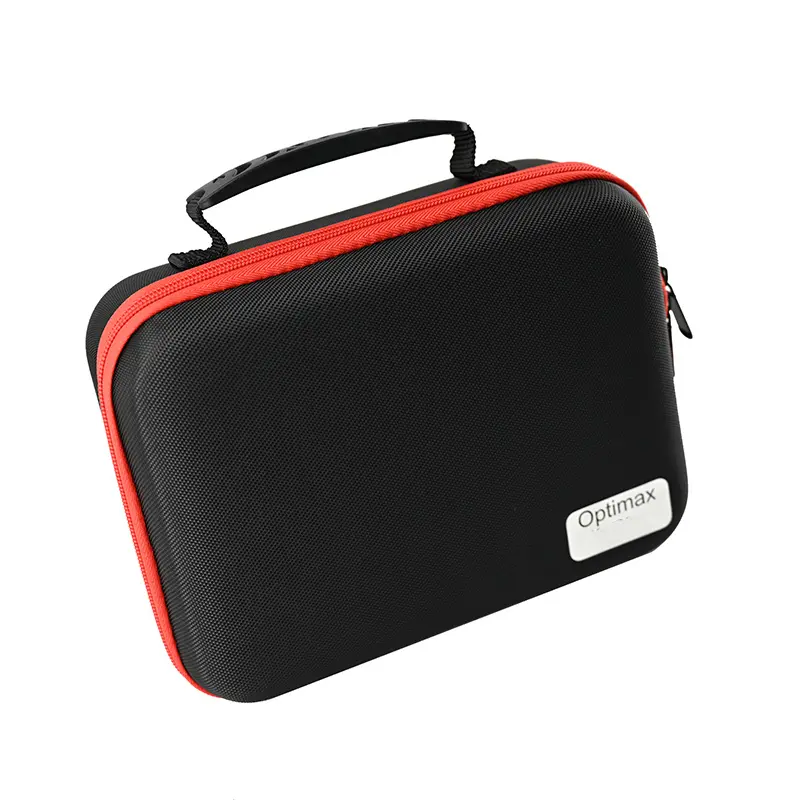
I. EVA Storage Bags for Hardware Tools: A Perfect Match Between Material and Needs
The characteristics of hardware tools dictate that storage bags must possess three core capabilities: strong protection, high adaptability, and easy portability. EVA material perfectly matches these needs, making it the preferred material for hardware tool storage:
Superior Protective Performance: EVA material has excellent shock absorption, pressure resistance, and drop resistance, effectively absorbing impacts during transportation or carrying, preventing scratches, deformation, or even damage to hardware tools such as wrenches, screwdrivers, and drills caused by collisions. It also has good moisture-proof and waterproof properties, preventing moisture intrusion, rusting and oxidation of metal parts, and extending the tool’s lifespan.
Balance of Lightweight and Durability: EVA material has a low density and is lightweight. Even storage bags customized for large hardware tools will not add extra carrying burden, making it suitable for various scenarios such as construction site work, on-site repairs, and outdoor construction. Furthermore, the material is highly wear-resistant and not prone to aging, able to withstand long-term repeated use, reducing the frequency of bag replacement.
Environmentally friendly, safe, and compliant: High-quality EVA material meets international environmental and safety certification standards such as CE, RoHS, and REACH. It is odorless and releases no harmful substances, ensuring user health and meeting global market compliance requirements, thus preventing material issues from hindering product exports.
II. Customized Design: Seamless Integration of Storage Bags and Hardware Tools
Customization is the core value of EVA hardware tool storage bags. Different types and sizes of hardware tools have vastly different needs for storage space and structural design. Standardized storage bags struggle to achieve precise fit, while customized design solves this problem at its root. Its core logic lies in a “tool-centric” end-to-end adaptation:
1. In-depth Needs Analysis: Precisely Capturing Core Requirements Pre-customization needs communication is fundamental. Professional manufacturers need to fully understand: the specific types of hardware tools (e.g., hand tools, power tool accessories, precision measuring tools), dimensional parameters (length × width × height, weight), quantity, and combination methods; usage scenarios (whether outdoor portability is required, whether exposure to humid environments is necessary, whether frequent handling is required); and brand needs (whether brand logo, brand colors, and brand tone need to be embedded). 2. Precise Fit to Structure and Size
Customized Lining: Customized foam linings (such as CNC-cut EVA foam grooves) are used to create a unique storage space for each tool, achieving a “one-to-one” fit. For example, socket wrenches can be designed with layered grooves for storage, with independent storage for each socket size to prevent shaking and collision; larger tools such as drills use a one-piece molded thickened EVA lining, with reserved storage areas for handles and drill bits, ensuring orderly placement of the entire machine and accessories.
External Structure Design: A reasonable external structure is designed according to carrying methods—for frequent movement, reinforced carrying straps and adjustable shoulder straps can be added to improve portability; for stacking storage, a flat and wear-resistant bottom can be designed to enhance stability; for outdoor work scenarios, waterproof zippers and sealed edge designs can be added to improve moisture and dust resistance.
3. Detail Optimization: Balancing Practicality and Brand Image
Functional Details: Adding small parts storage bags (e.g., for screws, washers), elastic straps (to prevent tools from falling off), and label pockets (for easy categorization) enhances ease of use.
Brand Empowerment: Embedding the brand logo into the bag’s surface using heat embossing, embroidery, and screen printing, maintaining color consistency with the brand’s visual identity, making the bag an extension of the brand image and increasing product value.
Durability Upgrades: Utilizing high-strength zippers (such as metal zippers and waterproof nylon zippers), reinforced stitching, and a wear-resistant Oxford cloth composite layer enhances the bag’s resistance to wear and tear, making it suitable for high-frequency use.
III. Manufacturing: Quality Control from Sample to Mass Production
The successful implementation of customized designs relies heavily on professional manufacturing processes. High-quality EVA storage bags for hardware tools require comprehensive quality control throughout the entire process, from design to mass production, ensuring that each batch meets expected standards:
1. Pre-production Preparation: Mold and Sample Confirmation
Mold Development: Based on the final design drawings, custom molds are created to ensure the dimensional accuracy and structural stability of the molded EVA, with particular attention to the precise calibration of the curvature and depth of the inner lining grooves;
Sample Testing: PP samples (pre-made samples) are produced first for customers to verify dimensional compatibility, structural rationality, feel, and appearance. Adjustments and optimizations are made based on feedback until the requirements are fully met before entering the mass production stage.
2. Production Process: Balancing Efficiency and Quality
Material Cutting and Molding: High-precision cutting equipment is used to cut EVA sheets and foam linings. Hot-pressing or cold-pressing processes are then employed to create the pre-designed storage structure, ensuring that the dimensional deviation of each card slot is controlled within a reasonable range.
Lamination and Assembly: The EVA body is laminated with outer protective materials (such as Oxford cloth or PU leather) to enhance wear resistance. Subsequent assembly processes include zipper installation, shoulder strap fixing, and seam reinforcement. Each step undergoes manual quality inspection to prevent issues such as zipper jamming or loose stitching.
3. Quality Inspection: Compliant with International Standards
During mass production, multi-dimensional quality inspections are conducted to ensure product quality:
Material Inspection: Random sampling of EVA material density, hardness, and environmental indicators to ensure compliance with international certification requirements such as RoHS and REACH;
Structural Inspection: Testing the storage bag’s compression resistance (simulating stacked weight), shock resistance (simulating transportation bumps), and zipper lifespan (repeated opening and closing tests);
Appearance Inspection: Checking the clarity of logo printing, color consistency, and surface for scratches or defects to ensure a clean and uniform product appearance.
4. Efficient Delivery: Controlled Production Cycle and Transportation
Professional manufacturers typically offer efficient production cycles (e.g., mass production delivery within approximately 20 days) and support low minimum order quantities (MOQ 500pcs) to meet the bulk needs of different customers; protective packaging is used during transportation to prevent product damage and ensure timely and intact delivery to customers worldwide.
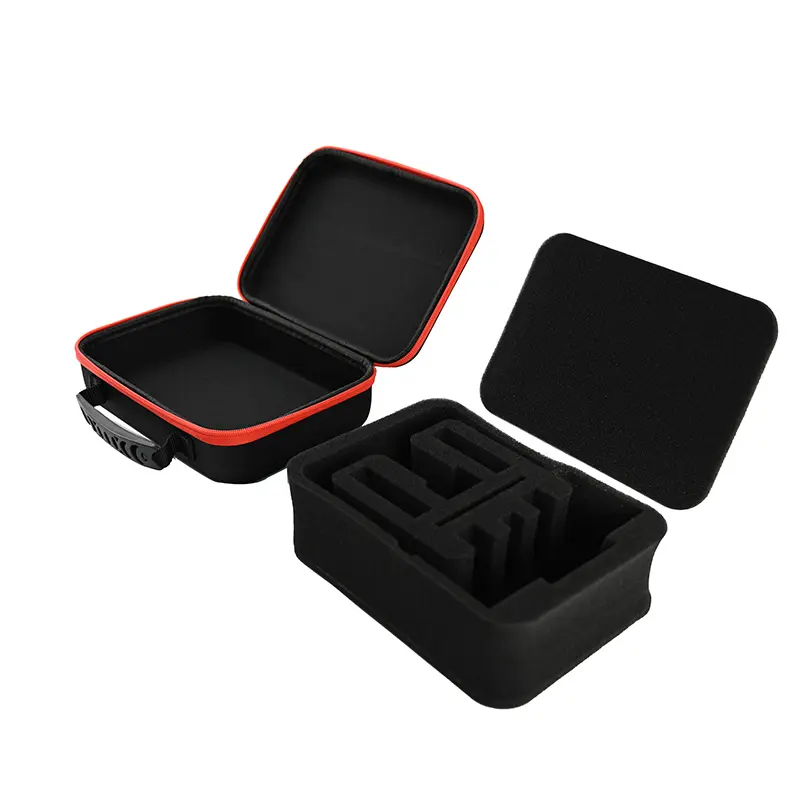
IV. Core Application Value of Customized EVA Storage Bags
For hardware tool companies, customized EVA storage bags are not merely “add-ons,” but rather crucial components for enhancing product competitiveness and reducing overall costs:
Protecting Tool Assets: Reducing wear and tear on tools during transportation, storage, and use lowers repair or replacement costs. This is especially important for precision hardware tools (such as measuring instruments and specialized wrenches), where precise storage and protection prevent damage to accuracy.
Improving Usage Efficiency: Clearly categorized storage designs make tool retrieval faster, eliminating the need for time-consuming organization and searching. This is particularly suitable for high-efficiency work scenarios such as construction sites and repair shops.
Strengthening Brand Image: Customized storage bags convey a brand’s attention to detail and focus on user experience, differentiating itself from homogeneous products and creating a competitive advantage in the market, enhancing customer recognition.
Adapting to Multiple Scenarios: Whether for indoor warehousing, cross-regional transportation, or temporary outdoor work, customized storage bags provide corresponding protection and portability solutions based on the characteristics of the scenario, improving tool adaptability.
V. Key Considerations for Choosing a Professional Custom Manufacturer
To obtain high-quality EVA storage bags for hardware tools, choosing a reliable custom manufacturer is crucial. Pay close attention to the following points:
Industry Experience and Case Studies: Prioritize manufacturers with over 10 years of experience in EVA storage customization. They are more familiar with the storage needs of hardware tools and possess mature customization solutions and successful case studies.
One-Stop Service Capabilities: A full-process service capability encompassing “needs communication – design solutions – sample production – mass production – quality inspection and transportation” reduces intermediate communication steps and improves customization efficiency.
Compliance and Quality Certification: Products must pass international certifications such as CE, RoHS, and REACH to ensure compliance with global market environmental and safety standards.
Flexible Customization Support: Support for low minimum order quantities, rapid sample confirmation, and personalized design adjustments to meet the customization needs of companies of different sizes.
Production Cycle and After-Sales Service: Clear production cycle commitments and comprehensive after-sales service ensure on-time order delivery and timely response and resolution of any issues.
Post time: Jan-12-2026