




EVA Case Manufacturing Process Overview
Introduction
Custom molded EVA cases have become the universal protective packaging solution for electronics, precision tools, medical supplies, outdoor gear, and personal care equipment across global markets. Their balanced advantages of lightweight structure, shock absorption, water resistance, and customizable shaping make them far more functional than simple fabric pouches or rigid plastic boxes.
For sourcing managers, brand procurement teams, and product developers, understanding the full end-to-end manufacturing workflow of EVA cases eliminates communication gaps, reduces sample revision cycles, and helps set clear quality and lead time expectations with manufacturers. This overview breaks down every standardized production stage, from initial project alignment to final shipment, with key quality benchmarks and buyer-focused notes for each phase.
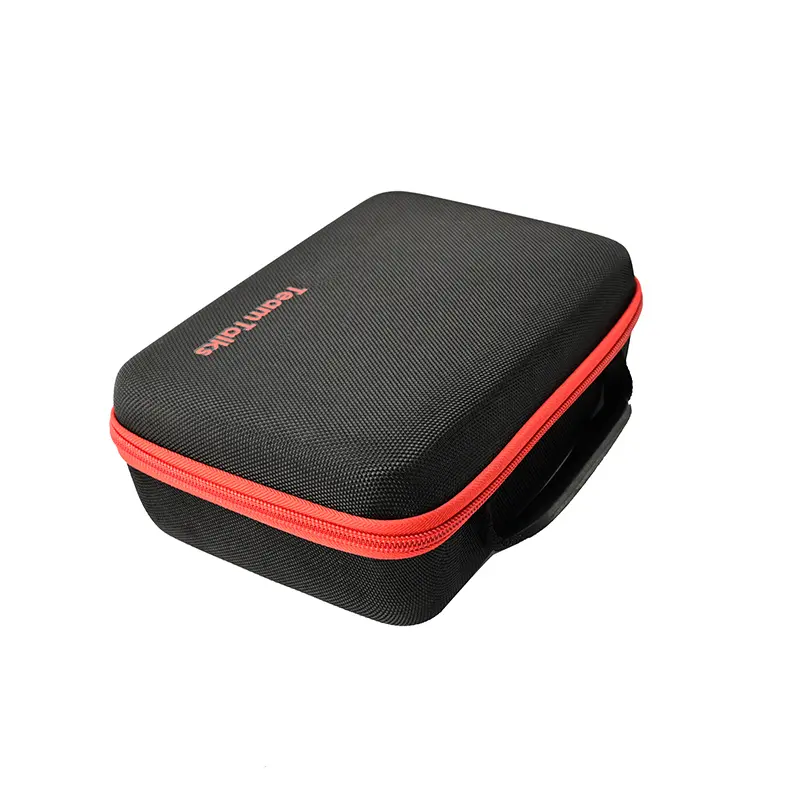
What Is a Molded EVA Case?
EVA refers to Ethylene-Vinyl Acetate foam, a flexible, compressible polymer core used to form the hard shell of protective storage cases. The finished product combines three core components:
- Molded EVA hard shell: Provides structural rigidity and impact buffering; hardness ranges from 35° to 75° shore, selected based on load weight and protection requirements.
- Exterior lamination fabric: PU leather, carbon fiber textured material, Oxford cloth, or matte nylon for scratch resistance and brand aesthetics.
- Custom interior inserts: CNC cut or thermoformed foam trays, velvet lining, elastic bands, mesh pockets to fix and organize equipment.
All finished products can comply with global material standards including CE, RoHS, and REACH for cross-border retail and industrial distribution.
Full Step-by-Step EVA Case Manufacturing Workflow
Phase 1: Project Briefing & Engineering Design
The production cycle starts with aligning functional and branding requirements before any material or tooling work begins.
- Requirement collection: Buyers share product dimensions, protection standards, target order volume, branding specifications (embossed, silk screen, heat transfer logos), and extra accessories (handles, shoulder straps, waterproof zippers, carabiners).
- 3D structural design: Engineering teams draft digital renderings of the case shell, internal compartment layout, and hardware placement. Critical design details include zipper track positioning, wall thickness, foam insert depth, and carrying load capacity.
- Spec sheet confirmation: A standardized technical document records material grades, Pantone color codes, dimensional tolerances, and all custom features, signed off by both parties as the official production reference.
Buyer tip: Submit original product samples or precise CAD drawings to avoid dimensional errors during later sampling. Complex multi-compartment cases require additional foam layout reviews at this stage.
Phase 2: Raw Material Sourcing & Pre-Processing
Material quality directly determines case durability and regulatory compliance, so qualified factories implement full incoming batch inspection.
- Core EVA foam selection: Foam thickness and hardness are matched to use cases. Thin, soft EVA suits lightweight earbud chargers; dense, thick EVA is used for power tools and heavy precision instruments. Additives like anti-static, antibacterial, or UV-resistant compounds are integrated for specialized industries.
- Auxiliary material preparation:
- Outer surface fabrics, interior lining velvet, and waterproof adhesive films
- Zippers, pull tabs, plastic or metal hardware, woven webbing handles
- Foam blocks for custom-cut inner trays
- Compliance verification: Every material batch undergoes testing to meet environmental safety standards required for EU, North American, and Asian markets. Unqualified raw materials are rejected before entering production lines.
- Lamination treatment: EVA foam sheets are heat-bonded with exterior fabric under controlled temperature and pressure. This process creates a seamless outer layer that resists peeling and surface abrasion long-term.
Phase 3: Mold Fabrication & Pre-Production Sampling
Custom OEM projects require dedicated aluminum molds for thermoforming; standard ODM sizes utilize existing tooling to cut lead time and costs.
- CNC mold machining: Aluminum molds are carved to match the 3D design, separated into upper and lower halves to form the top and bottom case shells. Molds are polished to eliminate surface blemishes that transfer to finished cases.
- Trial sample production:
- ODM samples: 3–7 working days using in-stock molds and materials
- Custom OEM samples: 7–15 working days including mold making and physical prototyping
- Sample performance testing: The prototype undergoes fit testing with the buyer’s product, zipper cycle testing, drop impact trials, and surface branding checks. Revisions to shell shape, foam layout, or logo style are implemented at this stage before mass production lock-in.
- PP sample confirmation: A pre-production sample matching full bulk production materials and techniques is sent for final buyer approval; this unit becomes the quality benchmark for all subsequent orders.
Buyer tip: Low minimum order quantities (starting at 500 units) are available for small-batch brand launches without sacrificing standardized production processes.
Phase 4: Mass Production Core Molding & Fabrication
This is the most technically demanding stage, where laminated EVA sheets take the rigid, defined shape of the finished case shell.
- Precision die cutting: Laminated EVA panels are cut into uniform blanks slightly larger than the mold cavity to ensure full coverage during heating.
- Thermoforming (core production step):
- Molds preheat to a controlled temperature range of 120–180°C
- Cut EVA blanks are secured inside hydraulic thermoforming machines
- Graduated pressure (10–40 MPa) is applied for 45–90 seconds to soften and press foam into the mold contour
- Constant pressure is maintained while cooling water circulates through molds to lock the case shape and prevent warping or rebound
- Edge trimming: Post-cooling, excess EVA material around shell edges is removed via die-cut or laser machines. Clean, symmetrical trimming ensures seamless alignment between top and bottom case halves during assembly.
- Interior foam insert manufacturing: Separate CNC cutting or secondary molding creates custom recesses sized to hold each device, cable, or accessory. Multi-layer foam combinations, velvet wrapping, and elastic securing straps are added per design requirements.
Phase 5: Assembly, Sewing & Brand Finishing
Molded shells are transformed into fully functional, branded storage cases through manual and mechanical assembly lines.
- Sewing reinforcement: Professional heavy-duty sewing machines stitch fabric edging to molded shells, attach zipper tape, and install carry handles, shoulder straps, and mesh storage pockets. Reinforced stitching at high-tension points (zipper bases, handle mounts) prevents tearing after repeated use.
- Logo & surface branding: Three common custom branding methods are applied based on buyer preference:
- Embossed/debossed: Permanent texture pressed directly into the EVA shell during molding
- Heat transfer printing: Full-color, high-resolution graphics on exterior fabric
- Silk screen printing: Cost-effective single-color brand logos for large-volume orders
- Hardware installation: Metal rivets, magnetic clasps, plastic pullers, and hook clips are fixed and tested for tightness to avoid loose fittings during transport.
Phase 6: Multi-Stage Quality Control Inspection
Reliable manufacturers implement a three-tier QC system to maintain consistent batch quality across all production runs.
- In-process line inspection: QC technicians monitor every workstation to flag uneven molding, loose stitching, color mismatches, or defective zippers before parts move to the next production step. Dimensional tolerance is held within ±2mm for all finished shells.
- Finished product full inspection: Every completed case undergoes a comprehensive check covering:
- Visual quality: No bubbles, wrinkles, scratches, color deviation, or misaligned logos
- Functional testing: 500-cycle zipper smoothness test, drop impact resistance, weight-bearing handle test, and water resistance spray test for outdoor-grade models
- Internal fit: Foam inserts must hold target products securely without loose movement
- Batch sampling audit: Random units from each production carton are re-tested against the approved PP sample to eliminate batch-to-batch inconsistencies. Defective items are separated for rework or replacement.
Phase 7: Final Packaging & Shipment Preparation
Once QC clearance is complete, orders are prepared for global logistics with export-standard packaging and documentation.
- Individual unit packaging: Each case is wrapped in protective polybags to avoid surface scratches during transit. Custom retail packaging (color boxes, branded tissue paper, instruction cards) can be added as an optional upgrade.
- Bulk carton packing: Uniform master export cartons are stacked with protective corner padding to prevent crushing during sea or air freight. Carton labels include order numbers, product specifications, and quantity breakdowns.
- Documentation compilation: Manufacturers provide full export paperwork including commercial invoices, packing lists, and material compliance certificates for customs clearance in all destination markets.
- Lead time & shipping arrangement: Standard mass production lead time sits at 20 working days post sample approval. Flexible shipping options include sea freight, air freight, and expedited express delivery to match buyers’ inventory timelines.
Key Factors That Impact EVA Case Production Quality & Lead Time
- Mold complexity: Simple rectangular tool cases use single-cavity molds with faster turnaround; curved, multi-contour medical or drone cases require multi-stage molding and extended production cycles.
- Customization depth: Full custom foam inserts, multi-color printing, and specialized waterproof hardware add 3–7 days to lead times compared to standard blank cases.
- Material compliance tiers: Medical-grade antibacterial or food-contact safe EVA requires extra pre-production material testing, which extends initial sample timelines slightly.
- Order volume: Larger bulk orders activate parallel production lines to maintain consistent delivery windows, while small MOQ batches follow streamlined low-volume workflows.
Common Industrial Applications for Custom EVA Cases
The standardized manufacturing process adapts seamlessly to protective packaging across all major verticals:
- Consumer electronics: Wireless earbuds, chargers, keyboards, cameras, drones, gaming controllers
- Industrial tools: Screwdriver sets, measuring instruments, power accessories, flashlight storage kits
- Medical & first aid: Portable first aid kits, diagnostic device storage, sanitized medical instrument cases
- Outdoor & camping: Cooking gear storage, travel vacuum organizers, sports goggle and sensor carry bags
- Personal care & beauty: Hair styling tools, skincare devices, makeup artist compartment kits
- Pet supplies: Portable pet cleaning storage bags and travel accessory organizers
Final Takeaway
A transparent, fully integrated EVA case manufacturing workflow eliminates sourcing risks for global procurement teams. From initial design engineering and mold creation to molding, assembly, multi-level quality testing, and export packaging, every stage is built around repeatable, consistent standards that deliver matching quality across small MOQ test orders and large mass production batches.
Buyers who align closely with manufacturers during the design and sampling phase minimize revision delays, lock in predictable lead times, and receive custom protective cases that fully match functional, branding, and regulatory requirements for their global product lines.
Post time: Jul-01-2026