




EVA Tool Case Supplier Selection Strategy
Table of Contents
- Clarify Your Core Sourcing Requirements First
- Distinguish Between Real Manufacturers & Trading Agents
- Evaluate Supplier Customization & Technical Capacity
- Audit Quality Control & Material Compliance Standards
- Assess Production Capacity & Delivery Stability
- Calculate Total Procurement Cost (Not Just Unit Price)
- Complete Sample Verification & Trial Order Validation
- Review After-Sales Service & Risk Control Clauses
- Build Long-Term Cooperative Supplier Matrix
- Common Sourcing Pitfalls & Avoidance Tips
- Frequently Asked Questions
- Conclusion
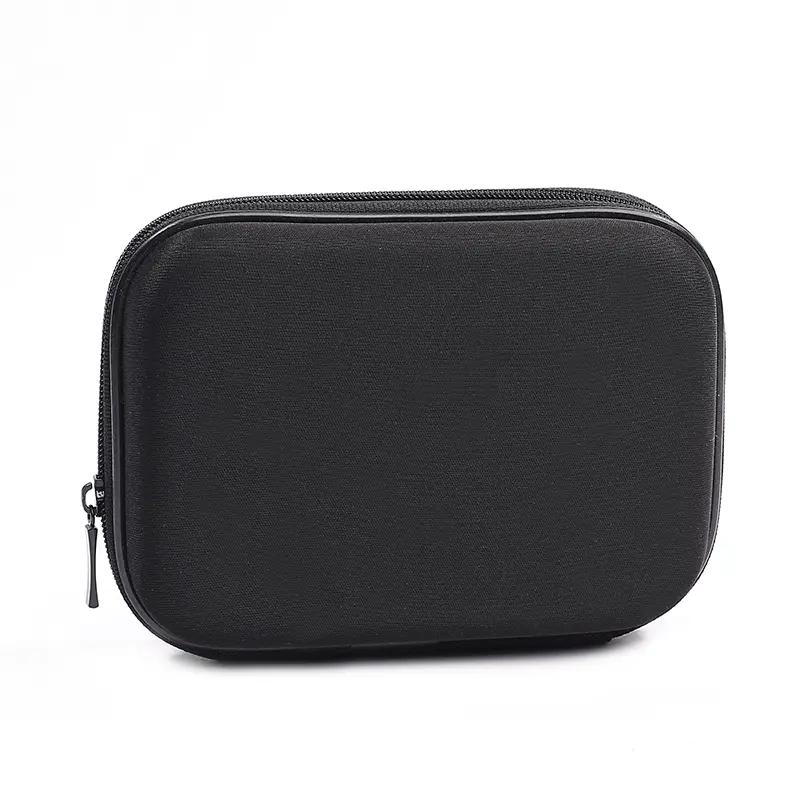
1. Clarify Your Core Sourcing Requirements First
Before contacting any suppliers, fully sort out your product and business demands, which serves as the baseline for all screening work. Unclear demands will lead to repeated communication, inconsistent samples and delayed schedules.
Key dimensions to confirm
- Product specifications: Outer shell size, EVA hardness/density, exterior fabric (nylon, carbon fiber PU, Oxford cloth), internal foam structure (CNC custom mold foam or general grid foam), handle/zipper accessory standards
- Customization scope: Silk printing, embossed logo, metal label, color matching, separate mesh pocket design, detachable shoulder strap
- Compliance standards: EU RoHS, REACH, CE, US SGS, BSCI factory audit, medical-grade material certification (for medical tool kits)
- Order cycle: Trial order volume, monthly repeat order forecast, peak season rush order demand, required lead time
- Usage scenarios: Hand tool storage, medical instrument packaging, drone/camera protective box, outdoor emergency first aid kit, automotive power supply storage
Clear written technical specifications (tech pack) can directly filter out suppliers incapable of matching your standards, greatly improving screening efficiency.
2. Distinguish Between Real Manufacturers & Trading Agents
Many buyers confuse traders with direct factories, which creates hidden costs and quality risks in long-term cooperation. The core differences are as follows:
| Evaluation Item | Professional EVA Tool Case Factory | Trading Company |
|---|---|---|
| Pricing | No intermediate markup, volume discounts available | 15%-30% higher unit price |
| Customization | Independent mold workshop, supports full OEM/ODM new mold development | Only adjust existing stock color/logo; new molds require third-party coordination |
| Quality Control | Full-process inspection from raw materials to finished goods | Unable to monitor production lines, quality fluctuates frequently |
| MOQ Rule | Standard custom mold MOQ: 500pcs per design | Low MOQ for spot goods, mixed batch support |
| Lead Time | Stable mass production cycle (18-25 days after sample confirmation) | Uncertain cycle for customized orders, subject to factory scheduling |
Simple verification methods
- Request factory workshop videos, production line photos and annual output data
- Ask for internal mold processing, foam CNC cutting and sewing workshop records
- Inquire about independent material incoming inspection procedures; traders cannot provide on-site QC records
3. Evaluate Supplier Customization & Technical Capacity
Customized EVA tool cases account for over 80% of global procurement demand, so technical R&D and design capability directly determine product presentation.
Core assessment indicators
- In-house design team: Whether CAD drawing, 3D render and DFM manufacturability optimization services are provided. Excellent suppliers will optimize structural stress points (handle reinforcement, zipper edge wrapping) at the drawing stage to reduce mass production defects.
- Foam processing technology: Mastery of CNC integral molding, die cutting, layered composite foam. For precision instruments, integrated cavity foam with precise positioning is essential.
- Surface craftsmanship options: Carbon fiber hot pressing, embossing, heat transfer printing, silicone label sticking, full color offset printing. Confirm stable mass production yield of your required logo process.
- Mold management rules: Clarify mold production cycle, one-time mold cost, mold ownership after reaching agreed order volume, long-term storage and maintenance standards.
Suppliers with complete technical support can shorten sample iteration times from 14 days to 3-7 days for ODM modified designs, accelerating your product launch schedule.
4. Audit Quality Control & Material Compliance Standards
Quality consistency and global regulatory compliance are core pain points for cross-border buyers. A single unqualified batch will trigger overseas returns, customs detention and brand reputation losses.
Full-process QC system inspection points
- Incoming material inspection: EVA particle hardness test, fabric wear resistance, zipper tensile test, foam density detection to prevent recycled inferior materials
- Semi-finished inspection: Molding forming size tolerance, edge trimming burr control, composite lamination adhesion strength
- On-line patrol inspection: Uniform stitching density, handle load-bearing capacity, logo printing adhesion
- Finished product comprehensive test: Drop resistance, waterproof performance, repeated zipper opening and closing life
- Pre-shipment AQL sampling inspection: Complete sealed golden sample comparison before delivery
Compliance document verification
Request original third-party test reports matching your target market:
- European market: RoHS, REACH SVHC, CE certification
- North American market: SGS material safety test
- Large retail channels: BSCI, Sedex factory audit reports
Avoid suppliers that only provide expired universal certificates; reports must cover the exact EVA and fabric materials used for your order.
5. Assess Production Capacity & Delivery Stability
Many suppliers exaggerate output capacity on official websites. Buyers need to verify true flexible production capacity to avoid delayed shipments during peak sales seasons.
Standard industry lead time reference
- ODM modified sample: 3-7 working days
- OEM new mold prototype: 7-14 working days
- Small trial order (500-2000pcs): 18-22 days
- Medium bulk order (2000-10000pcs): 20-25 days
- Large volume order (10000pcs+): 22-30 days
Capacity verification methods
- Confirm factory plant area, number of production lines, skilled sewing workers and annual output data
- Ask about surge order response plans, standby production lines for rush orders
- Check historical customer delivery records, delay handling compensation clauses
- Confirm raw material stock reserve cycle to avoid raw material shortage shutdown risks
Stable manufacturers maintain a defective rate below 1.5% for precision tool cases and below 3% for general storage bags. Factories with rework rates exceeding 6% will greatly affect delivery timelines.
6. Calculate Total Procurement Cost (Not Just Unit Price)
Most buyers only compare ex-factory unit prices, ignoring multiple hidden costs that greatly increase overall expenditure. Adopt TCO (Total Cost of Ownership) comprehensive accounting during supplier comparison.
Four major cost components
- Direct visible cost: Unit price, mold fee, sample fee, export packaging charge, freight, customs clearance fee
- Quality hidden cost: Return freight for defective goods, customer compensation, secondary inspection labor cost
- Supply chain loss cost: Production line shutdown loss caused by delayed delivery, emergency air freight surcharge
- Supplier switching cost: New supplier sample re-development, mold re-production, market test delay
Low-price suppliers often cut corners on EVA thickness, zipper grade and foam density, leading to high after-sales loss rates. When comparing quotations, align identical material standards and customization requirements to ensure fair price evaluation.
7. Complete Sample Verification & Trial Order Validation
Samples are the most intuitive standard for testing supplier strength; formal bulk orders must never be placed without trial order verification.
Step 1 Sample layered inspection
- Appearance layer: Color difference, printing blur, fabric scratch, uneven stitching
- Structural layer: Foam cavity fit tightness, handle shake, zipper smoothness, mesh pocket firmness
- Performance test: Squeeze deformation recovery, drop test, long-time zipper repeated use test
- Document confirmation: Seal and sign the approved golden sample, with one copy retained by both buyer and factory as the mass production standard
Step 2 Small trial order cooperation
Place a small batch trial order after sample confirmation, focusing on observing:
- Consistency between mass-produced goods and golden samples
- On-time delivery rate
- Proactive communication of production abnormalities
- Efficiency of defective product replacement solutions
Only after passing trial order assessment can long-term large-volume cooperation be launched to fully avoid mass production risks.
8. Review After-Sales Service & Risk Control Clauses
Complete cooperation terms reduce disputes during order execution. Key clauses to confirm in advance:
- Defective product processing: Rework free of charge, full return or partial refund standards, bear return logistics fees for factory-caused defects
- Delivery delay liability: Clear daily compensation ratio for late shipments
- Mold ownership: Confirm whether molds belong to the buyer after reaching the agreed order quantity
- Confidentiality agreement: Prohibit the supplier from disclosing your product design to third-party brands
- Payment terms: Flexible deposit balance ratio, letter of credit support for large orders
High-quality suppliers provide dedicated account managers for full-cycle order tracking, with daily production progress updates during mass production.
9. Build Long-Term Cooperative Supplier Matrix
For sustainable procurement, establish a tiered supplier system instead of relying on a single factory:
- Core strategic supplier: Full OEM customization, stable monthly bulk orders, complete compliance certification, joint new product development
- Backup alternative supplier: Matching basic product standards, responsible for emergency rush orders and supplementary shipments
- Spot ODM supplier: Low MOQ stock goods, suitable for market test small batches and seasonal short-term demand
This multi-supplier matrix effectively solves risks such as single factory production suspension, price adjustment and delivery delay.
10. Common Sourcing Pitfalls & Avoidance Tips
- Blindly pursue ultra-low unit price Avoidance: Standardize unified material parameters before quotation comparison, calculate full TCO cost
- Fail to confirm written golden sample standards Avoidance: Sign and seal physical samples + detailed written technical specifications together
- Ignore material compliance test reports Avoidance: Request batch-matched test reports for each formal order, reject expired universal certificates
- Neglect mold ownership agreements Avoidance: Add clear mold ownership clauses in the cooperation contract
- Skip trial orders and directly arrange large shipments Avoidance: Take small trial orders as mandatory assessment links before bulk procurement
11. Frequently Asked Questions
Q1: What is the standard MOQ for customized EVA tool cases?
A: Professional factories set 500pcs MOQ per new mold design; existing ODM styles support lower MOQ of 100-300pcs without additional mold fees.
Q2: How long is the normal sample making cycle?
A: Modified ODM samples take 3-7 days; fully customized OEM new mold samples take 7-14 working days, depending on structural complexity.
Q3: Can suppliers provide third-party factory audit documents such as BSCI?
A: Formal export manufacturers can provide complete BSCI, Sedex audit reports; small workshops without export qualifications cannot offer relevant certification.
Q4: How to handle mass-produced goods inconsistent with samples?
A: Sign a golden sample confirmation document before production. If mass products fail to meet standards, the factory bears all rework and logistics costs as agreed in the contract.
Q5: Can suppliers support mixed container delivery of multiple styles?
A: Large-scale manufacturers support mixed loading of multiple SKUs within one order; traders have stricter single-style quantity limits.
12. Conclusion
Selecting an EVA tool case supplier is a systematic strategic decision rather than a simple price comparison behavior. Buyers need to sort out clear demand standards in advance, verify factory production and customization strength through multi-dimensional dimensions such as production capacity, quality control and compliance, and use samples + trial orders to complete practical verification.
Establishing a tiered supplier cooperation matrix and locking clear risk control clauses can continuously stabilize your supply chain, reduce comprehensive procurement costs, and provide consistent high-quality protective packaging for your tools, instruments and electronic products in long-term global sales.
Post time: Aug-12-2026