




How to Control Import Costs of EVA Specialized Tool Kits?
EVA specialized tool kits, with their core characteristics of shock resistance, waterproofing, and portability, have become essential procurement items in industries such as industrial, outdoor, electronics, and medical. However, their import costs are often affected by multiple factors, including procurement negotiations, international logistics, customs clearance, and trade policies. Achieving precise control over import costs is not simply about lowering the unit price, but rather about addressing the entire supply chain. This involves professional negotiation strategies, logistics optimization, tax planning, and risk mitigation to achieve the goal of “reducing costs without compromising quality” in cross-border procurement. This article will share a systematic approach to controlling the import costs of EVA specialized tool kits from a practical perspective, covering core aspects such as procurement, logistics, customs clearance, and policy adaptation.
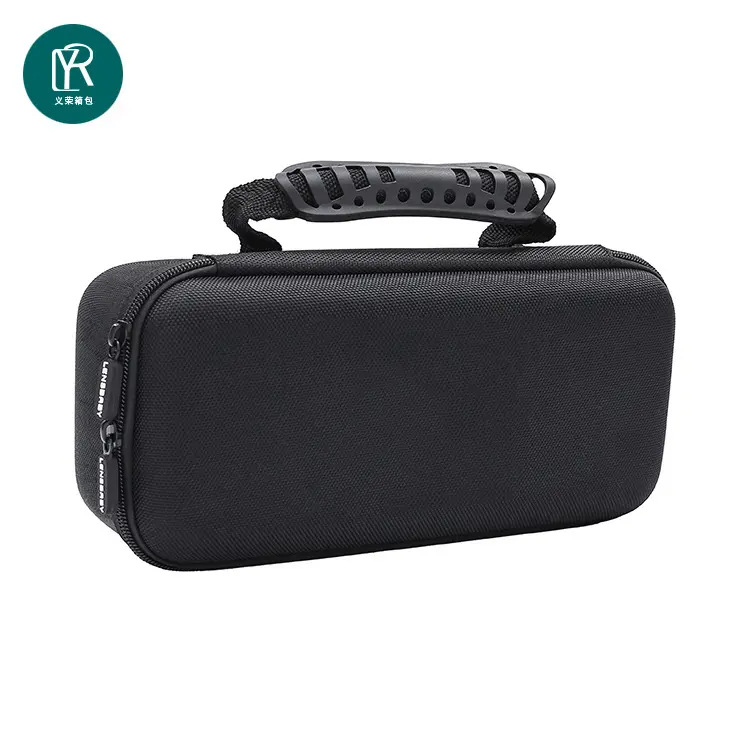
Source Control: Negotiation and Cost Optimization in the Procurement Process to Lock in Core Purchase Prices
The product procurement price constitutes a core proportion of the import cost of EVA special toolkits. Effective negotiation is not about “hard bargaining,” but rather about achieving a win-win price negotiation with suppliers through professional cost research, leveraging bargaining power, and designing cooperative models, while avoiding quality compromises due to low prices.
Understanding the Cost Baseline: Avoid Being Held Hostage by Suppliers’ “High-Price Justifications”
Before procurement, it’s essential to understand the core cost structure of EVA toolkits through industry reports and peer exchanges—EVA raw materials account for approximately 60%, processing and manufacturing 20%, profit around 15%, and other miscellaneous expenses 5%. Real-time monitoring of international market price fluctuations for EVA raw materials is crucial for negotiation. After receiving supplier quotations, request detailed cost breakdowns. If the supplier refuses, subtly suggest that “other suppliers offer transparent quotations, and we prefer long-term transparent cooperation” to maintain control of the negotiation. Simultaneously, connect with at least 2-3 similar suppliers to understand their pricing, minimum order quantities, delivery times, etc., and develop alternative solutions. During negotiations, clearly state, “We acknowledge your company’s quality and hope the price can match the market average price range.”
Build your own purchasing leverage to encourage suppliers to offer concessions.
A supplier’s willingness to offer concessions essentially depends on the long-term value the buyer can bring. As a wholesale buyer, you can fully leverage your purchasing volume, payment terms, and depth of cooperation: If your annual purchasing volume is large, you can promise, “If the price is met, we will sign a 1-3 year long-term purchasing agreement,” exchanging stable order volume for unit price discounts; considering suppliers’ emphasis on cash flow, you can propose “Shortening the payment cycle (e.g., from 3 months to 1 month) in exchange for a unit price reduction of around 5%”; if you have supply chain resources, you can promise to introduce downstream customers to suppliers, reducing the unit price through deeper cooperation.
Set clear negotiation boundaries, balancing price and quality. Before negotiating, you need to clearly define your optimal target, acceptable target, and bottom-line target to avoid making concessions without a bottom line that could compromise quality. For example, the optimal target could be set as “15% reduction in unit price + 90-day payment period + free sea freight,” an acceptable target as “10% reduction in unit price + 60-day payment period + cost sharing,” and a bottom-line target as “8% reduction in unit price + 45-day payment period.” Negotiations should begin with the optimal target, gradually making small concessions, each with exchange conditions, such as “a 10% increase in purchase volume requires shortening the delivery time from 30 days to 20 days,” ensuring the supplier feels that “the concessions are based on value exchange, not unilateral compromise.”
Logistics Optimization: Eliminating “Hidden Freight Costs” for More Cost-Effective Cross-Border Transportation
EVA special toolkits are mostly lightweight and bulky goods, easily incurring additional costs in international logistics due to “volume-based billing.” Furthermore, seasonal price differences for sea and air freight, route selection, and packaging design all offer significant potential for cost optimization. The core of logistics cost control lies in accurately calculating overall costs, optimizing packaging design, and selecting the right transportation solution, rather than simply lowering freight forwarder quotes.
Choose your shipping method according to your needs to avoid “paying a premium for timeliness.” The core formula for logistics selection is: Total Cost = Freight + Time Loss Cost + Warehousing Cost. The shipping method should be matched to the urgency of the procurement needs: For non-urgent routine replenishment (such as industrial tool kits, outdoor camping tool kits), prioritize sea freight LCL or sea-rail intermodal transport, saving 60%-70% in freight compared to international express; for small-to-medium-sized urgent purchases (30-500kg), choose air freight lines, which are 35% cheaper than international express and only 1-2 days slower; for oversized EVA tool kits (such as tool kits for large equipment), use special containers for LCL instead of FCL, saving approximately 40% in freight.
Optimize packaging design to avoid “air freight” costs. International logistics charges are based on the higher of “actual weight” or “volume weight.” EVA toolkits, with their foam lining, are prone to volumetric pricing, necessitating packaging optimization: vacuum compression of lightweight EVA toolkits can reduce volume by over 50%; custom-designed, irregularly shaped EVA toolkits can be detachable for stacking during transport, reducing volumetric costs by 25%; lightweight cardboard boxes should be used for outer packaging to reduce overall weight and avoid increased costs due to “heavy cargo” pricing.
Off-peak booking + consolidation of LCL shipments avoids peak season premiums and half-container waste. Both sea and air freight have distinct peak and off-peak seasons. June-August (summer vacation stocking period in Europe and America) and November-December (Black Friday and Christmas stocking period) are peak seasons, with freight rates double that of the off-peak season. During these periods, booking should be done 1-2 months in advance to lock in the “pre-sale price.” January-February and September-October are off-peak seasons, with freight rates potentially reduced by 30%-40%. Regular replenishment can be scheduled during the off-peak season to lower overall freight costs. If a single purchase volume is less than a full container, consolidated shipments to the same destination can be handled through a freight forwarder, or joint consolidation can be undertaken with other buyers in the same industry to share freight costs, eliminating the cost waste of “half-container shipping.” This can save approximately 30% on freight per shipment.
Choosing the right professional freight forwarder avoids “overcharging” at the destination port. Choosing a freight forwarder is not simply about “the lowest possible freight rate,” but rather about focusing on their destination port resources, cost optimization capabilities, and risk mitigation abilities. High-quality freight forwarders can connect you with reliable customs clearance and trucking companies at the destination port, avoiding situations where destination port miscellaneous fees (such as terminal handling fees and distribution fees) account for 30% of the total freight cost. They can also proactively offer suggestions for packaging improvements and route optimization, often saving costs far exceeding freight rate differences. Furthermore, wholesale buyers with stable annual purchasing volumes can sign annual framework agreements with freight forwarders to obtain exclusive contract prices, guaranteed peak season space, and emergency inspection channels, further reducing overall logistics costs.
Tax Planning: Precise and Compliant Customs Declaration, Avoiding Unnecessary Taxes and Mitigating Tax Risks
Import taxes and fees for EVA special toolkits are affected by factors such as HS Code, rules of origin, and trade agreements. Precise tax planning can significantly reduce costs while maintaining compliance. Incorrect code classification or failure to utilize free trade agreements often leads to overpayment of customs duties, demurrage fees, and even fines.
Accurately classify customs codes to avoid additional costs from classification errors.
The core customs code for EVA raw materials is 3901300000, with a preferential import tariff rate of 6.5% and a general tariff rate of 45%. Finished EVA toolkits need to be accurately classified according to their intended use and material to avoid a 30% increase in inspection rates and thousands of yuan in daily demurrage fees due to incorrect coding. It is recommended to establish a dedicated product database for enterprises to record historical customs clearance data for EVA toolkits. If there are doubts about the code classification, a pre-classification application can be submitted to customs in advance with written confirmation to achieve “instant release” and reduce inspection and demurrage costs.
Fully utilize free trade agreement rules of origin to enjoy tariff reductions.
Currently, EVA-related products enjoy zero or low tariffs under several free trade agreements: ASEAN, Chile, New Zealand, Switzerland, and Australia implement a 0% agreement tariff rate for EVA raw materials, while RCEP member countries (such as Malaysia, Thailand, Vietnam, and Singapore) implement a preferential tariff rate of 5.2%. When purchasing goods, it’s essential to request a formal certificate of origin from the supplier. The cost of obtaining this certificate, only a few hundred yuan, can save 5%-15% on customs duties, making it the most direct and compliant way to optimize tax costs. It’s crucial that the certificate of origin meets the “substantial processing” standard to avoid being unable to enjoy preferential treatment due to discrepancies between the certificate and the goods.
Reasonable Value Declaration + Utilizing Bonded Warehouses to Alleviate Cash Flow Pressure
Value declaration must adhere to the principle of “accurate declaration,” neither underreporting (to avoid customs audits and fines) nor overreporting (to reduce unnecessary customs duties and VAT). Formal purchase contracts and commercial invoices must be attached to ensure consistency between the goods and the invoice. For large-volume EVA toolkit purchases, goods can be stored in bonded logistics parks in the importing country, allowing for “deferred customs duties until actual release from the bonded area,” alleviating cash flow pressure. Simultaneously, simple processing (such as labeling and repackaging) can be performed within the bonded warehouse, increasing the value without incurring additional tax costs.
Pay attention to the importing country’s trade policies to avoid additional taxes and fees such as anti-dumping duties. Some countries impose anti-dumping duties on specific EVA products. For example, India imposes an anti-dumping duty of up to $897 per metric ton on EVA plastic sheets used in Chinese solar cell modules. If the purchased EVA toolkit involves related categories, it is necessary to confirm the importing country’s trade policies in advance. Either choose suppliers not involved in the case or include the anti-dumping duty in cost accounting to avoid additional tax expenses after purchase. At the same time, it is necessary to monitor the importing country’s tariff adjustments and import license requirements in real time and prepare contingency plans in advance.
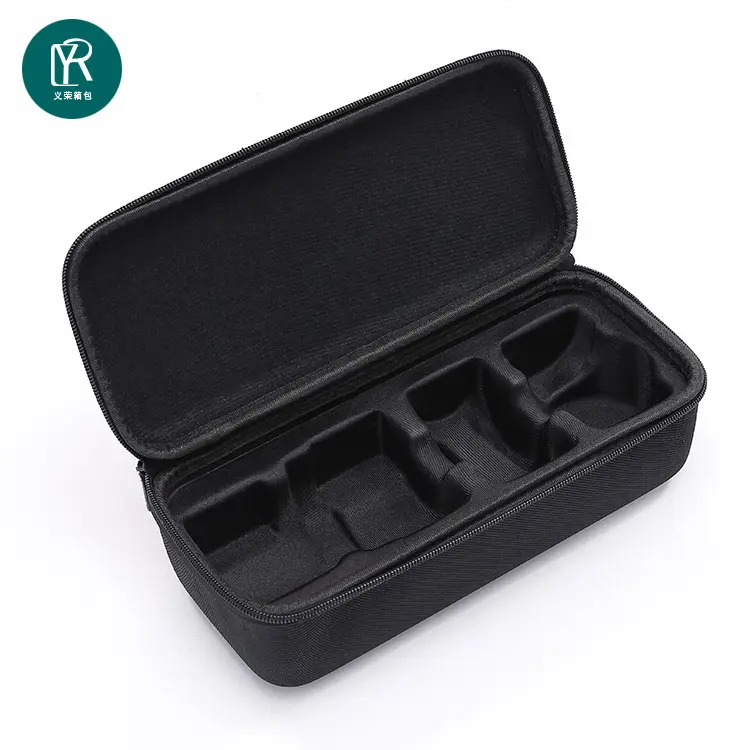
Risk avoidance: Control supply chain details to reduce “hidden cost losses”.
The import cost of EVA special toolkits includes not only explicit procurement, logistics, and tax costs, but also hidden costs caused by delivery delays, quality defects, and document discrepancies, such as demurrage fees, rework fees, and penalties. These costs are often overlooked but can significantly increase the overall import cost.
Clearly define supplier delivery dates and quality terms to avoid rework and delays.
When signing the purchase contract, clearly define the quality standards for the EVA toolkit (such as EVA material density, foam lining fit, waterproof and shockproof performance), delivery dates, and corresponding liabilities for breach of contract: if rework is caused by supplier quality issues, the supplier shall bear the round-trip freight and rework costs; if delays in delivery result in demurrage charges or sales losses for the importer, the supplier shall compensate proportionally. Simultaneously, request the supplier to provide pre-production samples and bulk samples to confirm quality in advance and avoid additional costs incurred after problems are discovered upon arrival at the port.
Check customs clearance documents in advance to ensure consistency between documents, goods, and certificates. Inconsistencies in customs clearance documents (such as discrepancies between the customs declaration and invoice value, incorrect information on the certificate of origin, and deviations in the packing list quantity) are the main causes of port delays and inspections, and demurrage charges can reach several thousand yuan per day, significantly increasing import costs. Before procurement, all customs clearance documents, including customs declarations, commercial invoices, packing lists, certificates of origin, and product certification documents (such as CE and RoHS for the EU market), must be verified with suppliers and freight forwarders to ensure accurate and consistent information and achieve “zero errors” in customs clearance.
Establishing long-term supply chain partnerships reduces overall cooperation costs. Establishing long-term partnerships with high-quality EVA toolkit suppliers and freight forwarders not only secures more favorable procurement and logistics prices but also enhances supply chain stability: suppliers prioritize delivery times and quality for long-term clients, and freight forwarders provide more efficient customs clearance and emergency handling services. For example, signing annual framework agreements with suppliers secures stable supply prices and priority scheduling; partnering with freight forwarders can reduce customs clearance time from 72 hours to 8 hours and improve anomaly response speed by 90%.
Post time: Mar-06-2026