




Logistics Solutions for Customized EVA Toolkits in Cross-Border Trade
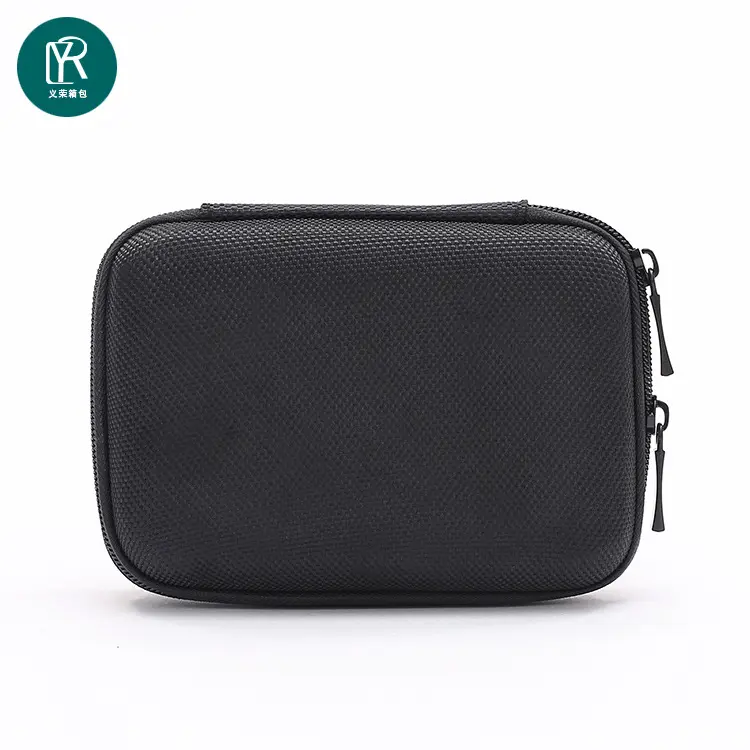
In cross-border trade, customized EVA toolkits, with their core advantages of shock resistance, waterproofing, and lightweight design, are widely used in various fields such as electronic devices, medical instruments, outdoor equipment, and industrial tools. However, the complexity of cross-border transportation—the logistics regulations of different countries, the protection requirements for long-distance transportation, and the stringent requirements for customs clearance compliance—poses greater challenges to the logistics solutions for customized EVA toolkits. This article will focus on the logistics pain points of customized EVA toolkits in cross-border scenarios, providing a feasible end-to-end solution from the dimensions of solution design, transportation selection, compliant customs clearance, and cost optimization.
I. Core Logistics Principles for Cross-Border Customized EVA Toolkits
Logistics solutions for customized EVA toolkits must revolve around the dual needs of “product characteristics + cross-border scenarios,” adhering to three core principles:
Safety and Adaptability Principle:Customized EVA toolkits are often irregularly shaped and precisely adapted to end products (such as precision instruments and specialized tools). Logistics solutions must prioritize preventing compression and damage during transportation, while also matching the product’s protective attributes (e.g., some medical EVA toolkits require moisture and contamination protection).
Compliance Priority Principle:Different countries/regions have specific requirements for customs codes, certification standards, and packaging labels for imported products. Logistics solutions must incorporate compliance procedures in advance to avoid customs clearance delays or penalties.
Cost-Effective Balance Principle:Combining order volume, timeliness requirements, and destination characteristics, transportation methods should be flexibly combined to control logistics costs while meeting overseas customers’ delivery expectations.
II. Cross-border Logistics Transportation Selection for Different Scenarios
The cross-border transportation of customized EVA toolkits requires selecting a targeted transportation solution based on order size, time requirements, and destination market characteristics. The following are adaptation suggestions for common scenarios:
1. Bulk Stocking Scenarios: Sea Freight (FCL/LCL) + Overseas Warehouse Distribution
Applicable Scenarios: Orders ≥ 500pcs (meeting the standard MOQ for customized EVA toolkits), destinations in mainstream markets such as Europe, America, and Southeast Asia, with medium time requirements (30-60 days), such as outdoor camping EVA toolkits, industrial tool storage bags, etc.;
Core Advantages: Lowest unit logistics cost, suitable for long-term stocking, local delivery can be achieved through overseas warehouses, improving customer experience;
Practical Points:
Outer Carton Reinforcement: Although EVA toolkits have inherent shockproof properties, sea freight involves high stacking pressure. A five-layer corrugated cardboard box with reinforced buckles is necessary. The box should be filled with pearl cotton or bubble wrap to prevent deformation and product compression during transportation;
Loading Optimization: Utilizing EVA… The lightweight and nestable nature of the materials allows for optimized packing density planning, increasing container loading efficiency (e.g., modular stacking designs can be used for irregularly shaped custom toolkits), and reducing unit transportation costs. Overseas warehouse selection: Prioritize partnerships with overseas warehouses covering key destination hubs (such as Los Angeles, USA; Düsseldorf, Germany; Singapore, etc.), supporting unpacking, sorting, and local express delivery to shorten last-mile delivery time.
2. Small to Medium Batch Scenarios: Air Freight + Air Courier
Applicable Scenarios: Orders of 100-500 pieces, with high time requirements (10-20 days), and customized orders destined for Europe and America, such as EVA toolkits for electronic equipment, protective bags for precision instruments, etc.
Core Advantages: Stable delivery time, relatively simplified customs clearance process, suitable for rapid replenishment or meeting urgent customer order needs;
Practical Points:
Weight Control: The lightweight design of EVA toolkits maximizes the advantages of air freight, avoiding soaring shipping costs due to overweight. It is recommended to keep the weight of a single box below 20kg for easy handling and customs inspection;
Logistics Provider Selection: Prioritize cooperation with logistics providers with dedicated air freight lines (such as Sinotrans and Huamao Logistics), which can provide door-to-door service, integrating air freight, customs clearance, and last-mile delivery to reduce communication costs.
3. Urgent Order Scenario: International Express (DHL/FedEx/UPS)
Applicable Scenarios: Orders ≤ 100pcs, urgent delivery requirements (3-7 days), high-value customized orders, such as EVA toolkits for medical equipment, protective cases for high-end electronic instruments, etc.
Core Advantages: Fastest delivery time, high customs clearance priority, full traceability, suitable for solving customers’ emergency needs;
Practical Points:
Declaration Standards: High-value products must be declared accurately, and product compliance certifications (such as CE, RoHS, REACH, etc., matching the certification qualifications of EVA toolkit manufacturers) must be provided to avoid customs detention due to false declarations;
Insurance Configuration: Purchase logistics insurance for high-value orders to cover risks such as loss, damage, and delays. It is recommended that the insurance amount be configured at 120% of the goods value.
4. Special Destination Scenarios: Regional Dedicated Line Logistics
Applicable Scenarios: Orders destined for emerging markets such as Latin America, the Middle East, and Africa, such as customized EVA toolkits for local engineering equipment and outdoor work protective kits;
Core Advantages: Addressing the logistical pain points of emerging markets (such as complex customs clearance and fragmented last-mile delivery), dedicated line logistics providers have mature local cooperative resources, resulting in higher customs clearance efficiency;
Practical Points:
Confirm Destination Regulations in Advance: For example, some Latin American countries require import licenses, and the Middle East requires Arabic labeling on packaging. It is necessary to confirm and implement these requirements with the client in advance;
Choose a logistics provider with local agents: Ensure that if problems arise in the destination country, a professional team can handle them promptly, avoiding prolonged delays.
III. Synergistic Optimization of Packaging and Logistics: From Product Design to Transportation Protection
The logistical advantages of customized EVA toolkits can be further amplified through “product design + packaging optimization,” achieving a dual improvement in logistics costs and safety:
Lightweight Design:High-density EVA materials are used to reduce product weight without compromising protective performance. Cross-border logistics are often charged by weight, and lightweighting directly reduces shipping costs (e.g., every 1kg reduction saves $5-10 in sea freight and $20-50 in air freight);
Modular and Foldable Design:For large customized EVA toolkits (such as drone storage cases and camping equipment bags), foldable or modular designs are adopted to reduce transport volume and increase loading capacity;
Synergy Between Outer Box and Inner Material:Waterproof and moisture-proof corrugated cardboard is used for the outer box. A customized foam lining is used inside, tailored to the irregular shape of the EVA toolkit, ensuring a tight fit between the product, lining, and outer box to prevent damage during transport;
Labeling Standards:** Bilingual labels (Chinese + English / …) are affixed to the outer box. (In the destination language), label the product with its name, quantity, weight, dimensions, fragile label, customs code, etc., and include the commercial invoice and packing list number required for customs clearance to facilitate customs inspection.
IV. Customs Clearance and Compliance: The “Key to Clearance” for Cross-Border Logistics
One of the core pain points of cross-border logistics is customs clearance delays. Customized EVA toolkits need to be prepared around “compliance certification + declaration specifications”:
Accurate Customs Code Classification:Accurately classify the EVA toolkit according to its purpose and material (e.g., tool storage bags are classified as 42021200, protective boxes as 42029200) to avoid customs detention or fines due to incorrect classification.
Required Compliance Documents:
Basic Documents: Commercial invoice (specifying value, quantity, unit price, and trade terms such as FOB/CIF), packing list (detailed product information for each box), certificate of origin (some countries offer tariff preferences, such as tariff reductions under the China-ASEAN Free Trade Area certificate of origin);
Product Certification:** Provide corresponding certifications according to destination requirements. For example, the EU requires CE, RoHS, and REACH certifications, while the US requires FDA certification (medical products) and FCC certification (electronic equipment accessories). These certifications must be obtained from the EVA… Tool kit manufacturers should process and provide the necessary documentation in advance; Transparent and Accurate Declaration: Avoid underreporting the value of goods (potentially incurring fines) or overreporting the value (increasing tariffs). Accurately declare the product name, purpose, and material, and attach product images and instructions to facilitate rapid customs verification.
V. Cost and Time-Saving Strategy: Refined Operation of Cross-Border Logistics
Bulk Planning and Inventory Preparation: Plan bulk orders 3-6 months in advance based on the customer’s sales cycle, using a “sea freight + overseas warehouse” model to reduce unit logistics costs. Simultaneously, achieve rapid local delivery through overseas warehouses, increasing customer repurchase rates; Long-Term Cooperation with Logistics Providers: Establish long-term partnerships with 2-3 core logistics providers (e.g., COSCO and Maersk for sea freight, Lufthansa and Cathay Pacific for air freight), obtaining better freight rate discounts and priority warehousing rights, especially ensuring timely delivery during peak logistics seasons (such as Christmas and Black Friday); Flexible Selection of Trade Terms: Select appropriate trade terms based on order details, such as FOB (customer responsible for transportation) for bulk orders, CIF (seller responsible for transportation and insurance) for small and medium-sized orders, and other terms for urgent orders. DDP (Seller Pays Door-to-Door) transfers some of the logistics risk; Logistics data tracking and optimization: Utilizing the logistics provider’s tracking system, record data such as transit time, customs clearance time, and damage rate for each batch of goods, analyze the advantages and disadvantages of different logistics solutions, and continuously optimize the logistics selection for subsequent orders (e.g., if a batch shipped to Europe has a high damage rate, it can be switched to air freight with reinforced outer packaging).
VI. After-Sales Logistics Guarantee: The “Last Mile” of Cross-Border Services The after-sales logistics of customized products directly impacts customer satisfaction, necessitating a comprehensive guarantee mechanism:
Full Logistics Insurance Coverage:Purchase cargo insurance for all cross-border orders, covering the entire transportation chain (port of origin – port of destination – last-mile delivery), clearly defining the claims process for damage, loss, and delays, and shortening the claims cycle;
Overseas Warehouse Return and Exchange Service:** For orders with bulk inventory, utilize overseas warehouses to provide return and exchange services. Customers can return problematic products to the overseas warehouse for unified inspection or replacement, avoiding the high costs and long transit times of cross-border shipping;
Emergency Response Mechanism:A contingency plan is agreed upon with the logistics provider in advance. If goods are delayed in customs clearance, the logistics provider must provide a solution within 48 hours; in case of damage, on-site photo evidence collection is supported, facilitating rapid claims initiation.
In conclusion, the core of logistics for cross-border customized EVA toolkits lies in “adaptation and collaboration.” Logistics solutions for cross-border customized EVA toolkits are not simply about choosing a single mode of transportation, but rather a comprehensive adaptation of “product characteristics, order scenarios, destination requirements, and compliance requirements.” From lightweight and modular optimization in the product design phase, to scenario-based selection in the transportation process, and then to end-to-end support for customs clearance and after-sales service, each link requires close collaboration to achieve the goals of “safe export, efficient delivery, and controllable costs.”
Post time: Jan-26-2026