




Portable EVA Tool Bag Storage Design: Finding a Balance Between Efficiency and Protection
Whether you’re a technician working outdoors, a frequent-travel equipment maintenance worker, or an outdoor enthusiast seeking sophisticated storage, the core requirements for a portable tool bag always revolve around “safe storage” and “easy access.” EVA (ethylene-vinyl acetate copolymer), with its shock-absorbing, waterproof, lightweight, and easily moldable properties, has become the preferred material for tool storage. The quality of its storage design directly determines the practical value of the tool bag—maximizing space utilization, providing precise protection for various tools, and adapting to usage habits in mobile scenarios.
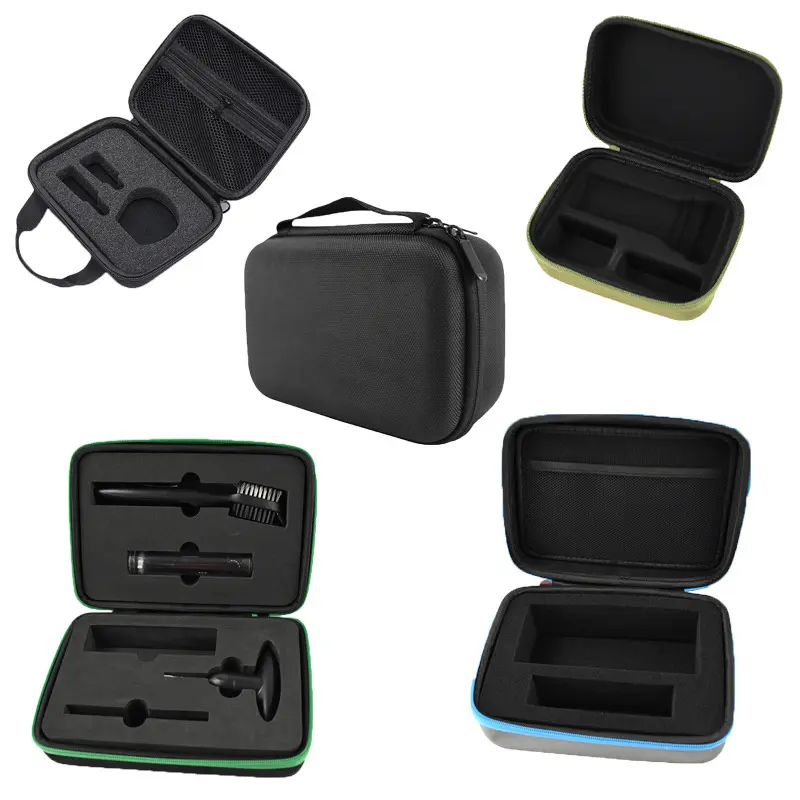
I. The Core Logic of Storage Design: Deep Integration of Material Properties and Usage Needs
The physical properties of EVA material provide a natural advantage for storage design. Good storage design essentially translates these advantages into a user-perceived experience: Shock Absorption → Precise Protection: The elasticity of EVA foam allows the tool bag lining to use customized grooves and layered cushioning structures to fix the shape of tools, preventing collisions and wear during transportation or movement. Especially for precision tools (such as miniature screwdrivers, sensors, and photography equipment accessories), foam linings that conform to the tool’s contours minimize movement, a core requirement for professional tool storage.
Lightweight and Portable → Space Optimization: EVA material has a low density, so even with multi-layered storage structures, the overall weight remains manageable. Storage design needs to strike a balance between “lightweight” and “storage capacity”—avoiding excessive stacking that leads to a bulky tool bag, while achieving “small volume, large capacity” through scientific partitioning.
Waterproof and Durable → Scene Adaptability: In outdoor work, humid environments, and other scenarios, tool bags need basic waterproof and dustproof capabilities. Storage design must leverage the airtightness of EVA material, employing sealed zippers, waterproof coatings, and moisture-proof layers within storage compartments to protect electronic tools and metal parts from moisture corrosion.
Customizability → Personalized Storage: EVA material can be molded into diverse structures, making “customized storage on demand” possible—whether it’s irregularly shaped tools, accessories of varying lengths, or precision equipment requiring separate isolation, a dedicated storage structure can achieve precise adaptation.
II. Key Storage Design Elements of Portable EVA Tool Bags
1. Zoning: Giving Every Tool its “Dedicated Place”
Disorganized storage not only wastes space but also leads to time-consuming and laborious retrieval of tools, and may even cause tools to become tangled or bumped. Scientific zoning design should follow the principle of “functional classification + usage frequency”:
Main Compartment: Centralized storage of core tools: As the core of storage, the main compartment should be flexibly designed with capacity based on tool size. For large tools (such as portable chargers and small instruments), adjustable Velcro dividers can be used, allowing users to adjust the space according to tool size and preventing tools from shifting during movement; for long, narrow tools (such as wrenches and probes), vertical storage slots should be designed, combined with elastic straps for fixation to prevent shaking.
Secondary Compartment: Categorized Storage of Auxiliary Accessories: The secondary compartment is used to store frequently used small accessories (such as screws, batteries, and data cables). It features multi-layered mesh pockets and zippered pockets to isolate small items from the main tools, preventing loss or scratches to the main tool surface. Some secondary compartments can be designed with transparent windows for quick identification of contents, improving retrieval efficiency.
Hidden Storage Area: Privacy or Emergency Item Storage: Hidden zippered pockets are designed on the sides or back of the tool bag to store instructions, warranty cards, emergency tissues, etc. This doesn’t take up core storage space and ensures the safety of items, suitable for business or professional use.
2. Lining Design: An Upgrade from “Containment” to “Protection”: The core of portable tool bag storage design is “protecting the tools.” The cushioning performance of EVA material is maximized through optimized internal lining structure:
Customized Foam Lining: For precision tools (such as drone accessories, microphones, and night vision equipment), CNC-cut foam linings are used, with custom-designed grooves tailored to the tool’s three-dimensional dimensions. Once the tool is inserted, it fits perfectly, with no room for movement, providing shock absorption far exceeding ordinary storage solutions. This design is commonly used in professional equipment storage, effectively preventing collision damage during transportation.
Layered Cushioning Structure: For scenarios involving multiple tools, a layered design of “upper elastic straps + lower foam padding” is used. The upper elastic straps secure lightweight tools (such as voltage testers and data cables), while the lower foam padding provides cushioning for heavier tools (such as small wrenches and power banks), while preventing direct friction between tools.
Soft Lining Details:Adding fleece or a soft EVA coating to the inner walls of storage compartments and pockets is especially suitable for storing tools with easily scratched surfaces (such as metal-cased instruments and lens accessories), reducing friction damage and enhancing the overall feel. 3. Portability Details: Seamless Integration of Storage and Carrying
“Portability” is not just about light weight, but also about flexibility in various usage scenarios. Storage design must be deeply adapted to carrying methods:
Lightweight Structure Optimization: While ensuring protective performance, a “thin EVA shell + hollow foam lining” design is used to reduce material redundancy, keeping the overall weight of the tool bag between 1-3kg (adjusted according to storage capacity), suitable for long-term hand-carrying or shoulder-carrying.
Multi-Carrying Adaptability: The tool bag features a non-slip handle on the top and a shoulder strap interface on the side, allowing for switching between hand-carrying and shoulder-carrying modes; some smaller tool bags can be designed as waist bags or hook-on bags, freeing up your hands during outdoor work and allowing tools to be easily accessed.
Foldable/Expandable Design: For scenarios where additional tools are needed, some tool bags feature expandable zippers, increasing storage capacity by 30% when opened; when not in use, they can be folded for storage without taking up storage space, suitable for frequent travelers.
4. Functional Additional Design: Enhancing Storage Practicality
Good storage design not only meets basic needs but also improves the user experience through detailed optimization:
Moisture-proof and Dust-proof Design:The main compartment uses a sealed zipper with waterproof strips at the joints. Combined with the inherent airtightness of EVA material, it effectively prevents moisture and dust from entering. Some tool bags include a desiccant storage bag to further protect electronic tools or metal accessories.
Identified Storage:** Classification labels are printed on the inside of storage compartments (e.g., “Tools,” “Accessories,” “Emergency”), or different colored linings are used to distinguish functional areas, facilitating quick and easy tool location, especially suitable for collaborative or emergency work scenarios.
Durable and Resilient Details: The bottom of the tool bag uses thickened EVA material or non-slip rubber pads to increase its load-bearing capacity and prevent wear and tear during storage. The corners are reinforced for enhanced durability, making it suitable for complex environments such as outdoor areas and construction sites.
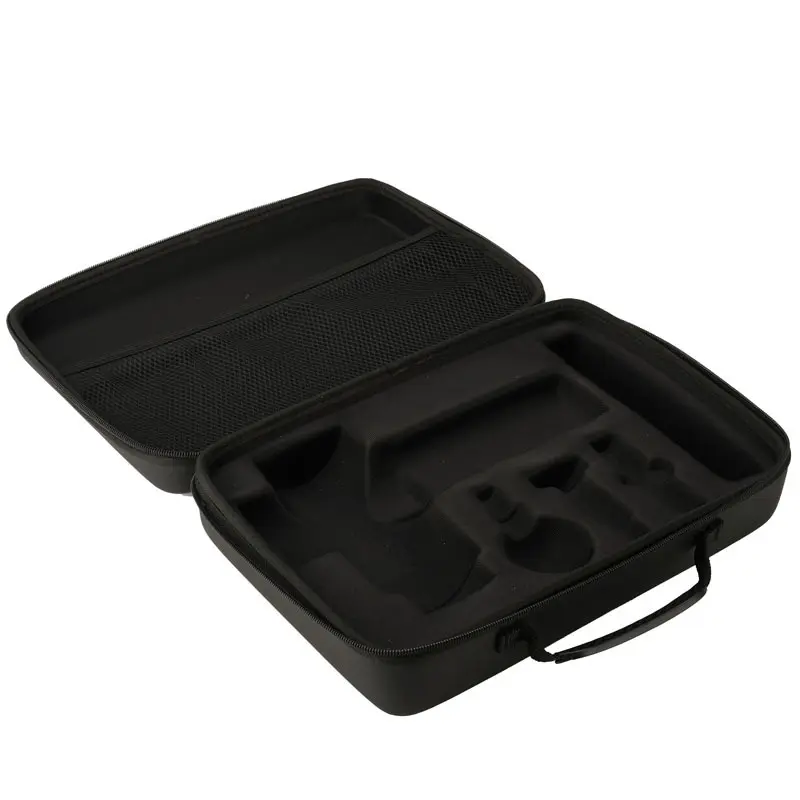
III. Storage Design Solutions for Different Scenarios
The storage design of portable EVA tool kits needs to be tailored to specific scenarios, achieving “customization on demand”:
1. Outdoor Work Scenarios (e.g., camping cooking, construction site repair)
Storage Focus: Tools should be shock-resistant, waterproof, and clearly divided into sections, suitable for complex outdoor environments.
Design Solution: The main compartment features a large-capacity open design with adjustable dividers to accommodate cooking tools, repair wrenches, etc.; side mesh pockets store water bottles, gloves, and other personal items; the bottom is thickened for non-slip operation, and the outer shell is made of wear-resistant EVA material, allowing direct placement on the ground or rough surfaces; internal elastic straps secure sharp tools (such as knives and screwdrivers) to prevent accidental slippage.
2. Electronic Device Storage Scenarios (e.g., power banks, data cables, gimbals)
Storage Focus: Scratch-resistant, shockproof, compact and portable, suitable for commuting or business travel.
Design Solution: Customized foam lining precisely fits the dimensions of electronic devices (such as gimbals, power banks, and earphones), with individual recesses for each device to prevent collisions; the main compartment features a zipper seal for waterproofing and dustproofing; the exterior boasts an ultra-thin, portable design, fitting easily into a backpack or carried by hand, with a weight under 500g; the secondary compartment includes multiple small mesh pockets for storing accessories such as data cables, charging adapters, and memory cards.
3. Professional Tool Scenarios (e.g., Medical Emergency, Precision Instruments)
Storage Focus: Clear categorization, quick access, and enhanced protection, adapting to the rigor of professional scenarios.
Design Solution: Employs multi-layered storage, with each layer corresponding to a specific type of tool (e.g., the “bandaging area,” “medicine area,” and “instrument area” of a first-aid kit); the inner lining uses high-elasticity foam, combined with a transparent viewing window for easy and quick tool identification; the tool bag features quick-access openings on the sides, allowing access to core tools in emergencies without opening the main compartment; the outer shell is made of thickened EVA, providing a certain degree of pressure resistance to protect internal precision instruments from crushing.
IV. Future Trends in Storage Design: Efficiency, Environmental Friendliness, and Multifunctionality Integration
As users’ needs for tool storage evolve, the design of portable EVA tool bags is developing in three directions:
Balancing Lightweight and High Strength:Through material upgrades (such as high-density EVA foam and composite fiber-reinforced EVA), weight is further reduced while improving the shell’s pressure resistance and shock absorption, adapting to more extreme scenarios.
Multifunctional Integration:*Storage designs not only meet tool storage needs but also incorporate additional functions, such as built-in charging ports, reflective markings (for outdoor safety), and detachable storage modules (for flexible adaptation to different tool combinations).
Environmental Friendliness and Sustainability:Using recyclable EVA materials, the storage lining is designed with a detachable structure for easy replacement or recycling, reducing environmental burden; at the same time, optimized production processes reduce material waste, achieving a unity of “efficient storage” and “environmentally friendly concepts.”
Post time: Dec-19-2025