




Protective Performance of EVA Equipment Bags for Outdoor Photography
Whether chasing the golden sunrise on the steep slopes of the Alps or capturing rare birds in the morning mist of the Amazon rainforest, your delicate camera body, lens, and storage devices are constantly threatened by impacts, moisture, dust, and extreme temperatures. For outdoor photographers, a reliable equipment protection solution is just as important as a high-quality lens. EVA (ethylene-vinyl acetate copolymer) equipment bags, with their superior comprehensive protective performance, have become the trusted choice of outdoor photography enthusiasts worldwide.
Shock Resistance: Giving Your Equipment a “Cushioning Spring”
Accidental drops and collisions during outdoor shooting are almost impossible to completely avoid—stumbles on rocky terrain and bumps during backpack transport can cause fatal damage to fragile components such as camera sensors and lens mounts. The core advantage of EVA equipment bags lies in their highly efficient absorption and dispersion of impact forces.
This performance stems from EVA’s unique closed-cell microstructure, filled with independent air bubbles of 0.1-1mm in diameter, acting like countless miniature springs. Upon impact, these bubbles convert energy into heat through elastic deformation. Experimental data shows that a mere 3cm thick EVA foam board can absorb up to 90% of the impact force. Under instantaneous pressure of 50kg/cm², the bubble compression rate can reach 60%, far superior to traditional open-cell foam materials. More advanced EVA equipment bags employ a gradient density design: a high-density surface layer (60-80kg/m³) disperses impact, a low-density middle layer (30-50kg/m³) absorbs core energy, and a moderately dense bottom layer provides rebound support, forming an “energy hourglass” cushioning system.
Professional testing confirms its reliability: a camera bag from a certain brand, using a high-density EVA liner, effectively protected the camera body and lens inside the bag from damage in a 1.5-meter drop test, with an impact force dispersion efficiency exceeding 90%. For photographers carrying precision equipment such as drones, customized EVA linings, CNC-cut to replicate the equipment’s contours, achieve millimeter-level wrapping, drastically reducing the damage rate during transport from 3.2% to 0.5%.
Waterproof and Moisture-proof: An “Invisible Barrier” from Nature
From splashes of spray at the beach to sudden downpours in the mountains, and the saturated humidity of rainforests, moisture is another major enemy of photographic equipment. The closed-cell structure of EVA material solves the waterproof problem at its source—its non-absorbent properties make it a natural moisture barrier, preventing moisture from penetrating the equipment even after prolonged use in humid environments.
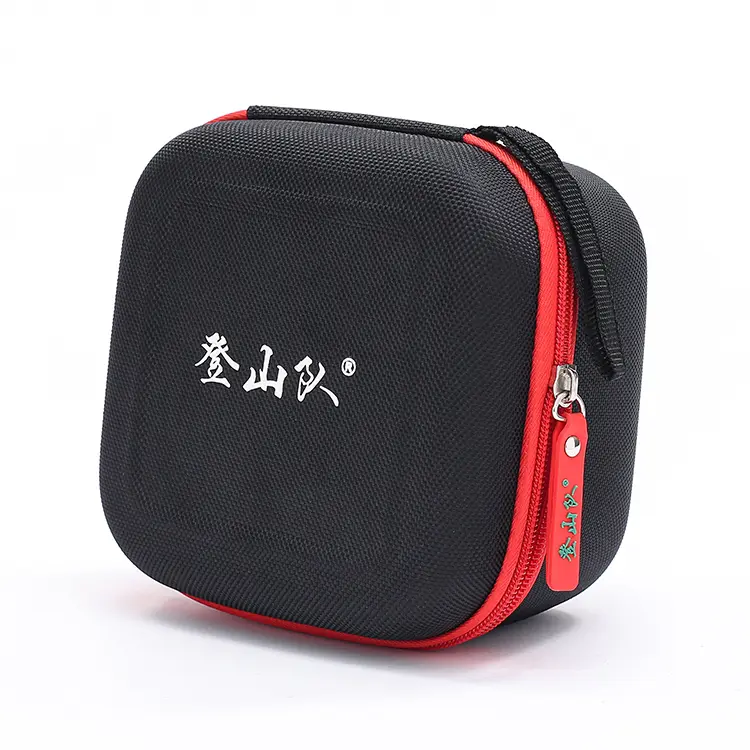
High-end EVA equipment bags further enhance the protection: the exterior uses durable Cordura 1000D nylon fabric, combined with waterproof zippers and sealing strips, achieving an IPX5 waterproof rating, capable of withstanding heavy rain. Some products also come with a detachable rain cover, providing double protection in extreme weather conditions. This all-around waterproof design allows photographers to focus on their equipment’s protection from moisture, whether shooting sunrises at the beach or documenting ecosystems in the rainforest.
EVA’s corrosion resistance further expands its application scenarios. It resists the corrosive effects of seawater, grease, acids, alkalis, and other chemicals. If it accidentally gets wet with seawater while shooting at the beach, or comes into contact with sand and salt in the desert, a simple wipe will maintain the bag’s stability, preventing the mold or corrosion problems that traditional canvas bags often experience.
Scratch and Abrasion Resistant: A “Tough Shell” for Complex Environments
Outdoor photography trips often involve rugged terrain: scratches while traversing bushes and friction in rock crevices can cause external damage to equipment bags, and even damage to the internal protective structure. EVA’s high toughness and tear resistance allow it to easily withstand these challenges.
By adjusting the vinyl acetate (VA) content in the EVA formula, a balance between hardness and toughness can be achieved. EVA material used in camera bags typically boasts a high VA content of 28%-40%, combining flexibility and resilience with a tear strength of up to 60kN/m, effectively resisting punctures and tears from sharp objects. Newly developed high-elastic EVA exhibits superior scratch resistance—it won’t leave a mark even with vigorous scratching from a fingernail, while conventional materials show noticeable scratches with slight friction.
Many EVA equipment bags also feature embossed surfaces, enhancing not only slip resistance but also abrasion resistance, achieving an abrasion resistance index up to three times that of ordinary canvas bags. This robust characteristic ensures the equipment bag remains in excellent protective condition during complex scenarios such as traversing deserts and climbing rock walls.
Extreme Environment Adaptability: Stable Guarantee Across Temperature Differences
From the extreme cold of the Arctic Circle to the scorching heat of tropical deserts, outdoor photography often involves drastic temperature changes, placing extremely high demands on the material stability of equipment bags. EVA material’s stable performance across a wide temperature range makes it an ideal choice for shooting in diverse environments.
Test data shows that high-quality EVA material maintains stable performance within a temperature range of -40℃ to 80℃, showing no cracks in a -35℃ low-temperature bending test, and maintaining a tensile strength of over 6MPa even at 60℃. EVA modified with added UV-blocking agents also resists aging and yellowing caused by long-term outdoor exposure, maintaining its structural integrity and protective performance even in high-altitude environments with strong UV radiation.
This temperature adaptability means that whether shooting snowscapes in winter mountains or capturing the starry sky on summer grasslands, EVA equipment bags provide a constant protective environment for equipment, preventing damage or protective failure due to thermal expansion and contraction.
Humanized Protection: Thoughtful Protection in the Details
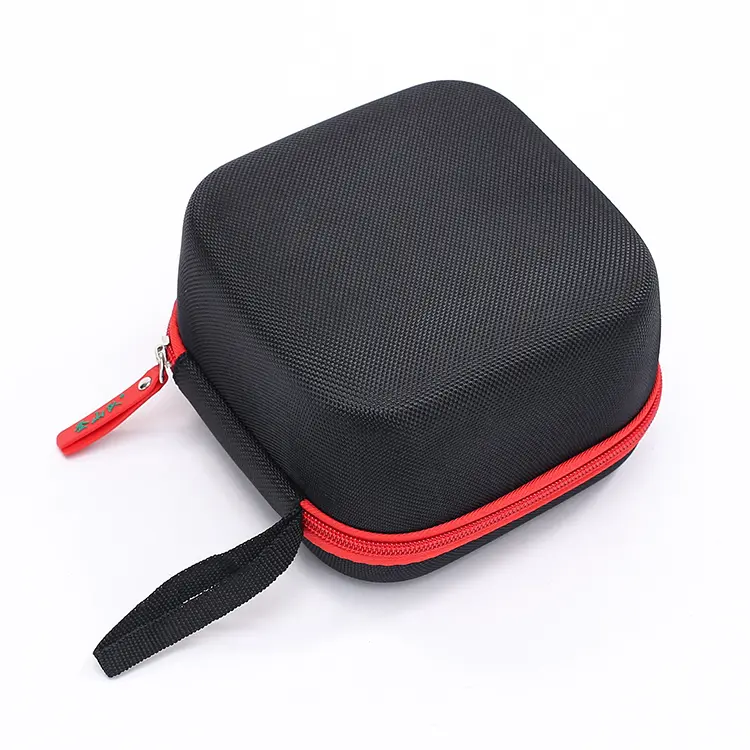
The protective performance of EVA equipment bags is also reflected in their precise adaptation to the needs of different photographic scenarios. The removable internal EVA dividers allow photographers to freely adjust the space according to equipment dimensions, and Velcro fasteners prevent equipment from shifting and bumping inside the bag. Specially designed mesh pockets and elastic straps can neatly organize and secure small accessories such as batteries and memory cards, preventing loss and wear. Some high-end models feature a C-shaped shock-absorbing inner liner, which uses a curved mechanical design to distribute the impact of a drop to both ends, providing enhanced protection for vulnerable areas such as the lens mount and the bottom of the camera body. The lightweight EVA material (density only 0.91-0.93g/cm³) provides professional protection while effectively reducing the backpack’s weight, allowing photographers to focus more easily on their work during long hikes.
Conclusion: Let Protection Be the Foundation for Creativity
The allure of outdoor photography lies in capturing fleeting moments of light and shadow in nature and humanity; the value of EVA equipment bags lies in providing reliable protection that frees photographers from worries. From shock absorption to waterproofing and moisture resistance, from abrasion resistance to extreme environment adaptability, the comprehensive performance of EVA material makes it a sturdy bridge connecting photographic equipment to outdoor scenes.
Post time: Dec-10-2025