




Shockproof Design of EVA Packaging Kits for Precision Instruments
In global industrial manufacturing, scientific research, and medical equipment fields, the value of precision instruments lies not only in their complex processes and high costs, but also in their micron-level measurement accuracy and stable operational performance. However, whether it’s the bumps and vibrations during cross-border transportation, accidental collisions during warehousing, or even minor drops during on-site handling, all can cause irreversible damage to the core components of precision instruments—lens shift, loose circuits, sensor malfunctions, etc., leading not only to equipment failure but also potentially causing subsequent production delays and economic losses.
EVA (ethylene-vinyl acetate copolymer) material, with its unique cushioning properties and customized adaptability, has become the core choice for packaging kits for precision instruments. Shockproof design for precision instruments is a precise match between “material properties” and “structural logic,” aiming to minimize the impact of external shocks and vibrations through scientific design, comprehensively protecting the precision and safety of the instruments.
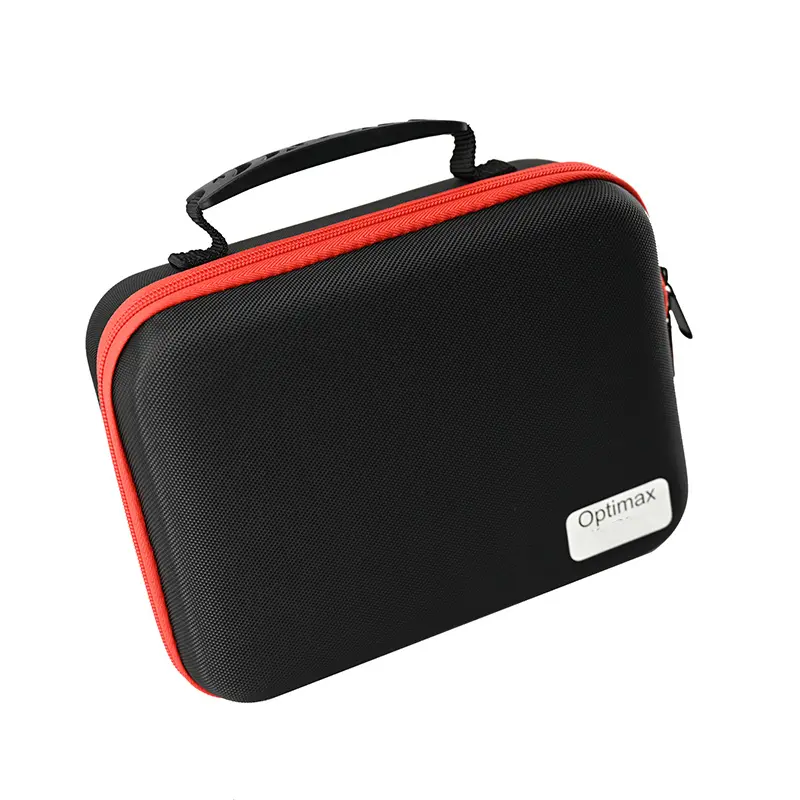
I. EVA Material: A Natural Advantage for Shockproofing Precision Instruments
The core foundation of shockproof design is the cushioning performance of materials, and the inherent characteristics of EVA material perfectly match the stringent requirements of precision instruments for shockproof packaging:
Superior Elastic Resilience: When subjected to external impact, EVA material can compress rapidly and rebound instantly, absorbing impact energy through its own deformation rather than directly transferring the force to the internal instruments. Compared to traditional foam materials, EVA’s resilience rate can reach over 85%, maintaining a stable cushioning effect even after multiple impacts, preventing the degradation of shockproof performance due to material fatigue.
Adjustable Density and Hardness: Depending on the weight, volume, and fragility of the precision instrument, EVA materials of different densities (25-80 kg/m³) and hardness (Shore 25-80) can be customized. For example, high-density EVA can be used to provide strong support for heavy industrial measuring instruments; for fragile components such as lenses and sensors, low-density, high-elasticity EVA can be used to achieve “flexible wrapping.”
Excellent vibration resistance and isolation performance: Precision instruments are particularly sensitive to “micro-vibrations”—even continuous low-frequency vibrations during transportation can cause internal components to shift. EVA material’s molecular structure possesses excellent damping properties, effectively filtering vibration waves of different frequencies and reducing the transmission of vibration energy to the instrument’s core. It is especially suitable for handling complex vibration environments in various scenarios such as aviation, maritime transport, and land transport.
Chemical stability and protective compatibility: The surfaces of precision instruments often have precision coatings or metal components. EVA material is non-corrosive and does not release harmful substances, preventing chemical reactions between packaging materials and instrument surfaces. Furthermore, EVA can be modified with antistatic and waterproof properties, providing both shock resistance and antistatic and moisture protection for the instrument, meeting the specific needs of precision electronic equipment.
II. Core Design Logic of EVA Shockproof Packaging for Precision Instruments
Good shockproof design is not simply “piling up materials,” but a customized solution based on the instrument’s characteristics—from the inner lining fit to the structural layering, every detail serves to “offset impact and reduce shaking”:
1. Customized Inner Lining: “Zero-Gap” Fit, Preventing Displacement
Precision instruments often have irregular shapes. Gaps in general packaging can cause the instrument to collide with the inner wall of the packaging during transportation, which is one of the main causes of damage. The core of EVA shockproof design lies in “precise fit”:
CNC Die-cut Integrated Molding: Precise dimensional data of the instrument is obtained through 3D scanning, and a custom inner lining is created using CNC die-cutting technology—each component, interface, and protrusion of the instrument has corresponding grooves and slots, achieving “zero-gap” wrapping. This design firmly fixes the instrument inside the packaging, preventing lateral or longitudinal displacement even during severe bumps.
Zoned Buffer Design: Differentiated protection for different parts of the instrument: Core functional areas (such as sensors and lenses) adopt a “hollowed-out + filled” structure, with soft EVA foam filling the gaps to form a buffer cavity; corners are protected with thickened EVA corner protectors to enhance impact resistance; and the bottom of the instrument can be designed with multiple layers of EVA feet to distribute vertical pressure.
2. Multi-layered Protective Structure: Building an “Impact Buffer Chain”
A single EVA layer is insufficient to withstand complex impact scenarios. Therefore, shockproof design requires a “multi-layered synergistic” structure to gradually absorb external energy:
Outer Layer: Made of rigid EVA or composite PU material, forming a robust outer shell to resist external compression and collisions, providing structural support for the interior;
Middle Layer: A highly elastic EVA buffer layer, typically 10-30mm thick, absorbs most of the impact energy through its own deformation, acting as the “first line of shock absorption”;
Inner Layer: A felted EVA or low-density EVA layer that adheres to the instrument’s surface, reducing friction and scratches between the instrument and the inner lining, and further buffering minor vibrations through “flexible contact.”
Sealing Synergy: Employing a sealed zipper or snap design not only isolates dust and moisture but also creates a relatively enclosed buffer space inside the packaging during an impact, preventing additional vibration transmission caused by airflow.
3. Enhanced Protection for Key Areas: Focusing on High-Risk Parts
Some components of precision instruments (such as optical lenses, precision circuits, and connectors) have extremely low impact resistance and require targeted reinforcement design:
Lens Protection: A double-layer structure of “EVA soft sleeve + foam filling” is used. The soft sleeve conforms to the lens contour, and the outside is filled with highly elastic EVA blocks to prevent the lens from being directly subjected to force;
Circuit Protection: “Elastic support pillars” made of high-density EVA are designed on the bottom and sides of the instrument. These pillars not only fix the instrument’s position but also absorb impacts in the vertical and horizontal directions, protecting circuit solder joints from detachment;
Connector Protection: “Raised EVA plugs” are designed in the inner lining corresponding to the connector locations to prevent the connectors from being compressed and to prevent dust from entering the connector gaps during transportation.
4. Lightweight Balance: Balancing Protection and Portability
Precision instruments often need to be carried on-site or frequently transported. Shockproof packaging should not increase weight excessively for the sake of enhanced protection. EVA material itself is lightweight (its density is much lower than traditional metal or rigid plastic packaging). In design, techniques such as “hole-punch design for weight reduction” and “localized thickening” can be used to reduce the overall packaging weight while maintaining protective strength in key areas, thus improving portability—this is especially important for scenarios such as outdoor measuring instruments and portable medical devices.
III. Shockproof Performance Verification: Reliability Guarantee in Accordance with International Standards
The shockproof packaging of precision instruments must undergo rigorous simulation testing to ensure its ability to withstand transportation and usage environments worldwide. Common international testing standards include:
Vibration Testing: Simulating different vibration frequencies in sea transport (5-200Hz), air transport (20-2000Hz), and land transport (10-500Hz), continuous testing for 8-24 hours to check for displacement of internal components and performance stability;
Drop Testing: Based on the instrument’s weight and packaging dimensions, free drop testing is conducted from a height of 1.2-1.8 meters (internationally accepted testing height), covering flat surfaces, corners, and edges, to verify the packaging’s impact absorption capacity;
Pressure Testing: Simulating a warehouse stacking environment, applying 200-500kg of static pressure for 24 hours to check for deformation of the EVA liner and collapse of the packaging structure.
Meanwhile, EVA materials must comply with international environmental and safety certifications such as CE, RoHS, and REACH to ensure that they do not release harmful substances during use, thus protecting precision instruments and aligning with the global trend of green packaging.
IV. Typical Application Scenarios: Customized Practices of Shockproof Design
Different types of precision instruments have different shockproof requirements, necessitating targeted adjustments to the design of EVA packaging kits:
Laboratory Analytical Instruments (e.g., core components of chromatographs and mass spectrometers):These require primary protection against the impact of micro-vibrations on detection accuracy. A design using a “low-density EVA liner + shock-absorbing feet” is employed. The liner conforms to the component’s contours, and the feet are made of high-elasticity EVA to filter low-frequency vibrations from the environment.
Medical Precision Equipment (e.g., ultrasound diagnostic probes, small testing instruments): In addition to shockproofing, sterility and scratch resistance are crucial. Medical-grade environmentally friendly EVA is used, with a velvety finish on the liner surface to prevent scratches on the equipment casing. A sealed design also prevents dust contamination.
Industrial Measuring Instruments (e.g., laser rangefinders, precision calipers):These need to withstand collisions and pressure during on-site transport. A structure of “rigid EVA shell + high-density EVA buffer layer” is adopted, with thickened EVA corner protectors. Core measuring areas utilize a “groove + filler” double protection.
Electronic Precision Components (e.g., chip testing equipment, sensor modules):** These require anti-static properties. + Double shockproof protection: EVA material is infused with antistatic agents, and the inner lining is designed with an antistatic coating. At the same time, the die-cutting process ensures precise fixation of components, avoiding damage to components caused by static electricity and vibration.
Post time: Dec-29-2025