




The Core Principles of EVA Material’s Shock Absorption and Cushioning Performance
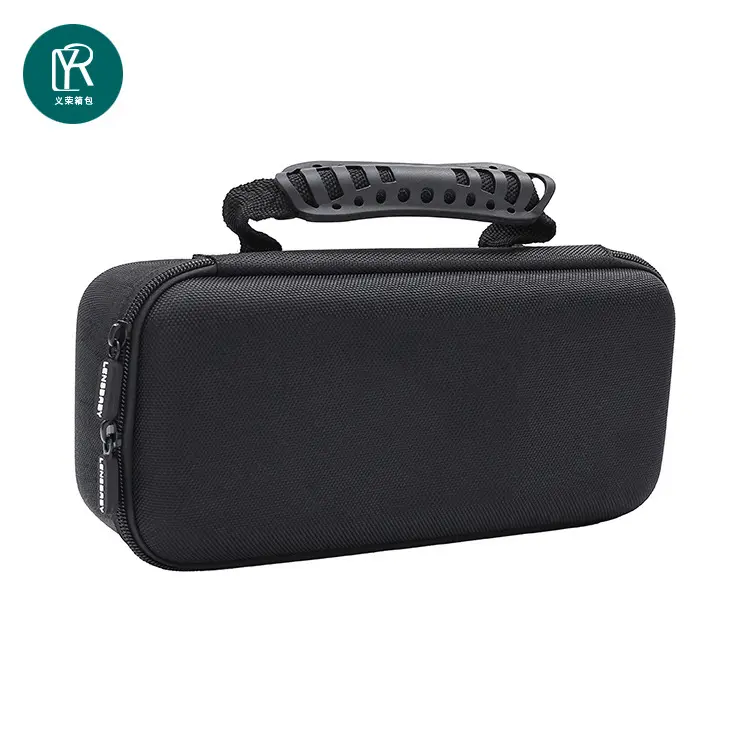
In numerous scenarios, such as the transportation of precision equipment, protection of outdoor gear, and storage of industrial tools, protective cases and toolboxes made of EVA material consistently provide a “safety barrier” for their contents thanks to their excellent shock absorption and cushioning capabilities. Why does this seemingly ordinary material exhibit such superior protective effects when faced with impact and compression? The core logic behind this lies in the perfect combination of the material’s structural characteristics and physical mechanisms. This article will delve into the underlying principles of EVA material’s shock absorption and cushioning performance, helping you understand the key reasons why this material has become a “favorite” in the protection field.
I. The Essence of EVA Material: Structure Determines the Foundation of Protection
To understand EVA’s shock absorption and cushioning capabilities, we must first start with its “genes”—the material structure. EVA, short for ethylene-vinyl acetate copolymer, is a high-molecular-weight material synthesized through the copolymerization reaction of ethylene (E) and vinyl acetate (VA). The structural characteristics of this copolymer lay the foundation for its shock absorption performance:
1. Flexibility of Chemical Structure
The ethylene component gives EVA material good toughness and tensile strength, while the vinyl acetate (VA) component provides softness and viscosity. By adjusting the VA content, the hardness, elasticity, and cushioning performance of EVA can be changed: higher VA content results in a softer, more viscous material with more prominent cushioning effects; lower VA content makes the material closer to the characteristics of polyethylene, with higher hardness, suitable for scenarios requiring both support and cushioning. This adjustable chemical structure allows EVA to adapt to different shock absorption needs.
2. The Core Role of the Foam Cell Structure
The shock absorption performance of EVA material is critically dependent on its unique closed-cell foam structure. During the manufacturing process, countless tiny, independent air cells are formed within the material through a foaming process. These cells act like sealed “miniature airbags,” forming the core carrier of EVA shock absorption and cushioning:
The independent air cells are not interconnected and are filled with gas. When subjected to external force, the cells are compressed, but no gas leakage occurs, thus ensuring the stability of the cushioning effect;
The size and uniformity of the air cell distribution directly affect the shock absorption performance: uniformly distributed tiny air cells can absorb impact force more finely, avoiding localized stress concentration; while differences in air cell density affect the material’s load-bearing capacity and energy absorption efficiency.
II. The Three Core Principles of EVA Shock Absorption and Cushioning: How is Energy “Dissipated”?
When external forces (such as impact or compression) act on EVA material, it doesn’t simply “block” the force, but rather “dissipates” the energy through a series of physical processes, thereby protecting the internal items from damage. This process mainly relies on three core principles:
1. Energy Absorption: Converting Impact Force into “Harmless Energy”
The core advantage of EVA material lies in its efficient energy absorption capacity. Essentially, it converts external impact energy into the material’s own deformation energy and thermal energy, preventing energy transfer to the protected object.
When subjected to impact, the closed-cell structure inside the EVA is rapidly compressed, and the cell walls undergo elastic deformation. During this process, the impact energy is converted into frictional energy and thermal energy between the material molecules, and gradually dissipated through heat conduction;
This energy conversion follows the “hysteresis loss” principle: the energy absorbed by EVA during compression deformation is far greater than the energy released when it returns to its original state. Most of the impact energy is “consumed” during the deformation process, thus achieving the shock absorption effect. For example, when a heavy object falls onto an EVA protective pad, the compression of the air cells “cushions” the falling speed, preventing the impact force generated by the direct collision between the heavy object and the contact surface.
2. Pressure Dispersion: Avoiding Localized Overloading
In addition to absorbing energy, EVA can also reduce localized stress intensity through pressure dispersion. Due to the good flexibility and ductility of EVA material, when subjected to concentrated impact force, the material will undergo a certain degree of deformation, dispersing the force originally concentrated at one point over a larger area. This “dispersion effect” significantly reduces the pressure per unit area: for example, if the corners of precision electronic components are directly impacted, the pressure is extremely high, easily causing damage; however, an EVA protective cover disperses the concentrated impact force at the corners across the entire contact surface, keeping the pressure within the component’s tolerance range and thus preventing damage.
3. Elastic Recovery: Maintaining Continuous Protective Capability
The elastic recovery performance of EVA material ensures that it can maintain a stable shock absorption effect even after multiple impacts. When the external force disappears, the compressed foam cells will return to their original shape due to their elasticity, without permanent deformation (unless subjected to a strong impact exceeding the material’s load-bearing limit).
This characteristic gives EVA material the advantage of reusability: whether it’s toolboxes that are repeatedly handled, frequently used sports protective gear, or equipment packaging that undergoes multiple transports, EVA can continuously provide shock absorption and cushioning without losing its protective ability after a single impact.
III. Key Factors Affecting EVA Shock Absorption and Cushioning Performance
The shock absorption effect of EVA protective products varies in different scenarios, mainly determined by the following four factors:
1. Density: Determining Load-Bearing Capacity and Energy Absorption Efficiency
The density of EVA material is usually between 0.91 and 0.93 g/cm³. The higher the density, the denser the foam cell structure, the stronger the load-bearing capacity, and the higher the energy absorption efficiency.
High-density EVA (such as density ≥ 0.92 g/cm³) is suitable for scenarios requiring resistance to larger impact forces, such as heavy tool packaging and industrial equipment transportation protection;
Low-density EVA is more suitable for light protection needs, such as electronic product storage and small parts packaging, combining cushioning and lightness.
2. Hardness: Balancing Cushioning Effect and Support Force
The hardness of EVA is measured by Shore A hardness, with a common range of 25-80A. Hardness and cushioning performance have an “inverse balance” relationship:
Low-hardness EVA (25-40A) is highly flexible and provides good cushioning, but has weaker support. It is suitable for protecting fragile and easily scratched items, such as lenses and displays;
High-hardness EVA (60-80A) provides strong support and maintains shape stability while also offering some cushioning. It is suitable for applications requiring both protection and shaping, such as tool storage boxes and equipment casing liners.
3. Foaming Process: Affecting the uniformity of the cell structure
EVA foaming processes mainly include molding foaming and extrusion foaming. Different processes directly affect the size, distribution, and closed-cell rate of the foam cells:
Molding foaming allows for precise control of cell size (usually between 0.1 and 1mm), resulting in uniform cell distribution and a high closed-cell rate (up to over 90%). This provides more stable shock absorption performance and is suitable for high-end protective products;
Extrusion foaming results in relatively larger cells and slightly less uniform distribution, but offers higher production efficiency and lower costs, making it suitable for mass-produced general-purpose protective products.
4. Crosslinking Degree: Enhancing structural stability and durability
The crosslinking degree of EVA material is achieved through the vulcanization process. The higher the crosslinking degree, the stronger the structural stability of the material, and the better its tear resistance, wear resistance, and recovery ability after repeated deformation.
High-crosslinking EVA can maintain stable shock absorption performance under long-term use or harsh environments (such as high and low temperatures), and is less prone to aging and cracking. It is suitable for outdoor equipment, long-term transportation packaging, and other applications.
IV. The Universal Application Value of EVA’s Shock Absorption and Cushioning Performance
Thanks to its unique shock absorption and cushioning principles, EVA material demonstrates irreplaceable value in numerous fields, becoming a preferred protective material across various industries:
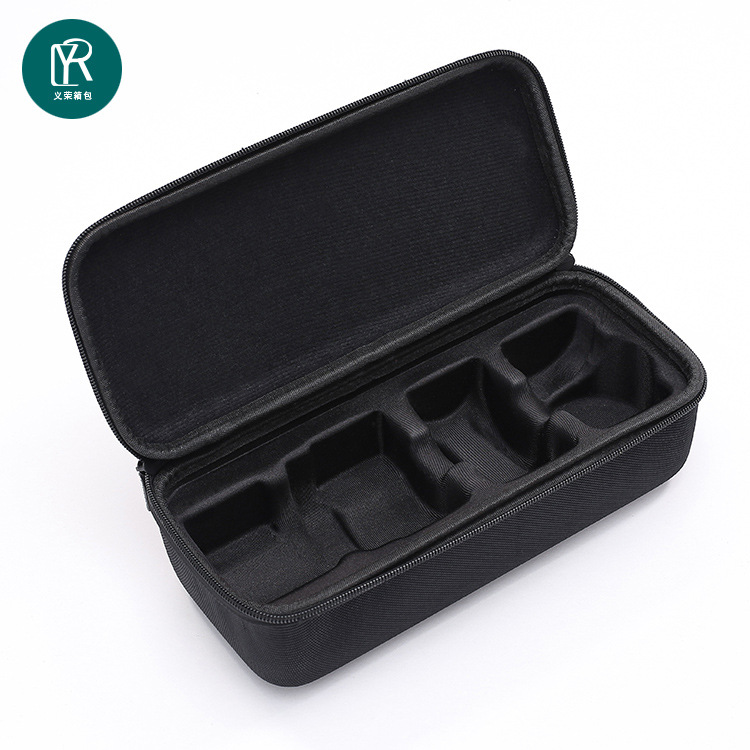
Precision Electronics: Provides impact protection for devices such as cameras, drones, and sensors during transportation and use, preventing damage to precision components from vibration;
Industrial Tools: Tool bags and tool box linings utilize EVA material to mitigate collisions and friction during handling, extending the lifespan of tools;
Outdoor and Sports: Camping cookware storage bags and sports protective gear (such as knee pads and wrist guards) utilize EVA’s cushioning properties to withstand impacts from complex outdoor environments and vibrations from human movement;
Medical Equipment: The packaging of precision medical equipment (such as portable testing instruments and surgical instruments) requires both shock absorption and sterile protection. The closed-cell structure of EVA material prevents moisture and dust from entering, while also absorbing impact forces during transportation.
Summary: The Core Competitiveness of EVA’s Shock Absorption and Cushioning Performance
The shock absorption and cushioning capabilities of EVA material are not the result of a single characteristic, but rather the synergistic effect of its chemical structure, cell morphology, and physical properties: the closed-cell structure provides a carrier for energy absorption, the copolymer characteristics endow the material with elasticity and toughness, and the precisely controllable production process allows its performance to be adjusted as needed.
Whether facing instantaneous strong impacts or long-term slight vibrations, EVA material can provide stable and reliable protection for the protected object through a complete process of “energy absorption, pressure dispersion, and elastic recovery.”
Post time: Dec-24-2025