




The Dyeing Process of Colored EVA Tool Bags
EVA tool bags, with their lightweight, impact-resistant, and waterproof properties, have become the preferred choice for storage tools in industrial, outdoor, and electronics fields. A rich variety of colors not only enhances the product’s visual recognition and brand compatibility but also meets the aesthetic and functional needs of different scenarios. The dyeing process for colored EVA tool bags is a systematic engineering project integrating materials science, color science, and processing technology. Its core lies in achieving color uniformity, stability, and durability while ensuring the original physical properties of EVA. Precise control at every stage, from colorant selection to process parameter adjustment, is crucial for creating high-quality colored EVA tool bags.
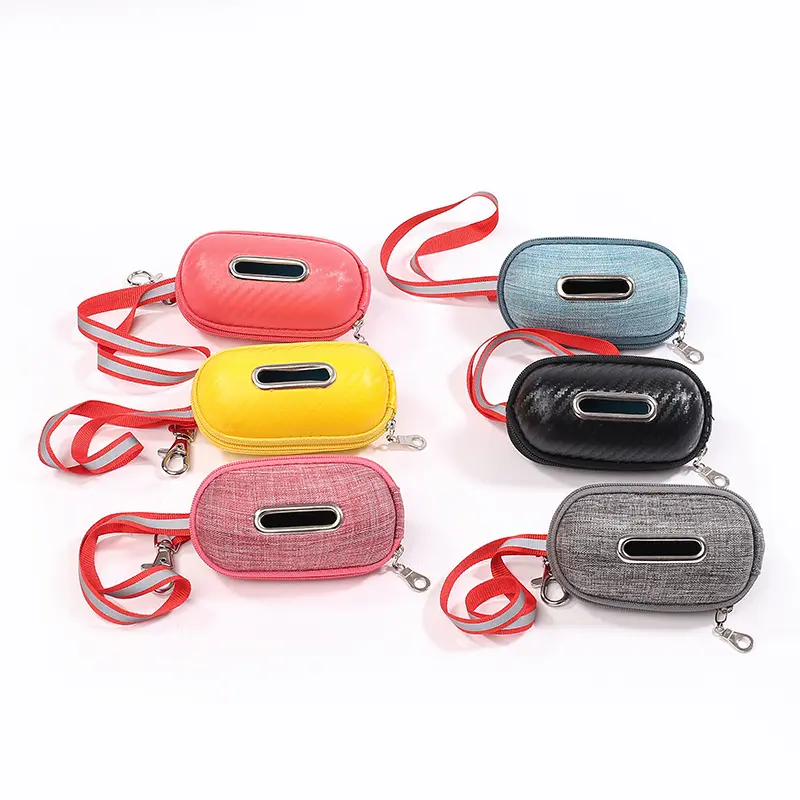
I. Basic Control Before Dyeing: Scientific Matching of EVA Substrate and Colorant
EVA (ethylene-vinyl acetate copolymer) itself is translucent or milky white. The purity, batch stability, and vinyl acetate (VA) content of the substrate directly determine the basic dyeing effect, while the selection of the colorant is the core of color presentation. The scientific matching of these two is a prerequisite for the dyeing process.
When selecting the substrate, high-purity EVA granules with minimal batch-to-batch color variation should be prioritized. Consistent batches should be screened using a spectrophotometer to measure the ΔE value (≤1.5) to avoid dyeing deviations caused by substrate yellowing or grayscale differences. Simultaneously, the selection of foaming agents, crosslinking agents, and other auxiliaries must consider compatibility with the pigments. Azodicarbonamide foaming agents and odorless crosslinking agents with low secondary color properties should be prioritized to prevent inorganic foaming agent residues from causing a grayish tint in the product and crosslinking agent oxidation products from causing yellowing. EVA substrates with different VA contents have different polarities. High VA content substrates have better compatibility with polar dyes, while non-polar pigments require the addition of compatibilizers to improve dispersibility. This characteristic must be carefully considered when selecting colorants.
The selection of colorants should focus on three core indicators: heat resistance, dispersibility, and weather resistance. Currently, mainstream colorants are mainly divided into three categories: masterbatches, color powders, and liquid color pastes. Among them, masterbatches are the first choice for dyeing EVA tool kits due to their good dispersibility and color stability. Organic pigment masterbatches (such as phthalocyanine blue and permanent red) offer vibrant colors and high transparency, making them suitable for creating bright indoor toolkit tones, but their weather resistance is relatively weak. Inorganic pigment masterbatches (such as titanium dioxide and iron oxide yellow) have heat resistance exceeding 200℃ and excellent lightfastness, making them more suitable for outdoor EVA toolkits, although their color saturation is relatively lower. For products requiring ultimate color stability, environmentally friendly special pigments with heat resistance up to 300℃ and lightfastness level 6 can be selected. Their non-migration and excellent dispersibility effectively prevent color spots and streaks after dyeing.
II. Core Dyeing Processes: Technical Points and Practical Specifications of Two Mainstream Methods
Dyeing of colored EVA toolkits mainly involves two methods: masterbatch blending and dyeing, and disperse dye carrier dyeing. The former is suitable for mass standardized production, while the latter is more suitable for customized products that require high color vibrancy and color fastness. Each process has its own emphasis, and both require strict control of parameter details.
(I) Masterbatch Blending and Dyeing: The Mainstream Choice for Mass Production
Masterbatch blending and dyeing involves thoroughly mixing masterbatch with EVA substrate particles, followed by foaming and molding/extrusion to complete the dyeing process. The entire process requires careful control of three key stages: mixing, foaming, and molding, to ensure uniform color penetration.
Mixing Stage: Control the temperature at 60-80℃ (below the EVA softening point) to prevent premature melting and clumping of the substrate; adjust the rotation speed to 300-500 rpm and mix for 5-10 minutes until no obvious color spots remain in the particles, ensuring full encapsulation and fusion of the masterbatch and substrate. To improve dispersibility, 0.5%-1% of dispersants such as polyethylene wax or zinc stearate can be added to ensure uniform embedding of the color powder into the EVA molecular chains.
Foaming and Molding: The foaming temperature needs to be adjusted according to the heat resistance of the pigment. The heat resistance threshold of organic pigment masterbatches is mostly 160-180℃, and the foaming temperature should be controlled at 150-170℃ to prevent pigment decomposition and fading. Compression molding requires ensuring the mold temperature error is within ±2℃, while extrusion molding requires stabilizing the temperature of each section of the screw to reduce shear heat damage to the pigment and avoid uneven color due to localized overheating.
Cooling and Setting: Rapid cooling can improve the surface gloss of EVA toolkits, making the colors more vibrant; slow cooling produces a matte effect, with the color appearing slightly darker. Products in the same batch must maintain consistent cooling conditions to ensure color uniformity.
(II) Disperse Dye Carrier Dyeing: A Customized Solution for High Color Fastness
To address the potential problems of decreased color vibrancy and affected mechanical properties that may result from masterbatch dyeing, disperse dye carrier dyeing has become the preferred process for high-end EVA toolkits. This process dyes the tool bag blank after EVA foaming with disperse dyes and a special carrier. Key parameters are controlled as follows: a carrier concentration of 10 g/L, a dye mass fraction of 2% (omf), and dyeing at a constant temperature of 60℃ to achieve high color saturation (K/S value).
This process effectively improves the colorfastness of EVA tool bags. Tests show that products dyed with disperse black DRD dye exhibit excellent colorfastness to rubbing and washing, with wet rubbing colorfastness reaching grade 3-4, fully meeting the needs of frequent contact and wiping in daily use. It is important to note that thorough washing and drying are necessary after dyeing to remove residual carrier and dye, avoiding any impact on the product’s environmental friendliness and feel.
III. Post-Coloring Process: Supplementary Solutions for Surface Color Optimization and Pattern Customization
For products requiring localized color accents, brand logo printing, or intricate patterns on the tool bag surface, post-coloring can be achieved using screen printing or spraying after basic dyeing. These two processes not only enrich color expression but also enhance brand recognition. Key issues to address are adhesion and abrasion resistance.
(I) Screen Printing Process: Environmentally Friendly and Efficient Surface Coloring
EVA tool bag screen printing requires specialized water-based inks. These inks must meet EU EN71 PART 3 heavy metal standards and prohibit azo dyes (AZO) content ≤30mg, while also possessing good adhesion, abrasion resistance, and yellowing resistance. In practice, a 100% EVA-specific base ink can be used to treat the surface first to improve color fastness and feel. To enhance adhesion, a crosslinking agent can be added to optimize the dry and wet rubbing performance and anti-stick properties of the printed surface. After screen printing, allow it to air dry at room temperature or bake at a low temperature of 60℃ to avoid high temperatures damaging the original color of the substrate.
(II) Spraying Process: Full Surface Color Renovation and Texture Upgrade
The spraying process is suitable for full surface color renovation or creating special textures (such as matte or high gloss) on EVA tool kits. The core issue is solving the problems of poor adhesion and paint film cracking caused by EVA’s low surface energy and porosity.
Pretreatment: Wipe the surface with isopropyl alcohol to remove mold release agent and dust. Activate the surface with low-temperature plasma to reduce the contact angle from 110° to 60°, improving paint wettability. If necessary, spray with an acrylic primer, 5-10μm thick, and pre-bake at 60℃ for 2 minutes.
Spraying Selection: Prioritize elastic polyurethane (PU) paint or water-based acrylic paint. The former has high abrasion resistance and can match EVA deformation, while the latter is environmentally friendly with low VOCs, suitable for children and indoor use. Add 3%-5% silane coupling agent to improve adhesion and 5%-10% elastic toughening agent to prevent paint film cracking.
Parameter Control: Spraying pressure 0.3-0.5 MPa, spray gun distance 15-25 cm, single-layer paint film thickness 15-25 μm, total thickness not exceeding 50 μm; use multi-layer thin spraying to avoid sagging; solvent-based paints dry at 60-70℃ for 10-20 minutes, water-based paints dry at room temperature for 30 minutes (humidity < 65%).
IV. Quality Control and Common Problem Solving: Key Measures to Ensure Color Stability
The coloring quality of the colored EVA toolkit is not only reflected in the accuracy of the initial color, but also in the color stability during long-term use. A comprehensive control system needs to be established from three aspects: production process testing, environmental control, and handling of common problems.
(I) Full-Process Testing and Environmental Control
Quantitative Testing: After mixing, sample particles are taken and their ΔE value is measured using a spectrophotometer to ensure batch consistency; finished products undergo weather resistance testing (e.g., UV aging for 1000 hours), requiring a color retention rate ≥90%; after screen printing/spraying, adhesion is tested using the cross-cut method (≥4B), and abrasion resistance is verified using the Taber abrasion test (500g load 1000 cycles, weight loss <20mg).
Environmental Control: Color matching and color accuracy testing must be conducted in a D65 standard light source box to avoid misjudgments due to color differences caused by fluorescent lights or direct sunlight in the workshop; masterbatches and EVA substrates must be stored in a sealed, dry environment (humidity ≤60%) to prevent moisture-induced clumping and affecting dispersibility.
(II) Solutions to Common Dyeing Problems Problems such as color spots, batch color differences, fading, and paint film cracking are common during the dyeing process and require targeted solutions:
Color Spots/Spots: Increase the dispersant dosage to 1.5%, or extend the mixing time to 12 minutes; check the quality of the masterbatch and replace products with poor dispersibility.
Batch Color Difference: Trace the base color deviation of the substrate batch and fine-tune the masterbatch ratio using the complementary color principle. For example, if the substrate is yellowish, add 0.1% blue masterbatch to neutralize it; fix the pigment brand and model and establish a standardized process parameter recording system.
Fading/Low Colorfastness: For outdoor products, replace with inorganic weather-resistant pigments, or add 0.5% ultraviolet absorber (UV-531); optimize the dye concentration and dyeing temperature during carrier dyeing to ensure full dye penetration.
Paint Film Cracking/Peeling: Reduce the thickness of a single layer of paint film during spraying and add an elastic toughening agent; perform surface priming before screen printing to improve the adhesion between the ink and the substrate. V. Development Trends in Dyeing Technology: A Dual Upgrade of Environmental Protection and Personalization
With increasingly stringent global environmental requirements and growing market demand for product personalization, the dyeing process for EVA toolkits is evolving towards environmental friendliness, intelligence, and customization. In terms of environmental protection, water-based pigments, bio-based pigments, and non-migrating environmentally friendly pigments are gradually replacing traditional solvent-based colorants. The dyeing process strictly controls the content of harmful substances such as formaldehyde, decomposable aromatic amines, and heavy metals, complying with international environmental standards such as EU REACH and RoHS. Simultaneously, easy-to-decolorize color matching schemes have become a research hotspot, facilitating the recycling and reuse of EVA toolkits and achieving a circular economy.
In terms of personalization and intelligence, intelligent color matching systems, through databases and algorithms, can quickly match customer color requirements, reducing trial and error and material waste. The combination of masterbatch blending and carrier dyeing processes achieves both the efficiency of mass production and meets the high color requirements of customized products. In addition, the combination of color and function has become a new trend. For example, industrial EVA toolkits dyed with warning colors can improve the safety of the work environment; matte and metallic coloring processes can meet the customization needs of high-end brands.
Post time: Mar-02-2026