




5 Key Features to Look for in a High‑Quality EVA Tool Case
For procurement teams, product designers, and resellers sourcing protective storage solutions, not all EVA tool cases deliver equal performance. Low‑grade options may look comparable on product photos but fail in real‑world use: shells deform under pressure, zippers break after limited cycles, or cheap foam offers almost zero shock absorption.
A premium EVA tool case balances structural toughness, reliable internal organisation, hardware longevity, and compliance requirements. Whether you are sourcing for field technicians, diagnostic instruments, power accessories, or consumer tool kits, focusing on these five core features will help you filter low‑quality offerings and select cases that hold up through shipping, daily transport, and end‑user heavy‑duty use.
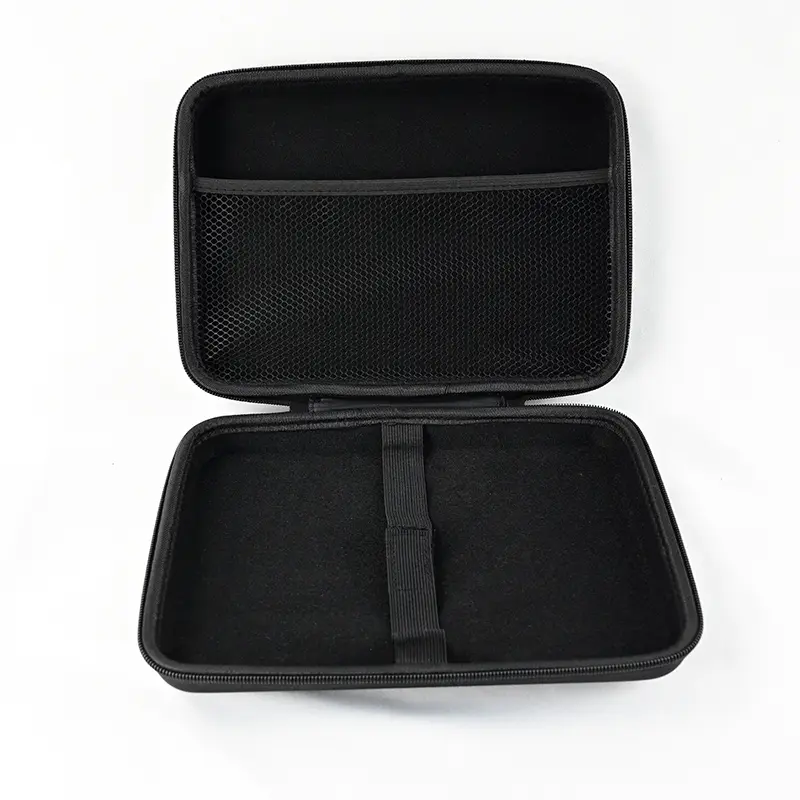
1. Premium‑Grade EVA Shell & Outer Material Construction
The outer shell forms the first line of defence against drops, compression, dust, and minor moisture exposure. High‑quality tool‑grade EVA is compression‑molded, delivering consistent wall thickness and stable shape retention, rather than thin thermoformed shells that dent permanently under moderate pressure.
Focus on two critical details:
- EVA core density and hardness: Tool‑oriented cases require medium‑to‑high‑density EVA. Material that feels overly soft will collapse when stacked during logistics or storage. Too‑rigid EVA becomes brittle and prone to cracking on impact. When evaluating samples, press firmly against the shell; it should bounce back completely without leaving permanent indentations.
- Exterior fabric lamination: Most quality cases bond 600D‑1680D nylon, ballistic fabric or carbon‑textured PU over the EVA core. This outer layer resists scuffs, abrasion, and light water splashes. Inferior cases use thin, lightweight fabric that frays quickly and delaminates from the EVA shell after repeated handling.
For buyers, always examine sample edges and corners. Clean, smooth finishing with no bubbling, peeling, or uneven trimming signals consistent manufacturing quality.
2. Precision‑Engineered Interior Foam Inserts
The interior foam is where most budget‑minded suppliers cut corners. The purpose of custom foam inserts is not just filling empty space — it holds each tool or component fixed, preventing internal collision, scratching, and calibration drift for sensitive instruments during transit.
Two main interior styles appear across professional‑grade EVA tool cases:
- CNC die‑cut / molded shadow foam: Custom cavities milled to match the exact contour of each item. This is ideal for branded tool sets, diagnostic gear, and precision electronics. Every piece sits securely with minimal movement. Many professional kits use dual‑colour foam so missing items can be spotted instantly.
- Pick‑and‑pull or layered foam: Perforated foam sheets where users remove blocks to form custom compartments. Best suited for multi‑purpose kits where end‑users frequently change tool assortments.
As a procurement tip: check foam density. Low‑density soft foam compresses permanently after a few months of use and loses shock‑absorbing capability. Quality insert foam maintains firm support while remaining soft enough to avoid marring finished tool surfaces. Many premium cases also add mesh zipper pockets on the lid for small cables, manuals, and spare parts, improving overall organisation.
3. Heavy‑Duty Hardware: Zippers, Handles and Reinforcements
Even the best shell and foam will fail if hardware is sub‑standard. Hardware components receive constant stress during opening, closing, lifting, and transportation. Many inexpensive EVA cases feature thin zippers and flimsy handles that become the first point of failure for end‑users.
What to inspect when reviewing samples:
- Zippers: Look for high‑cycle metal or reinforced plastic zipper tracks with smooth sliding action. Double‑zipper pulls are preferred for tool cases, as they allow opening from either side. Cheap zippers snag, separate, or teeth break after hundreds of openings. For outdoor or field‑use applications, water‑repellent coated zippers add extra protection against moisture ingress.
- Handles and carry attachments: Handles should be stitched or molded into the case structure, not simply glued onto fabric surfaces. For heavier tool sets, reinforced woven webbing handles or ergonomic rubber grip handles reduce hand fatigue. If shoulder straps are part of the specification, check D‑ring anchor points are stitched through multiple fabric layers, not just attached to surface material.
- Stitching and seam quality: Loose threads, skipped stitches, or uneven seams indicate rushed assembly. All stress points around handles, zippers and D‑rings need reinforced stitching.
4. Environmental Protection and Real‑World Durability Performance
Buyers often only consider physical drop protection, but real‑world operating conditions expose tool cases to dust, humidity, temperature shifts, stacking pressure during shipping, and rough handling in field environments.
High‑quality EVA tool cases deliver multi‑faceted protection:
- Shock and compression resistance: The molded EVA shell absorbs impact energy when dropped, safeguarding expensive tools inside. During logistics, cases will be stacked in cartons; a quality shell maintains shape under static load.
- Dust and water‑repellent performance: While most zippered EVA tool cases are not fully submersible, premium fabric laminations and well‑fitted zippers keep out dust, dirt, rain splashes and workshop grime.
- Material stability across temperatures: Good‑grade EVA will not turn brittle in cold conditions or soften significantly in high‑heat storage environments. Low‑quality recycled EVA can warp or emit strong chemical odours in warm settings.
If you serve markets in the EU and other regulated regions, confirm material compliance with REACH, RoHS and CE standards. Non‑compliant material can hold up shipments at customs and create product‑liability risks for your brand.
5. Practical Customisation Compatibility
For most procurement projects, off‑the‑shelf sizes rarely match exact product dimensions. A high‑quality EVA tool case platform should support meaningful customisation without sacrificing finished‑case quality.
Key customisation capabilities worth verifying with your supplier:
- Custom sizing and shell shape: Ability to build cases sized to your exact tool or device footprint, rather than forcing your product into generic pre‑made case dimensions.
- Interior layout flexibility: Support for CNC‑cut shadow foam, mesh pockets, elastic loops, divider arrangements tailored for your kit components.
- Branding options: Reliable options including screen printing, debossed / embossed logos, rubber patches, woven labels and metal name plates. Cheap printing rubs off quickly after abrasion.
- Surface finish choices: Selection of fabrics, colours, textured patterns (carbon‑fiber PU, ballistic nylon, woven textiles) aligned with your brand aesthetic.
Quality customisation starts with sample approval. Reputable suppliers produce pre‑production samples so you can validate fit, finish, and branding before committing to large‑volume manufacturing.
Final Takeaways for Sourcing EVA Tool Cases
On paper, many competing EVA tool case products look nearly identical in product listing photographs. The real difference in quality reveals itself in material density, foam precision, hardware robustness, environmental resilience and consistent custom‑manufacturing execution.
When comparing potential suppliers, always request physical samples rather than relying only on pictures. Test samples by squeezing the shell, repeatedly operating zippers, inspecting stitching and hardware anchor points, and verifying the fit of foam inserts. Cross‑check material compliance documentation for your target sales territories.
Focusing on these five key features helps you avoid costly post‑order surprises, reduces end‑user complaints and returns, and delivers tool‑case products that reinforce your brand reputation for quality.
Frequently Asked Questions
Q: Is thicker EVA shell always better for tool cases? A: Not exactly. Excessively thick shell adds unnecessary weight and cost. The critical factor is material density and molding quality. A well‑molded medium‑thickness high‑density EVA shell will out‑perform a thick but low‑density shell that deforms easily.
Q: What is the difference between shadow foam and pick‑and‑pull foam? A: Shadow foam is precision‑cut for exact tool shapes, ideal for fixed‑content branded kits. Pick‑and‑pull foam lets end‑users carve out compartments for variable tool assortments. Your intended end‑use should drive which interior style you select.
Q: Can EVA tool cases be fully waterproof? A: Standard zipper‑closure EVA tool cases are water‑repellent (resist splashes and rain), not fully submersible true‑waterproof. For complete submersion protection you would need hard‑shell cases with rubber gasket sealing systems.
Q: What should I do if supplier samples look great but mass‑production quality drifts? A: Lock in your approved pre‑production sample as the quality benchmark. Include reference to this sample within your purchase specifications, and arrange pre‑shipment inspection to spot material or workmanship deviations before goods ship.
Post time: Aug-19-2026