




EVA Case Fabric and Exterior Finishes: Nylon, PU and Printed
The outer fabric on an EVA case is not decoration. It decides how the case survives abrasion in transit, how it photographs on a retail shelf, and what the buyer pays per unit. When you specify a case from a Chinese factory, the three finish families you will quote against are laminated nylon, PU leather and direct printed fabrics. Each carries different cost, durability and branding implications, and choosing wrongly usually shows up as peeling corners or faded graphics after one shipping cycle.
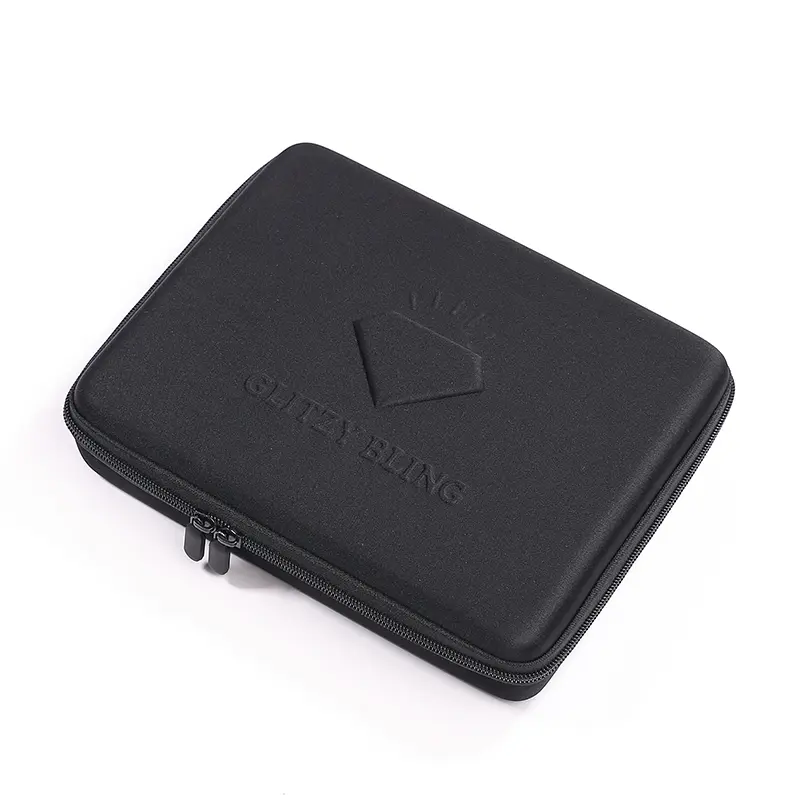
Nylon: the workhorse for tool and technical cases
Nylon (typically 420D ripstop, 600D or 840D) laminated onto EVA sheet remains the default for tool cases, instrument cases and anything handled roughly. It resists abrasion, does not crack at fold lines, and accepts embossed or silk-screen logos reasonably well. Key specification points to confirm in writing:
- Denier and weave. 600D polyester is often substituted for nylon at lower cost. Nylon is softer and more abrasion resistant; polyester holds color better outdoors. Ask the factory which fiber you are actually buying, and request the fabric spec sheet.
- Lamination adhesive. The bond between fabric and EVA is where failures start. Specify a minimum peel strength value and test method (for example, hand-peel a corner after a 24-hour room-temperature rest and after a 70-degree-Celsius heat soak). Do not accept “it is strong enough” as an answer.
- Coating. PU or WR (water-repellent) coating on the nylon face improves stain resistance and printing adhesion, but thick coatings can stiffen the fabric and cause crack-out at the fold line over time.
Nylon costs more than uncoated polyester, but for cases that travel in toolkits and truck beds it is the safer spec. If your program is a one-time retail gift set with light handling, you can justify a lighter fabric.
PU leather: the retail-facing option
PU (polyurethane) finishes dominate consumer electronics cases, headphone cases and anything positioned as a premium gift. PU laminated to EVA gives a smooth, uniform surface that embosses cleanly and photographs well. It is also the finish most sensitive to real-world abuse. When sourcing PU-faced cases:
- Thickness and backing. 0.5 to 0.8 mm PU film over a knitted backing is typical. Thinner film folds better but abrades through faster at corners.
- Cold crack and hydrolysis resistance. Cheap PU stiffens and cracks in cold climates and degrades with humidity over 12 to 24 months. Ask for the PU supplier’s cold-crack temperature rating and hydrolysis test data before approving samples.
- Embossed logos. PU accepts heat embossing with excellent definition, which is why it is favored for private-label branding. Confirm emboss depth on a physical sample, not a rendering.
PU is the right choice when shelf appearance drives the purchase decision, such as retail consumer electronics, and the wrong choice when the case lives in a technician’s bag.
Printed fabrics: graphics, Pantone and durability trade-offs
Printed finishes cover everything from full-coverage artwork on nylon to all-over printed patterns for lifestyle brands. There are three practical methods, each with different limits:
- Silk screen printing. Best for solid spot colors and simple logos on nylon. Cost per unit rises with the number of colors. Registration across a curved molded surface is imperfect; keep critical artwork away from fold lines.
- Heat transfer. Full-color artwork transferred to fabric before lamination. Better for gradients and photographic patterns. The transfer layer can crack if the fabric is over-coated, so verify with a fold-cycle test.
- Direct digital printing. Low setup cost and good for short runs and sampling, but ink adhesion on slippery nylon is weaker than on polyester. Wash or rub-test a sample before committing to production.
Color management is the recurring pain point here. Always approve a physical print proof on the actual case fabric, because the same Pantone chip will read differently on nylon, on PU and on uncoated polyester. If your brand family spans multiple case sizes, run all fabric lots for one program from the same dye batch and record the batch numbers in your purchase order.
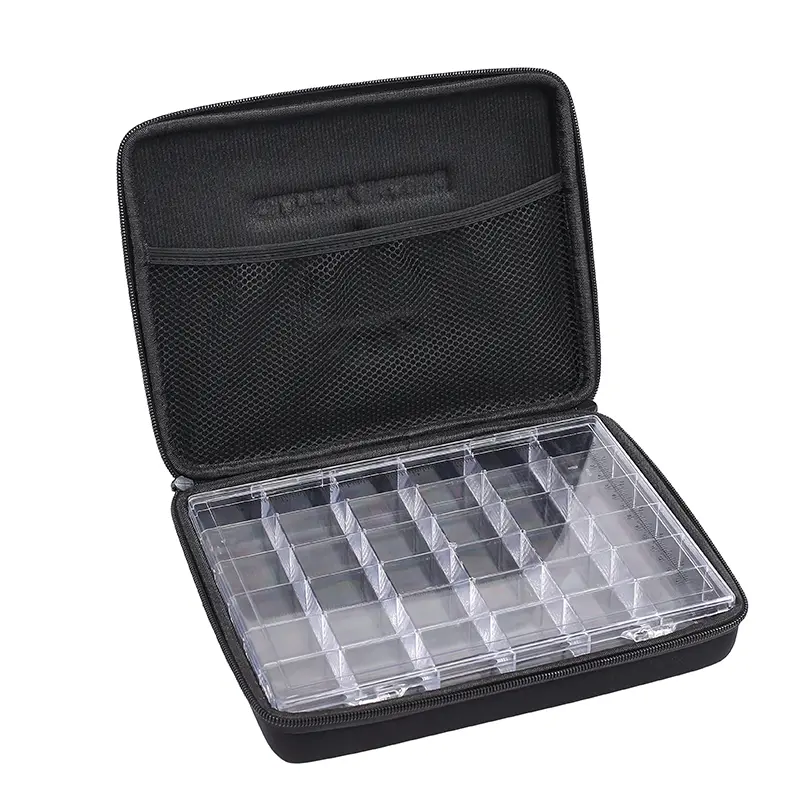
How the three finishes compare on cost and program fit
- Nylon: mid fabric cost, highest durability, moderate branding options. Fits tool, instrument and outdoor programs.
- PU: low to mid cost, premium look, weakest long-term durability. Fits consumer retail and gift programs.
- Printed: cost depends on method and coverage; screen printing adds per-color setup charges, heat transfer adds plate charges amortized across volume. Best when artwork differentiation justifies the extra step.
Request a fabric-and-finish matrix from your supplier listing base fabric, coating, adhesive type, logo method and tested peel strength for each option. This turns negotiation from opinion-based to data-based and makes reorders reproducible.
Tip: Always laminate and mold your fabric sample in the same production adhesive and press conditions you will use for mass production, because a hand-laminated sample can pass peel tests that the production line will fail.
Frequently Asked Questions
- Can I mix finishes, for example PU panels with nylon sides? Yes, panel combinations are common and done by stitching or welding fabric panels before lamination. Expect higher cutting and sewing labor, and confirm the seam treatment at the panel joint.
- Which finish is easiest to keep consistent across reorder batches? Plain nylon or PU in stock colors. Printed finishes depend on ink lots and screen condition, so archive approved print proofs and reference them in every repeat order.
- Does the fabric affect drop protection? No, protection comes from the EVA density and wall design. Fabric affects abrasion, appearance and water shedding only.
- What should I test on first samples? Corner abrasion, fold-line flex cycles, logo adhesion after abrasion, and color under both daylight and store lighting.
Related Pages
- EVA Tool Case Purchase Order Guide
- EVA Tool Case Sample Evaluation Guide
- EVA Case Bulk Order Tips
- EVA Tool Case Custom Inserts Design
Post time: Nov-25-2026