




EVA Tool Case Sample Evaluation Guide
Table of Contents
- Core Purpose of EVA Sample Evaluation
- Basic Appearance & Dimensional Inspection
- Raw Material & Shell Performance Testing
- Molded Foam Liner Fit & Protection Assessment
- Hardware, Fabric & Workmanship Audit
- Functional Durability Simulation Tests
- Branding & Custom Logo Quality Check
- Compliance & Certification Verification
- Standard Sample Evaluation Checklist
- Common Sample Defects & Revision Solutions
- FAQs for EVA Tool Case Buyers
- Final Sample Approval Best Practices
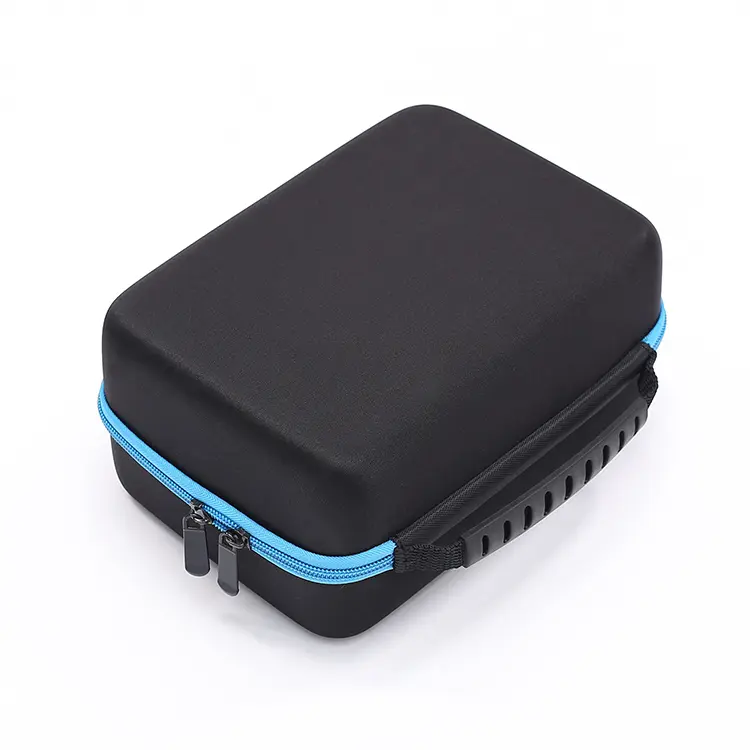
Core Purpose of EVA Sample Evaluation
- Verify the finished product matches technical drawings, design specs and brand requirements
- Validate shockproof, waterproof and compression resistance for target tools/instruments
- Confirm supplier manufacturing consistency, material quality and workmanship standards
Basic Appearance & Dimensional Inspection
Visual Appearance Standards
- Outer shell surface: Uniform fabric lamination with no bubbles, wrinkles, glue stains, scratches or color fading. Carbon fiber PU, nylon and Oxford cloth textures must match the confirmed material swatch.
- Edge & corner finishing: All thermoformed edges smooth, no sharp burrs, uneven trimming or exposed raw EVA foam. Seams between upper and lower shell flat and tightly bonded without separation gaps.
- Interior layout: Mesh pockets, elastic straps and divider positions align with design files; no stray glue, loose thread or foam debris inside the case.
- Color consistency: Exterior fabric, zipper tape and trim color match approved Pantone codes; no batch color difference between multiple pre-production samples.
Dimensional Measurement Rules
- Acceptable dimensional tolerance: ±1mm for small portable tool cases; ±2mm for large instrument storage bags
- Test closing clearance: Case fully zipped should close flat without bulging, warping or forced tension
- Carry handle position symmetry: Handles centered evenly, no tilt or offset molding defects
Raw Material & Shell Performance Testing
EVA Substrate Assessment
- Hardness & Density Check
Premium protective EVA for tool cases ranges from 38–50 Shore C hardness. Press the shell firmly: it should rebound instantly without permanent indentation or creasing. Over-soft EVA collapses under load; overly rigid EVA cracks under impact. Request supplier density test reports to confirm closed-cell foam rates ≥95% for moisture resistance.
- Odor & Safety Screening
Qualified food/industrial-grade EVA carries only a faint neutral scent. Strong pungent chemical odors signal recycled low-grade raw material that may fail RoHS and REACH export compliance.
- Pressure Resistance Test
Place 40–50kg flat weight on closed sample case for 10 minutes. Remove weight and inspect: shell must recover completely with no permanent warping or concave deformation.
Outer Laminated Fabric Evaluation
- Nylon/Oxford cloth: Resists pilling and surface scuffs
- Carbon PU leather: No peeling, cracking or color transfer after friction
- Waterproof coated fabric: Drop water droplets on surface to confirm water repellency without rapid absorption
Molded Foam Liner Fit & Protection Assessment
Step 1 Tool Fit Test
- Each component sits flush with no loose shifting or overly tight forced insertion
- Cavity depth matches tool height; no exposed sharp edges on metal equipment
- Separate storage zones for small spare parts, manuals and adapters with dedicated mesh pockets
Step 2 Foam Quality Inspection
- Foam cut precision: Laser or CNC carved edges clean, no jagged tearing or loose foam dust
- Elastic recovery: Press foam cavities hard; foam bounces back without permanent collapse
- Anti-scratch performance: Soft velvet-lined foam variants must not leave marks on polished metal, lenses or circuit boards
Step 3 Compartment Layout Logic
Hardware, Fabric & Workmanship Audit
Zipper Evaluation
- Smooth sliding test: Zip and unzip 50 continuous cycles. No jamming, tooth separation or fabric snags.
- Zipper grade matching: Small portable cases use #3 nylon coil zippers; large heavy-duty tool cases require #5 reinforced zippers. Waterproof TPU zippers must show full seam sealing.
- Zipper puller: Custom logo pull tabs securely attached, no easy detachment from zipper tape.
Carry Handle & Shoulder Strap Check
- Handle stitching: Double reinforced cross stitching at connection points, no loose threads or weak anchor points
- Load test: Lift fully loaded sample case by handle for 2 minutes. No stretching, tearing or seam separation
- Shoulder strap buckles: Plastic/metal hardware lock tightly without accidental release under weight
Stitching & Sewing Standards
Functional Durability Simulation Tests
1. Drop Impact Test (Industry Standard ASTM D5276)
- Pass criteria: No shell cracking, foam displacement, zipper breakage or tool surface scratches post-test
- Lightweight mini tool cases may reduce drop height to 1.0 meters per product positioning
2. Vibration Simulation
3. Moisture Resistance Test
4. Abrasion Endurance
Branding & Custom Logo Quality Check
- Silk Screen & Heat Transfer Printing
Logo text sharp, no blurred edges or ink bleeding. Rub printed area with alcohol wipe; print cannot fade or peel off.
- Debossed/Embossed Logos
Molded brand marks uniform depth across sample surface, no uneven indentation or distorted graphics from defective molds.
- Rubber PVC Patches & Woven Labels
Patches fully bonded with no lifting corners; woven labels stitched flat without curling.
- Color Matching
All printed graphics align with supplied brand vector files; no color shift or distorted proportions.
Compliance & Certification Verification
- Material Safety Reports
Request batch-specific SGS test reports confirming compliance with RoHS, REACH, PAHs and heavy metal migration limits. Avoid generic expired reports unrelated to the sample production batch.
- Industry Special Certifications
- Industrial/electronic tool cases: UL94 flammability reports for electrical equipment packaging
- Outdoor field kits: IPX4/IP67 waterproof dustproof test data
- Aviation transport cases: ATA 300 packaging standard certification
- Production Qualifications
Supplier ISO9001 quality system documentation confirms consistent manufacturing process control.
Standard Sample Evaluation Checklist
| Inspection Category | Pass Criteria | Fail Flag |
|---|---|---|
| Dimensional Tolerance | All measurements ±1/2mm of drawing | Warped shell, mismatched cavity size |
| EVA Shell Hardness | 38–50 Shore C, instant rebound | Soft collapse or rigid cracking |
| Foam Liner Fit | Tools sit flush, no loose movement | Over-sized/undersized cavities |
| Zipper Operation | 50 cycles smooth sliding | Jamming, broken zipper teeth |
| Handle Load Bearing | No seam separation under full load | Weak stitching, torn anchors |
| Drop Test Result | Shell/foam/hardware intact post-drop | Cracks, displaced foam, broken zippers |
| Logo Durability | Alcohol wipe test no fading | Peeling, blurred print |
| Material Compliance | Valid batch SGS/RoHS reports | Expired, non-batch matching docs |
| Waterproof Performance | Water repellent fabric & closed-cell foam | Rapid water absorption |
Common Sample Defects & Revision Solutions
- Foam cavity too loose: Adjust CNC carving mold to shrink cavity size by 0.5–1mm per tool outline
- Zipper jamming: Upgrade to thicker #5 zipper tape or realign shell seam molding
- Shell warping after pressure test: Increase EVA substrate density and thermoforming cooling time
- Logo printing peeling: Switch to heat transfer printing or add clear protective top coat
- Weak handle stitching: Add triple cross-stitch reinforcement at handle connection points
- Interior foam shedding: Request supplier use high-density anti-dust coated foam liner
FAQs for EVA Tool Case Buyers
Q1 How many pre-production samples should I request for evaluation?
Q2 Can I skip drop and vibration tests for low-cost small tool cases?
Q3 What if the sample passes appearance tests but fails compliance reports?
Q4 How long should suppliers take to revise failed samples?
Final Sample Approval Best Practices
- Document all defects with photos and written revision notes, shared with supplier for revised second samples
- Only sign formal sample approval once all functional, dimensional and compliance tests fully pass
- Retain one approved reference sample on file for bulk order quality comparison during factory inspection
- Confirm supplier locks approved material, mold and hardware specs to prevent material substitution during mass production
- Schedule mid-production inline inspection after 10% of bulk run completes to maintain sample standard consistency
Post time: Aug-03-2026