




EVA Case Fabric Lamination and Peel Strength: Specs for Buyers
An EVA case is rarely one material. A molded EVA shell is normally covered with a fabric or synthetic leather, and the bond between those two layers decides whether the case still looks and performs like a finished product after a season in the field. Lamination is therefore a structural specification, not a cosmetic one. When the bond fails, the shell itself may still be intact, but the product is rejected by the customer, returned by the retailer, or written off by the end user. This guide is written for buyers, product managers and sourcing teams who specify EVA tool cases, instrument cases, drone cases and audio-visual cases, and who need a practical way to put fabric, adhesive and bond strength into a purchase document.
The most common sourcing mistake is to approve a fabric by hand feel and colour, then treat the bond as an implicit factory responsibility. In practice, fabric choice, adhesive chemistry, lamination process and shell geometry interact. A change from a knitted fabric to a heavy Oxford changes the tension on the bond. A change from a solvent adhesive to a water-based adhesive changes drying time and the risk of trapped moisture. A deeper draw corner raises spring-back forces that try to peel the fabric away. All of these are specifiable, and all of them should be frozen before tooling and mass production, not discovered at final inspection.
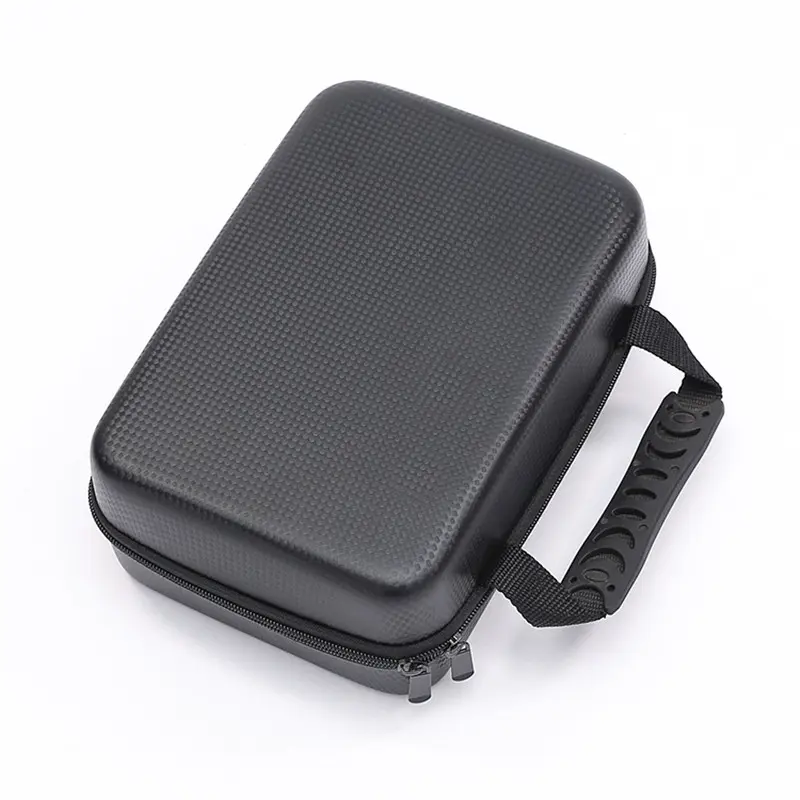
How Fabric Choice Sets the Baseline for the Bond
Knitted Fabric
- Warp-knitted and tricot constructions are soft, light and highly conformable, which makes them easy to lay over compound curves and deep-draw corners.
- Hand feel is smooth and slightly stretchy; the fabric hides minor shell surface marks well and gives a quiet, non-technical look.
- Abrasion resistance is the lowest of the common options. Snagging and pilling appear early on high-contact areas such as corners, handles and zipper tracks.
- The open loop structure can allow adhesive to pass through if viscosity and coating weight are not controlled, so strike-through risk must be checked.
- Best suited to light-duty cases, interior linings, and programs where softness and low cost matter more than long-term scuff resistance.
Nylon
- Woven nylon offers high tensile and tear strength with a smooth, dense surface and a relatively refined hand.
- Abrasion performance is strong for its weight, and the fabric takes dye well, although colour lot variation between dye batches is a real risk that must be controlled with reference swatches.
- Some finishes applied to nylon for water repellency reduce surface energy and weaken the bond, so finish type must be declared before lamination trials.
- Cost is typically higher than polyester equivalents, and long UV exposure can affect appearance on lighter shades.
- Commonly chosen for drone cases, camera cases and programs where a premium technical look is part of the brand promise.
Oxford (Polyester)
- Oxford weaves are defined by denier and weave construction; heavier constructions give a structured, rugged hand and strong abrasion resistance.
- A backing coating is usually present, and that coating becomes the actual bonding surface, so the coating chemistry matters as much as the face fabric.
- The pronounced weave texture can telegraph through thinner EVA shells, which is a visual issue on large flat panels.
- Weight and stiffness increase with denier, which raises spring-back at corners and edges and places more demand on the adhesive.
- This is the workhorse choice for tool cases and equipment cases where scuff resistance and a utility appearance are expected.
PU Synthetic Leather
- PU-coated or PU-cast materials give an embossed grain, a wipe-clean surface and a premium appearance at a lower cost than genuine leather.
- The bonding surface is the textile backing behind the PU layer, and the quality of that backing determines how well force is transferred into the bond.
- Plasticiser migration and cold-temperature stiffening are the two long-term risks; both should be discussed with the material supplier and verified by ageing tests.
- Deep embossing reduces the contact area available to the adhesive and can leave unbonded valleys that later appear as bubbles.
- Well suited to medical instrument cases, presentation cases and retail programs where surface appearance drives perceived value.
Lamination Processes Compared
Four bonding routes are used in this industry, and each one has a different process window, a different environmental profile and a different failure signature. The right question for a buyer is not which process is best in the abstract, but which process the factory can control repeatably for the chosen fabric and shell geometry. A factory that runs one process well will usually beat a factory that runs three processes inconsistently.
Hot-Melt Adhesive Lamination
- Thermoplastic adhesives are applied as a film, a web, a powder or through a roller coating system, then reactivated by heat and pressure at the nip.
- The process is solvent-free, fast, and clean to run, and it gives a predictable bond on flat and gently curved panels.
- Heat resistance is limited by the softening point of the adhesive, so a case stored in a hot vehicle or shipping container can see the bond creep under fabric tension.
- Rework is possible in principle because the adhesive can be reactivated, which is useful during sampling but can also mask a weak process.
- Film or web form gives the most consistent coating weight, which is why it is often preferred when peel values must be held to a tight band.
Flame Lamination
- In flame lamination, a foam surface is passed over a controlled flame so that a thin molten tacky layer forms and is immediately nipped against the fabric.
- No separate adhesive is added, line speed is high, and the bond is uniform when the foam gauge and flame parameters are stable.
- The process window is narrow: over-burning degrades the foam and creates odour, while under-burning leaves a weak and patchy bond.
- It is most commonly associated with bonding foam to fabric for interior padding rather than bonding fabric directly to a molded EVA shell.
- Emissions control and fire safety provisions at the line are mandatory, and buyers should confirm the factory operates a properly enclosed and extracted station.
Water-Based Adhesive Lamination
- Acrylic and polyurethane dispersions carry the adhesive in water, which is evaporated in a drying tunnel before the nip.
- VOC emissions are low, odour is usually mild, and the bond shows good resistance to heat and ageing once fully cured.
- Line speed is limited by drying capacity, and any residual moisture left in the bond line becomes a bubble or delamination risk later.
- Water-based systems are sensitive to substrate wetting, so surface preparation on the EVA shell becomes more critical than with solvent systems.
- Storage and transport of the adhesive need freeze-thaw control, which is a factory capability question worth asking during audit.
Solvent-Based Adhesive Lamination
- Solvent systems wet difficult surfaces easily and build high initial grab quickly, which helps on low surface energy shells and on heavily finished fabrics.
- They tolerate a wider range of substrates and are forgiving in the short term, which is why older lines still rely on them.
- VOC emissions, odour and worker exposure are the main drawbacks, and compliant operation requires extraction, recovery and safe storage.
- Aggressive solvents can attack or stress the EVA surface if the open time and drying are not controlled.
- Residual solvent is a frequent root cause of odour complaints and of bubbles that appear only after container transit.
Defining Peel Strength: Units and Test Logic
Peel strength is the force required to separate two bonded layers, expressed as force per unit width. Because the value depends on width, the unit must always be stated alongside the number. Common reporting units include newtons per millimetre, newtons per centimetre, newtons per twenty-five millimetres, kilogram-force per twenty-five millimetres and pounds-force per inch. A number quoted without a unit, a width, a test speed and a conditioning statement is not a specification; it is a marketing claim.
Test geometry matters as much as the number. A T-peel configuration pulls the two free ends apart in opposite directions, a one hundred and eighty degree configuration folds one leg back on itself, and a ninety degree configuration holds one leg at a fixture. Each geometry loads the bond line differently, and results from one geometry should not be compared with results from another. The peel trace also carries information: a steady plateau suggests a uniform bond, while a jagged trace suggests patchy wetting or variable coating weight.
Failure mode should be recorded with every value. Interfacial or adhesive failure means the bond separated cleanly at the interface. Cohesive failure means the adhesive itself split, leaving residue on both sides. Substrate failure means the fabric or the EVA shell tore before the bond did. Substrate failure is the outcome buyers generally prefer, because it indicates that the adhesive is no longer the weakest link in the assembly.
Standards bodies publish general peel test methods for flexible and rigid bonded assemblies, and regional standards families cover similar ground. None of them is written specifically for fabric-to-molded-EVA-shell bonds as a finished case assembly, so in practice the method is adapted, and the adaptation must be written down. References to specific ASTM or GB methods should be confirmed against the current published text, and any clause quoted in a purchase document should be marked as subject to the latest standard text and official notices.
Tip: Always require the failure mode and the peel trace to be recorded next to every reported value, because a high average with a clean interfacial failure usually indicates a bond that will separate later in the field.
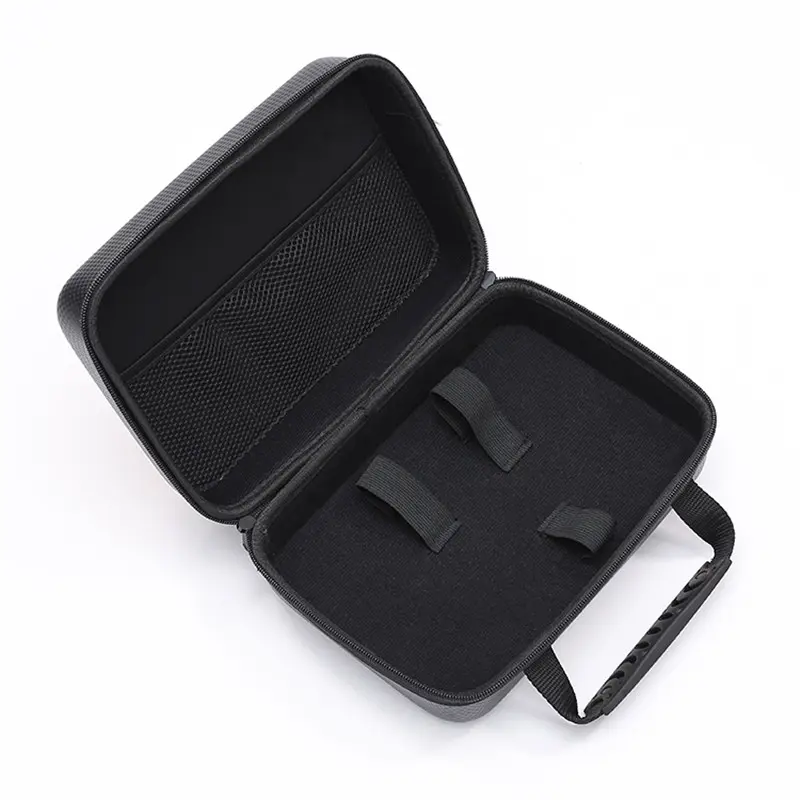
What Actually Drives Peel Strength
Adhesive Type and Coating Weight
- Coating weight is normally expressed in grams per square metre and must be stated as a target with a tolerance band, not as an open “as needed” instruction.
- Under-application leaves dry spots and starved areas, which show up as low individual values and patchy failure patterns.
- Over-application increases strike-through, extends drying time, traps solvent or moisture, and can make the bond soft under heat.
- The adhesive grade must be matched to both substrates; an adhesive that works on polyester Oxford may not wet a PU leather backing.
- Adhesive batch and shelf life should be traceable, because aged or poorly stored material is a recurring hidden variable.
Lamination Temperature and Pressure
- Nip temperature controls whether the adhesive reaches the right flow state to wet both surfaces; too low leaves poor contact, too high can over-flow or glaze the shell.
- Roller pressure controls how much adhesive is pressed into the fabric texture; insufficient pressure leaves voids in heavy weaves and deep embossing.
- Line speed interacts with both: a faster line needs more heat or more pressure to achieve the same dwell, and this relationship should be recorded as a process window.
- Excess heat can flatten embossing, shrink the fabric and shift colour, all of which are visible defects even when the bond is strong.
- Process parameters should be logged per shift so that a later peel failure can be traced back to a specific production window.
EVA Surface Preparation
- Molded EVA presents a low surface energy skin, and release agents or mould lubricants left on the surface will defeat almost any adhesive.
- Mechanical abrasion creates a keyed surface, but it must be uniform and the dust must be removed before lamination.
- Corona treatment raises surface energy quickly and suits high-volume lines, but the effect decays with time, so lamination must happen inside a defined window.
- Primer or adhesion promoter systems give a chemical bridge and are often the answer for difficult shell formulations and for PU leather backings.
- Surface preparation method, and the maximum allowed delay before lamination, belong in the process spec, not in tribal knowledge on the line.
Curing and Maturation Time
- Most adhesive systems continue to build strength after the nip, so peel values measured immediately after lamination understate the final bond.
- Maturation needs defined temperature and humidity; a cold, damp warehouse slows strength development and can introduce moisture into the bond line.
- Destructive peel testing should therefore be scheduled after the agreed maturation period, and the ageing clock should start from the production date.
- Shipping or packing before maturation is complete risks compression set and trapped volatiles that later appear as bubbles.
- The buyer should state the minimum maturation period before destructive testing and before shipment in the purchase document.
Common Defects: Causes and On-Site Identification
Bubbling and Blisters
- Typical causes include trapped solvent or moisture, insufficient drying, entrapped air at the nip, and later exposure to heat during container transit.
- Bubbles that appear only after transit usually indicate volatiles or moisture left in the bond rather than a mechanical bond failure.
- On-site check: press the area with a thumb under raking light; a bubble that moves or re-forms after pressing indicates a hollow unbonded pocket.
- Cut a small cross-section on a rejected sample and look for residue on both sides to distinguish trapped volatiles from contamination.
- Corrective action usually targets drying capacity, coating weight and the delay between surface treatment and lamination.
Delamination
- Causes include surface contamination, wrong adhesive for the substrate, insufficient nip pressure, and plasticiser migration from a PU layer.
- Delamination that starts in the middle of a flat panel points to wetting or contamination; delamination that starts near a draw corner points to tension.
- On-site check: a fingernail scrape along an edge, followed by a slow hand pull at roughly ninety degrees, reveals how easily the bond opens.
- A consistent, clean separation with no residue on either face is the signature of interfacial failure and should be treated as a process problem.
- Records should note where on the case the delamination began, because location is more diagnostic than the size of the affected area.
Corner and Edge Lifting
- Corners carry the highest spring-back because the fabric is stretched over a three-dimensional form and then tries to return to flat.
- Insufficient heat or pressure at the deepest draw, trimming too close to the bond line, and heavy stiff fabric all raise the lifting risk.
- On-site check: inspect corners after a warm soak or a period in a warm environment, because lifting often appears only once the adhesive softens.
- Corner reinforcement patches, a wider adhesive margin at trim, and a post-lamination heat set are the usual remedies.
- Acceptance criteria should define how much lift, measured at the edge, is tolerable on a hidden edge versus a visible face.
Adhesive Bleed and Strike-Through
- Causes include excessive coating weight, low viscosity adhesive, high nip pressure, and open or lightweight fabric constructions.
- Strike-through on the face fabric appears as shiny patches, stiff spots, and colour shift, and it is far more visible on dark shades.
- On-site check: view the panel under raking light and run a hand across the surface to feel stiffness differences between affected and clean areas.
- Bleed at the trim edge also causes blocking, where stacked cases stick together in the carton.
- Remedies include reducing coating weight, raising viscosity, reducing nip pressure, or moving to a film or web adhesive form.
Lamination Wrinkles
- Causes include uneven fabric feed tension, misaligned grain, poor operator handling, and mismatch between fabric and shell shrinkage under heat.
- Wrinkles concentrate at corners and along the zipper track, where the fabric is asked to take up the most shape change.
- On-site check: look for a wrinkle that follows a consistent geometric pattern, which indicates tension, versus random creases, which indicate handling.
- Pre-shrinking the fabric and controlling feed tension are the standard process corrections.
- A wrinkle approval sample should be agreed, because some minor fabric movement at deep draws is unavoidable with heavy constructions.
Building a Peel Strength Test Plan
Sampling Location and Quantity
- Define sampling zones in advance: a flat panel, the deepest draw corner, a trimmed edge, and the area around handle or hardware attachment.
- Corner samples are the most informative, because the bond is loaded most heavily there, and because most field failures start there.
- Define how many shells are pulled per production lot and how many strips are cut per shell, and record zone identity on each strip.
- Sampling should span the shift, not just the first pieces, so that thermal drift in the line is captured.
- Retained samples from the approved golden sample should be tested in the same session as production samples so results are directly comparable.
Aging and Thermal Cycling Before Retest
- Measure a baseline on matured samples, then repeat after heat ageing, after humidity ageing, and after a cold-to-hot thermal cycling sequence.
- The ageing temperature, duration, humidity level and number of cycles must be agreed in writing, because retention is meaningless without the protocol.
- Thermal cycling is the most realistic predictor for cases that travel by container and then sit in a cold warehouse.
- Report results as retention relative to the baseline and as a change in failure mode, not only as an absolute number.
- Samples that show interfacial failure after ageing, even with acceptable absolute values, should trigger a process review.
Agreeing Acceptance Values With the Customer
- State the unit, the test geometry, the sample width, the crosshead speed, the conditioning atmosphere and the conditioning period.
- Agree both an average value across the strips and a minimum individual value, because an acceptable average can hide a few very weak zones.
- Agree the required failure mode, for example a requirement that no sample shows clean interfacial separation.
- Define the remedy ladder in advance: rework, sort, credit, or rejection, and define who pays for destructive test samples.
- State that any clause citing a published standard is subject to the latest standard text and official notices, and name the edition used at contract signing.
Where Appearance Conflicts With Adhesion
Embossing and Textured Grain
- Deep embossing reduces the real contact area between adhesive and substrate, so the adhesive must flow into the valleys under adequate pressure.
- High nip pressure improves wetting but flattens the grain, so the process window has to balance bond strength against appearance.
- Embossed PU leather requires a primer or a high-flow adhesive more often than flat woven fabric does.
- A visual reference for acceptable grain retention after lamination should be signed off during sampling.
- Where grain definition is critical, consider laminating before final forming, or use a lower-pressure, longer-dwell nip.
Printing and Heat Transfer
- Ink films and transfer layers can become the weakest boundary in the assembly, so interlayer adhesion must be tested, not assumed.
- Print must be fully cured and fully dried before lamination, or solvents trapped under the fabric will create bubbles later.
- Silicone-based soft-hand finishes and some water-repellent finishes are adhesion killers and must be declared by the fabric supplier.
- Sample the printed area and the unprinted area separately, because peel values can differ substantially between them.
- Where a logo is applied after lamination, confirm that the application heat does not soften the adhesive and cause creep.
Dark and High-Coverage Fabrics
- Dark fabrics absorb more radiant heat, so a case left in sunlight reaches a higher surface temperature than a light-coloured equivalent.
- Higher surface temperature brings a hot-melt adhesive closer to its softening point, which raises the risk of creep and corner lift.
- Dark fabrics also show adhesive bleed, glazing and strike-through far more clearly, which lowers the visual tolerance for over-application.
- Specify an adhesive with a higher heat resistance for dark programs, and control nip temperature more tightly.
- Odour complaints are also more common with dark, heavy constructions because more adhesive mass is retained in the assembly.
Environmental and Compliance Requirements
VOC and Odour
- Solvent-based systems carry the highest VOC load; water-based and hot-melt systems are generally chosen where emissions and odour are tightly controlled.
- Request the adhesive technical data sheet and safety data sheet, and request a VOC content declaration for the specific grade in use.
- Odour should be tested by a defined and agreed method, for example a closed-container hold at an agreed temperature for an agreed period followed by a panel rating against a reference.
- Odour complaints often arrive after container transit, so testing should include a post-transit simulation rather than only a fresh-sample check.
- Factories should be able to show extraction and, where applicable, solvent recovery equipment at the lamination line.
REACH and Market Declarations
- For the European Union, request a SVHC declaration for the finished case or for the fabric and adhesive components, together with an Annex XVII restricted substance statement.
- For the United States, request the relevant federal and state declarations applicable to your distribution channels, and confirm responsibility for each declaration in the contract.
- Substance groups worth explicit confirmation include azo dyes, polycyclic aromatic hydrocarbons, phthalates in PU layers, dimethylformamide residue, and heavy metals in colourants.
- Request declarations from the fabric supplier and the adhesive supplier separately, because a case-level statement can hide an uncontrolled component.
- Every clause that cites a regulation should be qualified as subject to the latest standard text and official notices, since substance lists are updated periodically.
Freezing the Spec in the RFQ
- Fabric: fibre composition, denier or construction, finished weight in grams per square metre, backing coating type, colour reference, and any applied finish.
- Fabric performance: abrasion test method and required result, colourfastness methods, and the signed reference swatch retained by both parties.
- Adhesive: type and chemistry, physical form such as film, web or liquid, grade reference, VOC declaration, odour requirement, and shelf-life control.
- Process: lamination route, coating weight target with tolerance, nip temperature and pressure window, line speed range, and drying parameters.
- Surface preparation: abrasion, corona or primer method, plus the maximum permitted delay between treatment and lamination.
- Maturation: minimum curing period and storage conditions before destructive testing and before shipment.
- Peel strength: numeric minimum, unit, test geometry, sample width, crosshead speed, conditioning atmosphere and period, and required failure mode.
- Testing protocol: sampling zones, shells per lot, strips per shell, ageing and thermal cycling regime, and the retention comparison method.
- Acceptance rule: average value, minimum individual value, remedy ladder, and responsibility for destructive samples and third-party test fees.
- Documentation: lot test reports, retained samples, adhesive batch records, and a signed golden sample held on both sides.
Related Pages
EVA Tool Case Purchase Order Guide
EVA Tool Case Sample Evaluation Guide
EVA Tool Case Custom Inserts Design
Ready to source EVA cases with a written fabric, adhesive and peel strength specification?
Post time: Nov-02-2026