




EVA Case Hinge and Fold-Line Fatigue: Test Specs
Every time a field technician opens a tool case, flips an instrument lid, or unpacks a medical kit, one narrow strip of material absorbs the entire load of that motion: the hinge line. In molded EVA cases, the hinge area and the fold lines that connect the lid to the base are the most highly stressed zones in the entire product. A single cycle looks harmless, but a case that ships to a service team may be opened and closed twenty times a day for years. That is tens of thousands of repeated bending cycles concentrated on a strip of foam only a few millimeters wide. For buyers sourcing EVA tool cases, instrument cases, or travel cases under a private label program, hinge and fold-line fatigue performance is one of the most reliable predictors of field durability, and it deserves explicit test specs in your purchase agreement.
Why the Hinge Line Is the Weakest Zone in a Molded EVA Case
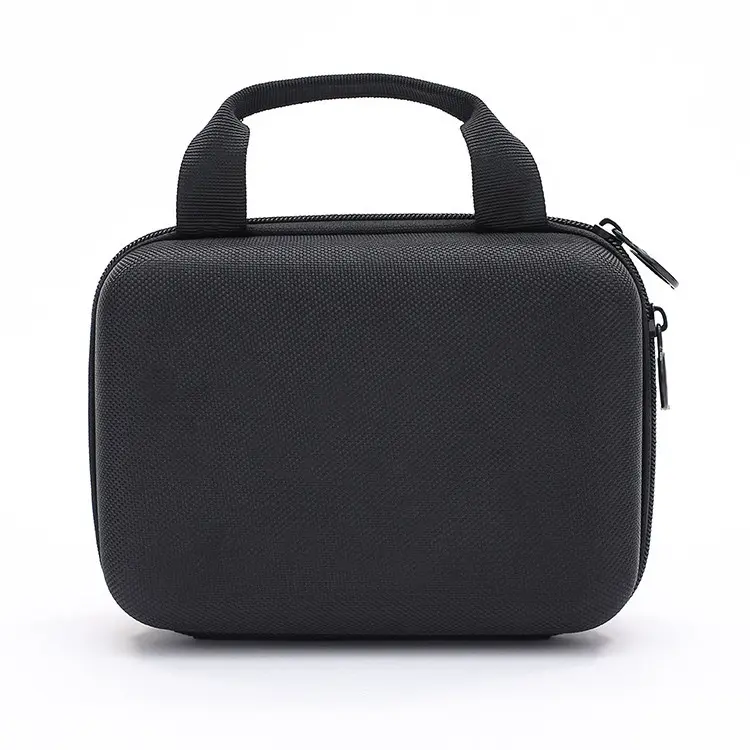
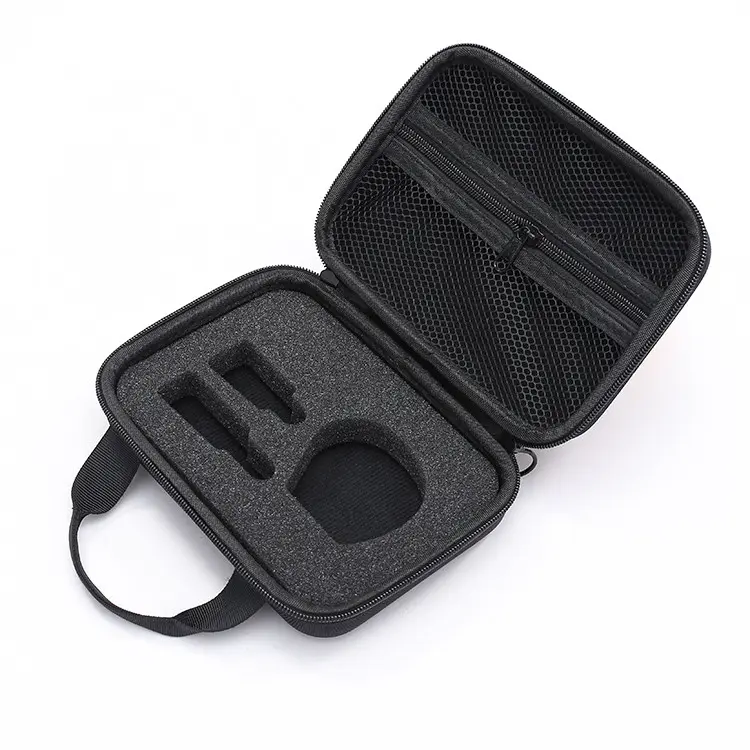
EVA (ethylene vinyl acetate) foam is prized for shock absorption, light weight, and design flexibility, but it is a closed-cell polymer with a finite bending life. The shell of a typical EVA case is compression molded as a single piece: the base, the walls, and the lid come out of the press as one continuous structure. The connection between lid and base is therefore not a metal hinge screwed into place. It is a living hinge formed entirely from molded foam and laminated fabric, and it must flex every time the case is used.
Each open-and-close action is a full fatigue cycle. The outer fabric layer on the hinge line experiences tensile stress when the case opens; the inner layer experiences compression; the foam core between them shears slightly as the bend radius tightens. Stress concentrates at the edges of the fold groove, where material thickness changes abruptly. Add a loaded tool tray pressing down on the lid, a zipper pulling the two halves closed under tension, and a courier dropping the case on a loading dock, and you have the exact recipe for premature failure. Cases that look identical at the sample stage can differ tenfold in cycle life purely because of how the fold groove was engineered, which is why a formal open-close fatigue test protocol belongs in every EVA case specification sheet.
How Compression Molding Shapes the Fold Line
The fatigue life of a hinge is largely decided inside the mold, before the first case is formed. In compression molding, the aluminum tooling carries a machined groove, often called the fold-line channel, at the exact position where the lid meets the base. Its width, depth, and profile determine how much material remains at the thinnest cross-section of the fold. Designers face a genuine trade-off:
- A wider and shallower groove leaves more material at the fold, which raises initial strength but forces a larger bend radius, so the case opens at a blunt angle and the hinge area stiffens over time.
- A narrower and deeper groove creates a crisp, clean fold with a tight radius, but it thins the material locally, raising stress concentration and shortening fatigue life.
- A rounded groove profile with a gradual transition distributes bending strain across a wider strip, avoiding the sharp thickness step that acts as a crack initiator.
The retained thickness at the bottom of the groove is a spec you can request and verify: nominal foam thickness at the fold line, groove width, and whether the fabric layers run continuous across the fold. A gradual, engineered fold transition typically survives far more cycles than a groove copied from a previous mold without analysis.
How Fatigue Failure Actually Shows Up
Fatigue damage in EVA cases rarely announces itself all at once. It develops through a few characteristic failure modes that buyers should recognize when diagnosing samples and production returns:
- Fold-line cracking. Micro-tears initiate on the outer surface of the groove after repeated bending, then propagate through the foam wall. Early signs are a whitish stress line and a fibrous texture along the fold; late-stage cracks run through to the interior, exposing the foam core and admitting dust and moisture.
- Fabric delamination at the fold. Most EVA shells are laminated with woven or knit fabric on both faces using adhesive. The hinge line is where the laminate bends the most, and it is usually the first place the adhesive layer fails. The fabric blisters, then separates from the foam, leaving a soft hollow ridge that abrades quickly.
- Zipper tape separation. The zipper is often stitched or welded close to the hinge line. As the fold fatigues, the seam allowance flexes with it and the zipper tape can tear away from the shell, a mode that often appears together with hinge cracking because both are driven by the same repeated bending loads.
Each of these modes starts invisible and becomes a warranty claim months later. Fatigue testing compresses years of field use into a bench procedure you can run during sample approval, before the failure reaches your customer.
Test Methods: Cycling, Cold, and the Right Test Order
The core procedure is an open-close cycle fatigue test. The case is mounted on a fixture that opens the lid to a defined angle and closes it again at a controlled speed, for a defined count of cycles. Key parameters to fix in the spec:
- Cycle count. Common acceptance thresholds range from 5,000 cycles for light-duty consumer cases to 20,000 cycles for professional tool and instrument cases, with premium programs specifying 30,000 or more.
- Opening angle. Test at the maximum angle a user will realistically produce, typically 110 to 180 degrees; testing at only 90 degrees understates the strain at the fold. If the lid can fold all the way back flat, test it that way.
- Cycle speed and dwell. A rapid cycling rate heats the hinge and can flatter the result. Specify a realistic rate, for example one cycle every two to four seconds, and whether a dwell at full open is required.
- Load condition. Cycling with the case empty is the easy version. For tool cases, cycle with the foam inserts and a representative tool load installed, because payload tension changes the stress at the fold.
For cold-chain and winter-market programs, add a low-temperature fatigue test. EVA compounds stiffen as they cool, and hinges that flex gently at room temperature become brittle near freezing. A sensible protocol conditions the case at minus 20 degrees Celsius for at least four hours, then runs the cycling inside the cold chamber or immediately after removal. After cold cycling, inspect for surface whitening and micro-cracking, the earliest visible signs of embrittlement at the fold.
Sequencing matters: run fatigue cycling before the drop test. A hinge that has survived 10,000 cycles is in the same condition as a case after a year in the field, and dropping that fatigued sample tells you whether the end-of-life product still protects its contents. Reversing the order hides how a degraded hinge behaves under impact. A recommended acceptance order is: (1) dimensional and cosmetic inspection, (2) fatigue cycling to the specified count, (3) drop test on the fatigued sample, (4) final functional inspection.
Acceptance Criteria to Write Into Your Spec Sheet
A fatigue test without pass-fail criteria is theater. Write the following items explicitly into your EVA case specification sheet, so the supplier’s QC team and your inspectors work from the same page:
- Cycle count and angle: for example, 20,000 open-close cycles at 180 degrees, with empty and loaded conditions defined.
- Test temperature: room temperature at 23 degrees Celsius, plus minus 20 degrees Celsius for cold-chain variants, with conditioning duration stated.
- Crack criterion: no visible crack longer than a defined length, for example 2 mm, on either face of the hinge line after the full cycle count, under 10x magnification.
- Delamination criterion: no fabric blistering or separation at the fold line exceeding a defined width, tested with a finger press and, where disputed, by peel strength measurement on a batch coupon.
- Functional criterion: after cycling, the lid must still open and close smoothly without catching, the zipper must run its full length with no more than a defined resistance increase, and the lid must stay open without flopping shut.
Tip: A supplier who resists putting a written cycle count, test temperature, and crack criterion into the spec sheet is telling you exactly how confident they are in their own hinge design.
Design Levers That Genuinely Improve Fatigue Life
If a sample fails the fatigue protocol, the answer is rarely a different factory. It is usually a design change, and there are three levers that reliably move cycle life:
- Fold groove geometry. Widening the groove, adding a radius at the groove edges, and reducing the depth of the thinning step all lower stress concentration at the fold. Even a fraction of a millimeter of extra retained thickness at the groove bottom can multiply cycle life.
- Fabric selection. The laminated face fabric controls how strain is distributed across the hinge. Knit fabrics with mechanical stretch in the bend direction flex with the foam instead of fighting it; tightly woven stiff fabrics concentrate strain at the groove edges. Specifying a fabric with defined elongation in the hinge direction is one of the cheapest fatigue upgrades available.
- Adhesive system. Delamination at the fold is an adhesive problem as much as a fabric problem. Higher-peel-strength lamination adhesives and a controlled glue coat weight extend the life of the laminate at the bend. Ask which adhesive system the factory uses and request peel strength data for the laminated panel, not just the raw fabric.
A supplier with in-house molding and lamination can iterate all three variables quickly, a strong argument for working with an integrated manufacturer when hinge durability is on your critical path.
Production QC: Keeping Fatigue Quality Stable Across Batches
Sample approval proves the design once. Production QC proves it ten thousand times. Because full-cycle fatigue testing of every unit is impossible, batch-level control relies on sampling plus fast sensory checks that correlate with fatigue health:
- Per-batch spot check: from each production batch, pull a defined sample, for example two cases per 500, and run a reduced-cycle hinge test, such as 2,000 cycles, as a regression screen against the golden sample.
- Hinge feel inspection: inspectors fold the hinge through its full angle by hand and feel for stiffness, uneven resistance, crackling, or a step in the fold. A hinge that feels different from the retained reference sample usually measures differently too.
- Visual fold-line criteria: check for stress whitening at the groove, exposed foam at the fold edges, fabric wrinkles crossing the hinge, and any adhesive bleed that stiffens the bend zone.
- Retained reference samples: keep a sealed golden sample from the approved first article, plus one retained unit per batch, in controlled storage. When a dispute or a field return appears, a side-by-side fold comparison against the golden sample resolves most arguments in minutes.
This discipline is what separates a program that passed one sample test from a program that still passes a fatigue audit eighteen months into production.
FAQ
How many open-close cycles should I specify for a professional EVA tool case?
For daily professional use, 15,000 to 20,000 cycles at a 180-degree opening angle is a defensible baseline, with 30,000 for premium service programs. For light retail use, 5,000 to 10,000 cycles is often sufficient. State the angle and load condition alongside the count.
Can a fatigue crack at the fold line be repaired in the field?
Not meaningfully. Once the foam wall cracks through, the structural and sealing integrity of that hinge is gone, and tape or adhesive patches only slow moisture ingress. That is why pre-shipment fatigue testing matters: the failure is cheap to catch at the factory and expensive to service in the field.
Does low-temperature testing really change the result?
Yes, often dramatically. EVA stiffens as it cools, and hinge designs that pass comfortably at room temperature can show whitening and cracking after just a few hundred cold cycles. If your cases ship through winter logistics or serve cold-chain, outdoor, or alpine markets, low-temperature fatigue testing is not optional.
How do I verify fold-line thickness without cutting my sample apart?
Ask the supplier to cut and photograph a cross-section of the hinge during sample approval, and to state the minimum retained thickness at the groove bottom as a spec. On production units, a soft pinch comparison against the golden sample is a practical proxy. A retained cross-sectioned sample also gives you a permanent reference for future audits.
Should fatigue testing be done before or after the drop test?
Before. Cycling the case first ages the hinge to a realistic field condition, so the subsequent drop test reveals whether an aged case still protects its contents. Reversing the order hides the interaction between fatigue and impact, which is precisely the combination that produces real-world failures.
Related Pages
EVA Tool Case Purchase Order Guide
EVA Tool Case Sample Evaluation Guide
EVA Tool Case Custom Inserts Design
Post time: Nov-04-2026