




EVA Case Latch and Catch Options: Spring, Snap and Magnetic
Most EVA case programs are specified around shells, foam inserts and fabric, while the latch system is treated as a late detail. That is a costly mistake. The catch determines how the case feels after five thousand open-close cycles, whether it passes transit vibration tests, and how much assembly labor goes into every unit. Buyers who lock the latch decision before tooling get consistent closures; buyers who decide after molding inherit whatever the shell geometry allows.
This guide compares the three catch families used on molded EVA cases – spring latches, snap-fit catches and magnetic closures – from a procurement perspective: mechanism, tooling implications, durability testing and cost drivers.
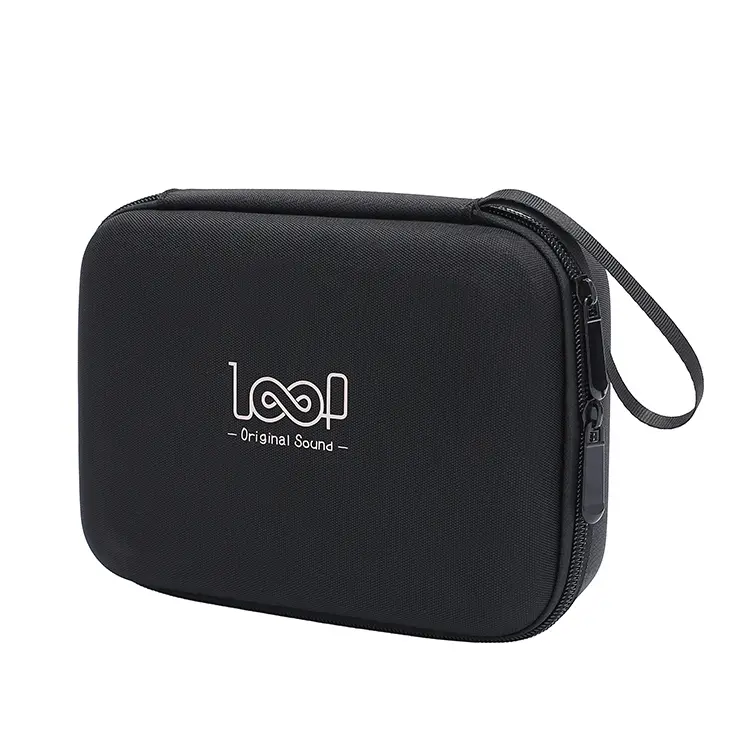
Spring latches: mechanical retention for repeated industrial use
A spring latch uses a molded or metal leaf, torsion spring or plunger that engages a strike plate or recess. The engagement is positive: the latch is either open or closed, with little ambiguity in between. This is the standard choice for tool cases and instrument cases opened hundreds of times per week.
- Retention force is predictable and testable: measure the force required to open the case with a pull gauge and set a range in the specification, for example between 15 N and 30 N depending on case size.
- Mechanism count matters. A single central latch is cheaper but allows shell twist on wide cases; two latches on the long edges resist bowing far better.
- Spring latches mount with rivets or screws through the shell edge. Confirm the rivet backing does not deform the EVA wall – reinforce with washers or molded bosses on thin shells.
The trade-off is cost. Each latch adds a part, a fastening operation and a potential failure point, so unit cost rises faster than with snap designs.
Snap-fit catches: molded-in retention at the lowest unit cost
Snap catches rely on geometry rather than separate hardware: a molded lip or flexible arm on one shell half deflects over a ledge on the other. Because the feature is formed in the same mold as the shell, there is no added component and no fastening step. For consumer electronics cases, headphone cases and promotional kits shipped in volume, snap closures are usually the most economical option.
What to verify before approving a snap design:
- Deflection ratio. The cantilever arm must flex within the strain limit of the laminated EVA composite; ask the factory for cyclic open-close data of at least 2000 cycles at room temperature.
- Retention force consistency. Because the catch is part of the shell, tolerance build-up from fabric lamination and foam density variation changes the feel. Sample at least three production batches, not just the pilot run.
- Low-temperature behavior. EVA stiffens in cold conditions; a snap that engages easily at 20 °C can pop open during winter freight. Request verification at approximately 0 °C if the market demands it.
- Wear mode. Fabric-covered beads can fuzz or abrade; specify dense fabrics or local heat-seal reinforcement on contact surfaces.
Magnetic closures: premium feel, hidden mechanism
Magnetic catches embed paired neodymium or ferrite magnets in the shell walls, often with a steel keeper plate. There is no visible hardware, closing feels damped, and branding surfaces stay clean – which is why consumer and gift-market EVA cases increasingly use magnetic flaps. The engineering concerns are different from the other two families:
- Pull strength must match the case contents. A weak pair lets the lid gape in transit; an overly strong pair frustrates elderly or gloved users. Specify magnet grade, diameter and quantity rather than just “magnetic closure”.
- Magnets add weight and cost per pair, and pricing tracks rare-earth market swings. Fix magnet sourcing terms in the contract for long programs.
- Shielding. For cases carrying compasses, medical devices or magnetic media, confirm acceptable field leakage or select a snap design instead.
- Assembly accuracy. Bonded magnets shift if adhesive application is inconsistent; require a pull-off test on samples.
How to choose: a decision sequence for buyers
Work through the questions in this order rather than jumping straight to cost:
- Cycle count. Above roughly 50 open-close cycles per day in the field, favor spring latches; below that, snap or magnetic designs are usually sufficient.
- Security requirement. If the case must not open under vibration, tumbling or inversion, positive mechanical retention wins; magnetic-only closures should not be the sole retention on tool or instrument cases.
- Brand position. A magnetic flap supports a premium unboxing experience; a visible spring latch signals ruggedness.
- Program volume. At high volumes the snap option’s zero-added-parts advantage compounds; at low volumes it matters less.
Specifications to put in the RFQ
Whichever family you select, write measurable requirements into the inquiry so quotations are comparable:
- Opening and closing force ranges, in newtons, measured with a gauge at defined points.
- Open-close cycle count target and test conditions, including temperature extremes if relevant.
- Fastening method for hardware latches: rivet, screw or molded-in insert, plus corrosion protection level.
- Magnet grade, dimensions and pull force for magnetic designs, verified on finished samples.
- Failure definition: what counts as a rejected unit – permanent deformation, retention loss beyond a set percentage, or visible fabric wear on the catch.
A latch specified before tooling costs a revision; a latch discovered after molding costs a tool. Inspect pilot samples for engagement alignment, listen for rattle under shake, and cycle each mechanism manually several hundred times before signing off. Combine this with your drop and transit testing so the closure is validated under the same conditions the case will face in the field.
Tip: Never approve a latch design based on one hand-assembled prototype – always cycle at least ten production-tool samples, because molded catches behave differently once fabric lamination and batch tolerance are in the loop.
Related Pages
- EVA Tool Case Purchase Order Guide
- EVA Tool Case Sample Evaluation Guide
- EVA Case Bulk Order Tips
- EVA Tool Case Custom Inserts Design
Post time: Nov-20-2026