




EVA Case Logo and Branding Methods Compared
Private-label brand owners, importers and distributors specify decoration at the sample stage because changing a logo method after the tool is approved costs both time and money. This comparison explains how each branding method behaves on EVA moulded panels so you can choose the right process before the first mould is cut. We cover molded-in debossing, screen printing, pad printing, heat transfer, laser engraving, woven and TPU labels, metal badges, rubber patches and embroidery on textile panels, and we explain where each one succeeds or fails on a real production line.
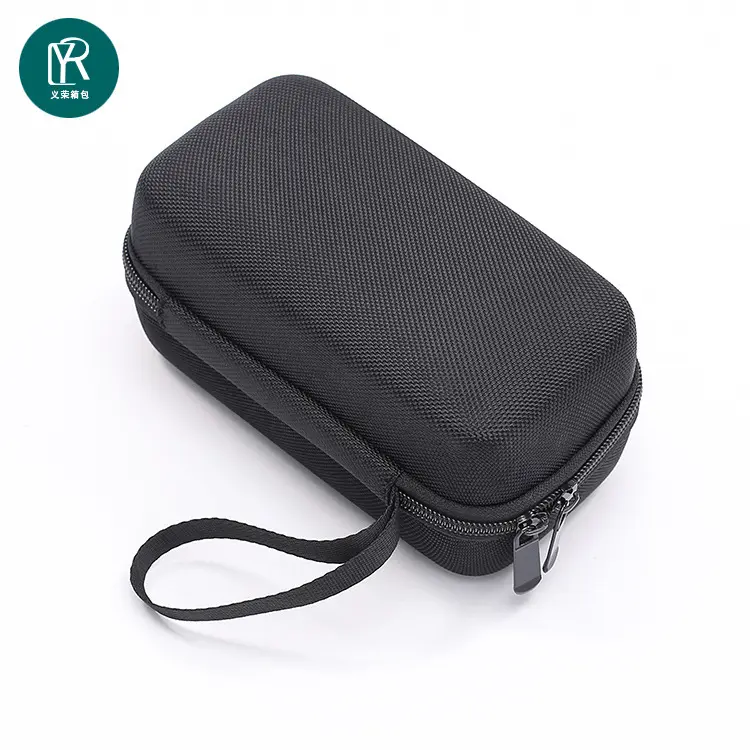
The Candidate Branding Methods
The following methods are the realistic options for EVA cases produced through a Chinese manufacturer’s tooling and assembly process. Each has a distinct look, cost profile and surface requirement, and the right choice depends on volume, surface geometry and the testing the product must survive.
- Molded-in debossing: the logo is engraved into the aluminium or steel tool so the mark is pressed into the EVA during moulding. It is permanent and sits flush with the panel with no ink or adhesive to fail.
- Silk screen printing: ink is pushed through a mesh stencil onto the skin. It suits flat or gently curved lids and gives solid, opaque colour blocks with strong coverage.
- Pad printing: a silicone pad picks up ink from a cliché and transfers it onto contoured surfaces, making it the better choice for curved corners that screen printing cannot reach.
- Heat transfer: a preprinted film is pressed onto the surface with heat and pressure, allowing photographic detail, gradients and multi-colour artwork in a single application.
- Laser engraving: a laser removes or discolours the top skin of the EVA, producing a clean monochrome mark with no ink and no consumable film.
- Woven and TPU labels: a sewn or welded patch carrying the brand name or care information, common on textile-lined models and soft panels.
- Metal badges and rubber patches: raised three-dimensional emblems attached with adhesive or rivets for a premium tactile finish.
- Embroidery on textile panels: stitching through a fabric panel bonded to the case, used where a soft-touch surface is part of the brand language.
How EVA Moulded Panels Accept Each Method
EVA is a closed-cell foam laminated between a fabric or film skin and a moulded shape, so surface behaviour depends on the skin material, the mould temperature and the draw depth of the tool. The molded-in debossing approach is the only method that does not rely on a separate surface coating because the mark is formed by the tool itself and becomes part of the panel.
Surface Texture and Curvature
A smooth PU or 1680D fabric skin accepts screen printing and heat transfer with fewer defects than a textured or brushed surface, where the ink can bridge the grain and read unevenly. Screen printing struggles on a radius tighter than about 15 mm because the squeegee cannot follow the curve, while pad printing conforms to the same radius through the flexible pad. Laser engraving reads best on a single-colour skin because the contrast comes from burning or ablating the top layer rather than laying down a new colour.
Panel Thickness and Deep-Draw Failures
Thin lids below roughly 2.5 mm limit the depth of a molded deboss, and very deep-draw curved shells can cause woven labels and rubber patches to bridge gaps and lift at the edges after repeated flexing. Methods that depend on a flat ink film, such as screen printing, fail on deep-draw curved surfaces where the film stretches and cracks during moulding or transit flex. Pad printing and heat transfer survive gentle curves, but neither holds up on a sharp compound radius without a pre-test panel approved at the sample stage.
Artwork Requirements
Artwork acceptance is where most sample delays start, so the file you send should match the process rather than a generic brand guideline. The vector artwork at 1:1 scale is mandatory for debossing, screen printing and pad printing because the artwork drives the tool path or the stencil, not just the printed appearance.
Vector Files and Minimum Sizes
Supply Illustrator or CorelDRAW outlines with all text converted to paths so the supplier does not substitute a font. Minimum recommended line weight is 0.25 mm for debossing and 0.3 mm for screen printing, with a smallest legible font around 6 pt for printing and 8 pt for molded marks. Below these thresholds the tool cannot hold the detail and the print loses readability after a short period of handling, so agree the minimum size in the artwork approval note.
Pantone Matching Versus CMYK and Registration
Spot colours should be specified by Pantone spot matching rather than CMYK because four-colour process drift is larger on fabric and film skins than on coated paper. Trap tolerance for multi-colour screen prints is typically 0.15 to 0.3 mm, and registration tolerance should be agreed in writing before sampling so the two colours cannot misalign visibly. A molded-in logo does not use ink, so its tolerance is governed by the tool engraving and the moulding shrinkage, not by print registration, which removes an entire class of alignment risk.
Durability Comparison
Durability is not a single score but a set of failure modes, and the right method depends on how the case is used in the field. Molded-in debossing and laser engraving have no adhesive layer to fail, so they resist abrasion and solvent contact better than any printed film. Screen and pad prints perform well against UV when a matched topcoat is applied, while heat transfer can delaminate under repeated flex near a folded hinge or a tightly packed carton edge.
What to Test
Three standard in-house checks cover most field failures without external labs. The tape adhesion test uses specified tape pressed firmly onto the mark and pulled away at a controlled angle to reveal poor bonding on printed or labelled surfaces. The rubbing test runs a loaded finger or cloth back and forth a set number of cycles to simulate handling abrasion on shop shelves and in transit. Climate ageing places the sample in elevated temperature and humidity for an agreed duration to expose adhesive breakdown before the product ships. These describe test methods and sample conditions, not guarantees of field life, which still depends on the end-use environment.
Cost Structure Logic
The commercial decision is rarely about the per-unit price alone but about the split between one-time setup and recurring cost. Molded-in debossing carries tooling cost with a low per-unit cost, whereas screen and pad printing carry a plate or screen cost plus a per-unit ink and labour cost. Heat transfer adds a per-unit film cost that can exceed the printing labour on small runs, and metal badges add a purchased-component cost on top of the attachment operation.
The break-even volume between a tooled method and a printed method is found with the formula N equals (Tm minus Pp) divided by (up minus um), where N is the total units, Tm is tooling or mould cost, Pp is plate or screen cost, up is the per-unit cost of the printed method and um is the per-unit cost of the molded method. The break-even volume shifts toward tooling as order quantity rises and toward printing when the decorated area or colour count increases the per-unit printed cost, so the same case can flip from print to mould depending only on the annual volume you commit.
Placement and Orientation
Logo position affects both appearance and packing, and the choice should be made on the engineering drawing rather than left to the operator. The lid and base placement decision matters because a base logo is protected but rarely seen, while a lid logo is visible but exposed to stacking abrasion in display and storage. Wrap-around printing is limited by the zipper channel and the seam, so artwork must stop short of the zipper by an agreed margin to avoid ink on the teeth and slider.
The mark should sit clear of the handle reinforcement and the hinge fold line so it is not distorted when the case is opened and closed thousands of times. Logo position relative to the zipper also changes how cases stack in the carton, because a centred lid logo can contact the next case and should be verified during the sample packing check, with the stacking orientation recorded in the approval photos.
Mixing Methods on One Case
Combining methods is common and practical: a molded logo on the lid, a printed model number on the base, and a sewn label inside the lid, each carrying different information for different audiences. Each layer needs its own checkpoint, so the QC plan should confirm the deboss depth, the print registration and the label stitch or weld in separate stations rather than as one pass. A mixed decoration also changes the sample approval sequence because the tool must be cut before the print proof can be evaluated against the real molded surface, so plan the sampling calendar around the longest lead item.
Compliance Notes
For cases intended for skin-adjacent use or child-use markets, the inks, adhesives and films must meet the relevant restricted-substance rules for the destination market, and the supplier should provide material declarations on request. Recycling and mono-material design are easier when the decoration is molded-in or laser-engraved because no separate ink, film or badge is added to the EVA stream and the panel stays a single polymer family. All compliance references are subject to the latest standard text and official notices, and the buyer remains responsible for confirming current requirements with the certifying body before mass production.
Tip: Send one combined artwork pack with the vector logo, the Pantone numbers and the placement drawing at the same time as the tooling request so the sample stage does not stall waiting for a corrected file.
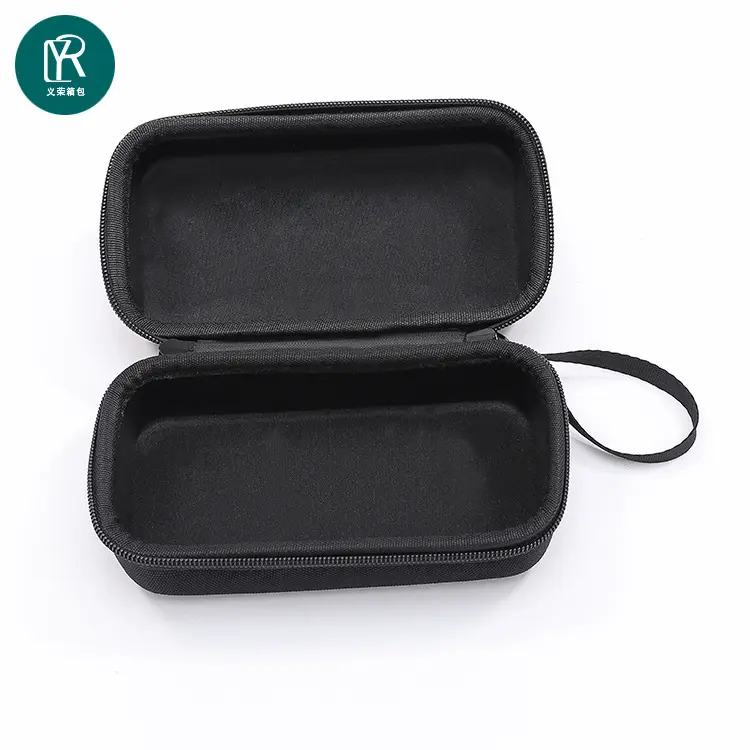
Branding Method Comparison Checklist
Choose by Surface and Use
- Flat lid, high volume, permanent mark: specify molded-in debossing and confirm deboss depth on the approved sample.
- Curved corner, one or two colours: specify pad printing and request the flex rubbing test result before release.
- Photographic detail or gradient: specify heat transfer and agree the film per-unit cost up front in the quotation.
- Premium tactile feel: specify metal badge or rubber patch and verify edge adhesion after climate ageing.
- Soft textile panel: specify woven label or embroidery and confirm the stitch density and pull strength.
Confirm Before Sampling
- Vector file at 1:1 with fonts converted to paths and the minimum line weight stated for the chosen method.
- Pantone spot numbers for every colour and the tolerance written into the purchase order and the artwork note.
- Placement drawing showing the margin from zipper, handle and hinge, plus the stacking orientation in the carton.
- Test plan covering tape, rubbing and climate ageing with the agreed cycle counts and acceptance limits recorded.
Frequently Asked Questions
Which branding method lasts longest on an EVA case?
Molded-in debossing and laser engraving last longest because they have no ink or adhesive layer to fail. Printed and film methods can reach similar field life only with a matched topcoat and a verified test plan agreed at the sample stage.
Can I print on a deeply curved EVA shell?
Screen printing is unreliable on deep-draw curved surfaces, while pad printing and heat transfer handle gentle curves. For a sharp compound radius, request a pre-test panel and a rubbing result before committing the production order.
Do I need a vector file for a molded logo?
Yes. The molded logo is driven by the tool engraving, so the supplier needs a vector outline at 1:1 with fonts converted to paths and a stated minimum line weight to hold the detail through moulding.
How is the break-even between tooling and printing calculated?
Use N equals (Tm minus Pp) divided by (up minus um), with tooling cost, plate cost and the two per-unit costs as inputs. The result tells you the volume at which the one-time tool cost is recovered against the higher per-unit printed cost.
Are decorated cases recyclable?
Mono-material recovery is simplest with molded-in or laser marks because no separate ink, film or badge is added. Badges, patches and printed films introduce mixed materials that need separate handling, subject to the latest standard text and official notices in the destination market.
Related Pages
If you are preparing a specification, these pages help with the surrounding purchase and sample steps.
EVA Tool Case Purchase Order Guide EVA Tool Case Sample Evaluation Guide EVA Case Bulk Order Tips EVA Tool Case Custom Inserts Design
Post time: Oct-26-2026