




EVA Case Shell Thickness and Corner Reinforcement
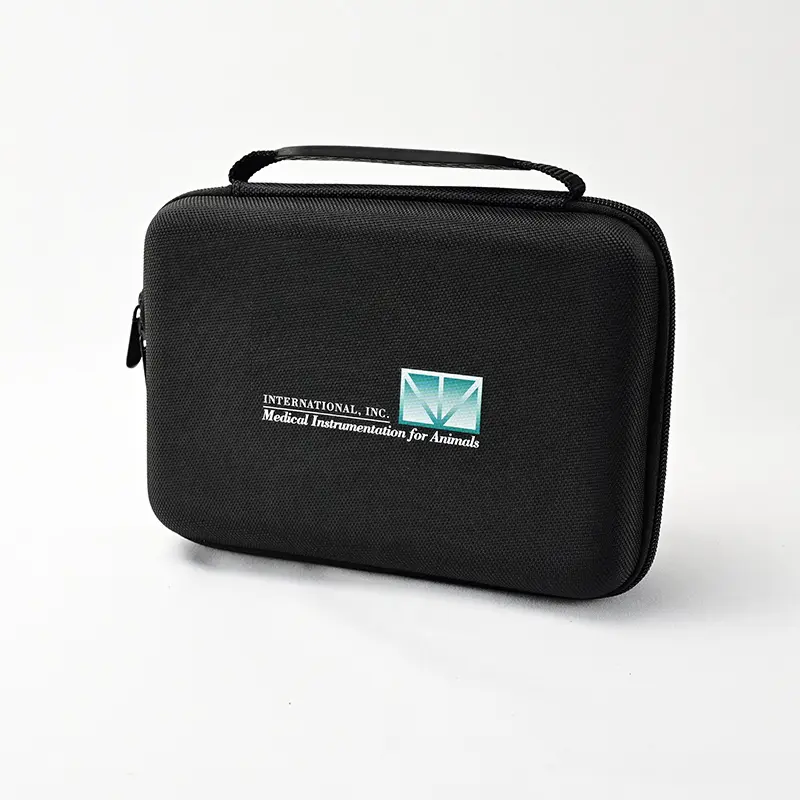
Shell thickness is one of the least visible yet most decisive factors in whether an EVA molded case survives real-world handling. Buyers often focus on color, zipper and foam, but the wall section and corner structure determine impact resistance, weight, freight cost and tooling behavior. This article explains how to specify and verify shell thickness and corner reinforcement for EVA tool cases, medical instrument cases, drone cases, audio-visual cases and laptop sleeves.
How Shell Wall Thickness Controls Impact Resistance and Weight
The molded shell of an EVA case is not a uniform sheet. A well-engineered case uses zoned wall thickness to balance protection and mass. The flat panels can stay relatively thin because they are supported by curvature and internal pressure. The corners carry the highest bending loads during a drop. The opening edges near the zipper must resist deformation that would prevent closure. The base often needs extra section because it bears stacking and point loads in transit.
A common design logic is to keep flat walls around 2.0 to 3.0 mm, increase corners to 3.5 to 5.0 mm, thicken the zipper flange to 3.0 to 4.0 mm, and reinforce the base to 3.5 to 5.0 mm depending on payload. The goal is to place material where stress actually appears rather than making the entire shell heavier.
Why Corners Fail First
In a free fall the case rotates and one corner usually contacts the ground first. The load path travels through a small contact area into a thin, curved transition, producing sharp stress concentration at the internal radius. Corners are geometrically the weakest point because the bending moment is highest where two panels meet at an angle.
Typical failure modes include cracking along the inner radius, collapse or flattening of the corner profile, and delamination where the fabric, EVA and adhesive layers separate. A cracked corner rarely repairs well because the molded skin is continuous, so prevention through reinforcement is far cheaper than field returns.
How Forming Process Affects Thickness Distribution
The manufacturing method controls how evenly the wall thickness is maintained. Vacuum forming stretches a heated sheet over a mold and tends to thin the deepest draws and corners, with a wall-thinning rate that can reach 20 to 40 percent at extreme sections unless the sheet is pre-stretched or the mold is engineered for material flow. Compression molding and matched-die pressing hold thickness more consistently because the material is squeezed between two shaped surfaces, giving better control over the section but usually higher tooling and cycle cost. Thermal pressing of pre-laminated EVA panels offers moderate control and is common for medium runs where surface fabric and EVA are bonded before forming.
The practical takeaway is that the thinner the corner after forming, the more you must compensate with radius design or added reinforcement rather than assuming the drawing thickness equals the actual part. For vacuum-formed cases it is good practice to order a first article and measure the actual corner section before committing to volume, because the gap between nominal and real thickness widens with deeper draws. Compression-molded parts usually stay within a tighter band, which is why critical medical and instrument cases often choose that route despite the higher tool investment.
Reinforcement Methods Compared
Several reinforcement strategies are available, each with trade-offs:
- Local thickening at corners and base: simplest, adds mass only where needed, but depends on process control.
- Built-in skeleton or stiffener plate: an internal PP or ABS panel bonded inside the shell raises rigidity without much external change.
- Corner caps or protector pieces: molded TPU or rubber corners glued or sewn on, easy to add but can peel if adhesive is weak.
- Two-shot overmolding edge guard: a softer or tougher material is molded around the rim for cushioning and abrasion resistance, requiring a more complex tool.
- Aluminum frame or metal corner guards: highest durability for heavy professional cases, but adds significant weight and cost.
The right choice depends on drop height, payload value and budget. Light consumer cases may only need zoned thickness, while medical and drone cases often justify molded guards or internal plates.
Coordination Between Wall Thickness and Interior Lining
A thick, hard shell does not automatically protect the contents. If the interior lining is too thin, the rigid shell transmits shock straight to the instrument. The correct approach is a hard-outside soft-inside system where the shell resists puncture and crushing while the EVA foam insert or molded tray absorbs energy and constrains movement.
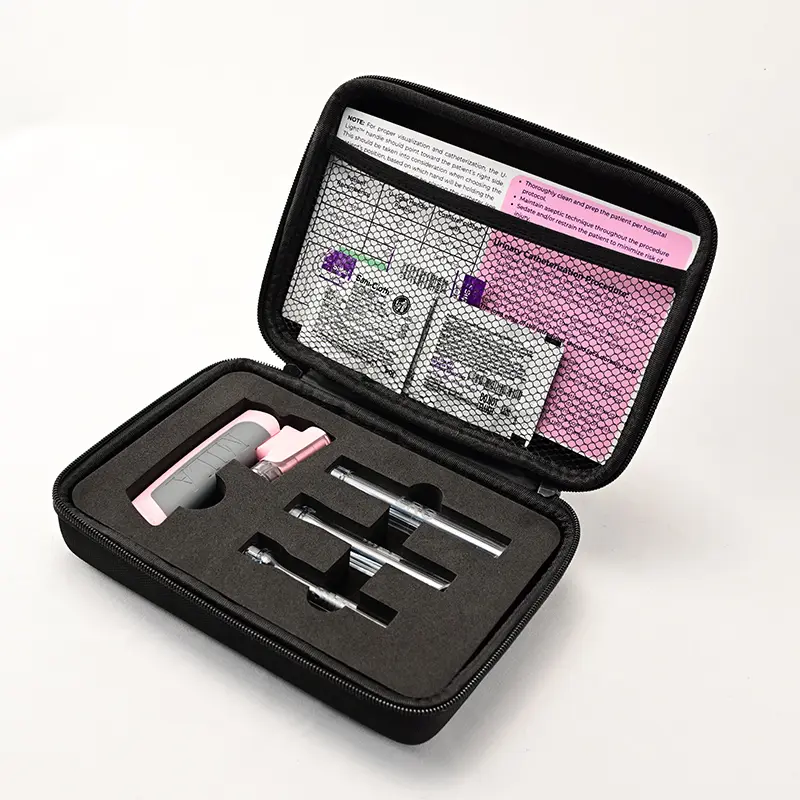
Avoid the common mistake of specifying a thick shell with a thin 5 mm generic foam. For fragile items use 10 to 20 mm density-graded foam, die-cut or CNC pockets, and a tray that holds the product tightly so it cannot hammer against the shell during impact. The shell and liner must be designed together, not separately.
Cost and Weight Trade-off
Adding wall thickness is not free. The relationship can be estimated rather than assumed. Start from the shell surface area A in square centimeters and the density of the EVA composite rho in grams per cubic centimeter. Increasing average thickness by 0.5 mm adds material mass of roughly A times 0.05 cm times rho. For a case with 2000 cm2 of shell area and a composite density of 0.45 g/cm3, that is about 2000 x 0.05 x 0.45 = 45 grams of extra material per case.
That extra mass lengthens the molding cycle slightly because more material must heat and cool, and it raises freight because both carton weight and dimensional stability change. Whether the increase is justified depends on the required drop height, the value of the contents and the shipping mode. Air freight makes every gram expensive, while sea freight tolerates more weight for better protection. A useful way to decide is to compare the cost of a damaged return, including shipping both ways and customer trust, against the per-case material and freight delta from a thicker wall. In most professional categories the protection premium is small relative to a single lost account.
Tip: Always request a sectioned sample cut from a production case, because a drawing thickness of 3.0 mm that measures 2.1 mm at the corner after vacuum forming will fail exactly where your customer drops it most.
Inspection and Verification Methods
Verification should happen before mass production, not after complaints. Wall thickness is checked with a ultrasonic gauge or by cutting a cross-section and measuring with a caliper at defined points: flat center, corner inner radius, zipper flange and base. Drop testing should copy the real condition: define drop height by product class, drop on each corner, edge and face, and use the actual packed weight. Low-temperature brittleness testing exposes cases to cold such as minus 20 Celsius then drops them, because EVA and adhesives lose flexibility when frozen. Stacking and crush tests apply a static load for a set time to confirm the base and walls do not permanently deform under pallet weight.
A practical inspection plan records at least three measurements per zone and averages them, because a single reading can fall on a local thin spot. Keep the measurement map attached to the approved sample so future production batches are judged by the same points. Buyers who skip this step often discover variation only after a distributor reports field failures, by which time thousands of units may have shipped.
What the Specification Sheet Must State
A usable drawing or spec sheet should not just say “EVA case.” It must record wall thickness with tolerance such as 3.0 plus or minus 0.3 mm, corner inner radius, material density and Shore hardness of the shell, the position and type of any reinforcement, and the acceptance criteria for impact and delamination. Without these values the factory cannot be held to a standard and the buyer cannot reject a bad batch objectively.
Inquiry Checklist and Common Disputes
When requesting a quote, buyers should ask for the measured corner thickness, the forming process, the reinforcement method, the drop-test standard used, and sample lead time. A frequent dispute is that the measured thickness is below the drawing. The fair judgment rule is to measure at the specified points with an agreed gauge and allow the stated tolerance; if the corner reads outside tolerance after multiple samples, the tool or process must be corrected rather than the specification quietly lowered.
FAQ
- Does thicker always mean stronger? Not necessarily. A thick shell with a sharp corner radius can still crack, while a thinner shell with a generous radius and internal plate may outperform it.
- Which process gives the most uniform wall? Compression or matched-die molding generally holds thickness best, followed by thermal pressing, with vacuum forming the least uniform.
- How much corner radius is enough? For most EVA cases an inner corner radius of 3 to 6 mm reduces stress concentration noticeably; heavier cases benefit from the larger end.
- Can I add corner guards later? Yes, but molded or overmolded guards perform better than glued-on pieces because adhesion is the usual failure point.
- What is the fastest way to catch a thin corner? Section a production sample and measure the cut, or use an ultrasonic thickness gauge at the inner radius before approving the tool.
Related Pages
- EVA Tool Case Sample Evaluation Guide
- EVA Tool Case Custom Inserts Design
- EVA Tool Case Purchase Order Guide
- EVA Case Bulk Order Tips
Post time: Oct-30-2026