




EVA Case Sourcing Guide for Amazon Sellers: Find Reliable Suppliers & Boost Your Product Performance
If you sell electronics, outdoor gear, first aid kits, power tools or small portable devices on Amazon, EVA cases are one of your most essential accessory lines. Lightweight, shockproof, waterproof and highly customizable, EVA storage cases have become a top choice for both bundled add-ons and standalone products across Amazon marketplaces. However, sourcing high-quality, compliant and cost-effective EVA cases can be challenging, especially for sellers aiming to maintain consistent product quality, meet global certification rules and control overall costs.
This comprehensive sourcing guide walks you through every key step of EVA case procurement, from understanding core product features, verifying supplier qualifications, confirming customization details, negotiating orders to managing quality control and logistics. Whether you are a new Amazon seller stepping into this category or an experienced brand owner looking to optimize your supply chain, this guide will help you avoid common pitfalls and build long-term reliable partnerships.
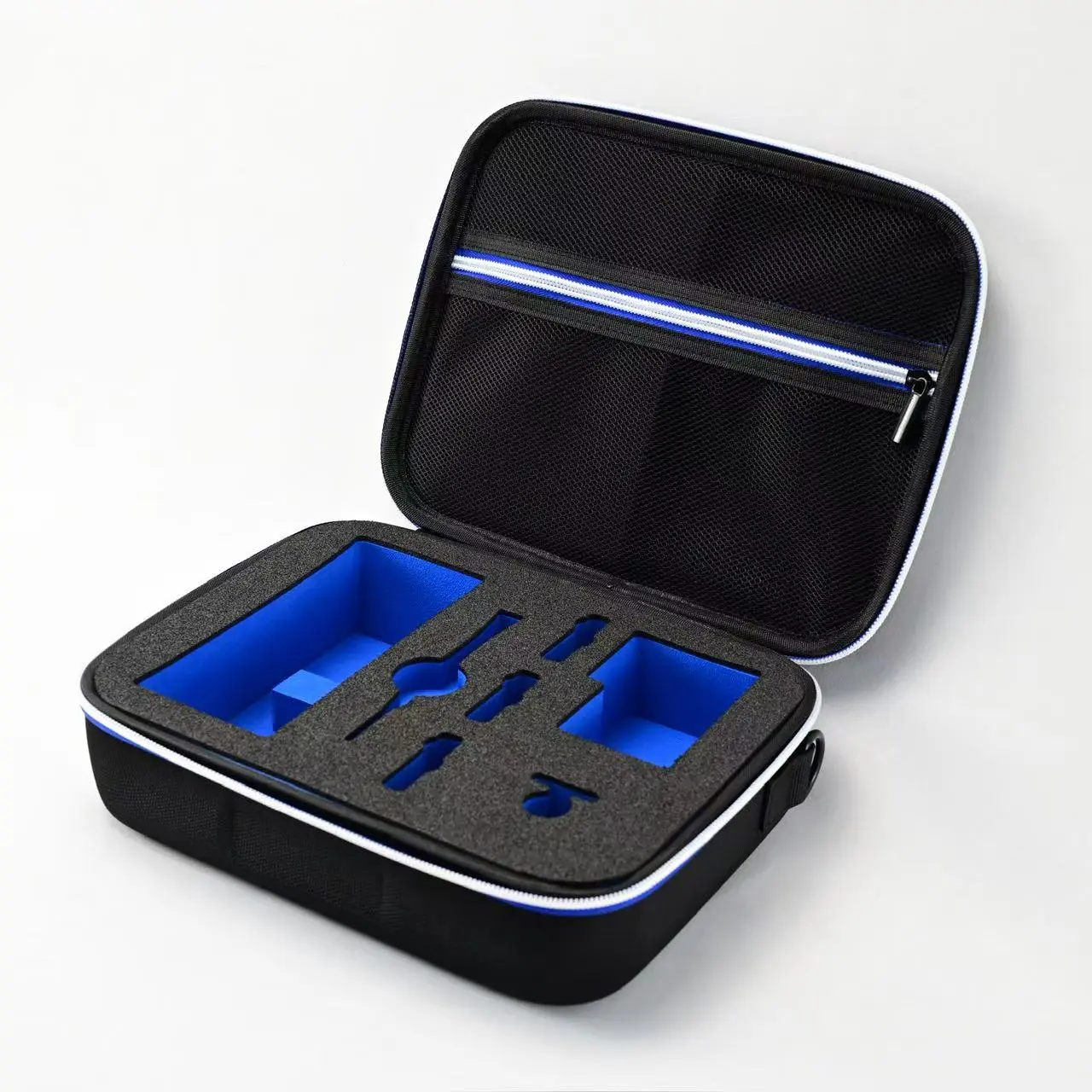
Why EVA Cases Are a Top Seller on Amazon
Before diving into sourcing details, it is critical to understand why EVA cases dominate the storage and protective packaging segment on Amazon. This helps you align your product positioning and select the right styles for your target audience.
EVA (Ethylene Vinyl Acetate) material combines the flexibility of foam and the sturdiness of hard shell materials. Compared with ordinary fabric bags and rigid plastic boxes, EVA cases stand out with multiple advantages that appeal to both buyers and sellers. For end consumers, these cases deliver excellent protection: they effectively buffer impacts during transportation and daily use, prevent scratches on earphones, chargers, drones, flashlights and precision tools. Most standard EVA cases also feature basic waterproof performance, suitable for outdoor, travel and daily carry scenarios. Meanwhile, their lightweight design will not add extra burden, which is a huge plus for portable products.
For Amazon sellers, EVA cases bring greater operational flexibility. First of all, they support rich personalized branding. Embossed logos, printed patterns, custom colors and tailored inner foam layouts can all be realized, helping you strengthen brand recognition and differentiate products from generic competitors. Secondly, the product range is extremely wide. EVA cases can be adapted to nearly all small and medium-sized portable products, including electronic accessories, first aid kits, pet supplies, outdoor cooking gear, car cleaning tools and more, covering multiple high-demand Amazon categories.
In terms of market performance, the global demand for protective storage accessories keeps growing steadily. As more consumers pay attention to product maintenance and neat storage, EVA cases maintain stable sales volume and profit margins on Amazon US, Europe and other mainstream sites. Moreover, mature production processes make EVA cases easy for mass production, laying a solid foundation for sellers to expand inventory and scale up business.
Core Product Specifications to Confirm Before Sourcing
The quality of EVA cases directly affects Amazon customer reviews, return rates and brand reputation. Defective products such as cracked shells, loose zippers, deformed inner foam and pungent odors will lead to negative feedback and even listing penalties. Therefore, clarifying product specifications in advance is the core of successful sourcing. Below are the key indicators you need to confirm with suppliers one by one.
1. Material Selection & Hardness
The core material of the case determines its protective performance and service life. Regular EVA cases are divided by material density and hardness, which match different usage scenarios.
- Hardness: For precision electronics like wireless earphones, data cables and chargers, medium-hard EVA (70-80 Shore hardness) is the mainstream choice, balancing protection and portability. For power tools, drones and outdoor equipment that require strong compression resistance, choose high-hardness thickened EVA to avoid extrusion deformation. Soft EVA is mostly used for lightweight accessories with low protection requirements.
- Outer Fabric: Common options include carbon fiber pattern PU, ordinary PU, Oxford cloth and matte fabric. Carbon fiber PU has a high-end texture, which can improve product grade and is favored by high-end electronic accessory sellers. Oxford cloth is wear-resistant and cost-effective, suitable for tool kits and outdoor storage bags. You need to select the surface material according to your product pricing and brand style.
- Inner Lining & Foam Insert: Custom molded foam is the standard configuration for high-quality EVA cases. Pre-cut grooves can fix products firmly and prevent shaking and collision. You can choose integrated foam or layered detachable foam according to the number of built-in accessories. In addition, confirm whether the inner fabric is lint-free, to avoid scratching the surface of electronic products.
2. Functional Performance Standards
Combined with the use habits of overseas consumers and Amazon product rules, focus on three core functions: shock resistance, waterproof performance and durability.
- Shock & Compression Resistance: Standard products need to withstand conventional drops and extrusion. If your products are fragile precision devices, ask suppliers to provide drop test results to ensure the EVA shell and foam will not be damaged after impact.
- Waterproof Rating: Most daily-use EVA cases reach IPX4 waterproof level, which can resist splashing water and light rain. For outdoor and travel-oriented products, you can upgrade to higher waterproof standards and confirm the sealing performance of zippers and edges.
- Accessory Durability: Zippers are the most vulnerable part of EVA cases. Confirm the zipper material and opening-closing durability. High-quality metal or durable plastic zippers can withstand more than 5000 times of opening and closing without jamming or damage. For cases with handles or buckles, also check the firmness of connections.
3. Global Compliance Certifications
This is a must for selling on Amazon cross-border sites. Non-compliant products will be removed from shelves, detained by customs or rejected by buyers. Prioritize suppliers who can provide the following complete certifications:
- REACH & RoHS: The two most basic chemical safety certifications for products sold in Europe and North America, which restrict harmful substances inside EVA materials and accessories. All regular EVA case manufacturers must hold these two certificates.
- CE Certification: Mandatory for products entering the European market, proving that the product meets EU safety, health and environmental protection standards.
- Other Optional Certifications: If you sell medical first aid kits or contact products, you need to ask for relevant sanitary certifications; for products sold in the US, you can confirm whether they meet California Proposition 65 requirements to avoid chemical compliance risks.
Always require suppliers to provide valid certification documents and test reports, and keep the files for customs clearance and Amazon review.
How to Verify a Reliable EVA Case Supplier
There are numerous EVA case manufacturers and trading companies in the market, and it is easy to encounter middlemen with marked-up prices or small factories with unstable quality. As an Amazon seller, you need to screen suppliers from production capacity, service capability and credibility. Here is a step-by-step supplier verification process.
1. Distinguish Between Direct Manufacturers and Trading Companies
Direct factories have advantages in price, customization flexibility and delivery cycle, which are more suitable for long-term cooperation. Trading companies usually have higher quotations and weaker control over production progress and quality. You can judge through the following details:
- Ask the supplier to introduce their production lines, workshops and existing mold resources. Professional EVA case factories have complete equipment for hot pressing, molding, sewing and logo printing, and own a large number of mature molds for electronic accessories, tool kits and other common products, which can save your mold opening cost and sample time.
- Confirm the company’s business scope and production years. Factories with more than 10 years of EVA case production experience have more mature processes and richer industry experience, and can accurately judge product problems in advance.
- Avoid suppliers who cannot provide on-site workshop photos, production videos or factory audit reports. These are typical characteristics of small trading intermediaries.
2. Evaluate Sampling & Customization Capabilities
Customization is the core demand of most Amazon sellers, including logo printing, color matching, internal foam layout and overall size adjustment. A qualified supplier needs to support one-stop customized services.
- Sample Lead Time: Standard ready-made samples can be delivered within 1-3 days. For fully customized products with new molds, the sample cycle is usually 7 to 15 days. Confirm the sample production time and sample fee rules in advance. Many regular factories will deduct the sample fee after the bulk order reaches a certain quantity.
- Logo Craft Options: Common logo processes include embossing, silk screen printing and heat transfer printing. Embossed logos are more durable and high-grade, which is the first choice for brand products. Clarify the logo size, position and color requirements when placing sample orders.
- Design Support: Excellent suppliers can provide free design solutions according to your product size and usage scenarios, from case shape to internal partition layout, reducing your design cost.
3. Confirm MOQ, Price and Production Cycle
Amazon sellers have diverse order demands: some start with small-batch trial sales, while others place large bulk orders for hot-selling products. Clarify MOQ, unit price and delivery time to match your inventory plan.
- Minimum Order Quantity (MOQ): Regular fully customized EVA cases usually have an MOQ of 500 pieces. For sellers doing trial sales, you can negotiate with suppliers for flexible low MOQ schemes. Standard in-stock styles often support lower MOQ, even small batch mixed orders.
- Price Ladder: Unit price is closely linked to order quantity. Generally, the larger the order quantity, the lower the unit cost. Ask suppliers to provide detailed price lists corresponding to different order quantities to calculate profit margins in advance. Meanwhile, confirm whether the price includes logo fees, mold fees and packaging fees to avoid hidden costs.
- Mass Production Cycle: After the sample is confirmed, the conventional production cycle for bulk orders is about 20 working days. If you have peak sales seasons such as holidays, you need to place orders in advance and confirm the supplier’s production capacity to ensure on-time delivery and avoid out-of-stock on Amazon.
4. Quality Control System
Stable batch quality is the key to maintaining Amazon listing scores. Learn about the supplier’s whole-process quality control measures: from incoming material inspection of EVA raw materials and accessories, semi-finished product inspection during production, to finished product full inspection before delivery. Professional factories will conduct random inspection on product size, performance and appearance for each batch of goods to ensure consistent quality between samples and bulk products. You can also require suppliers to provide pre-shipment inspection photos or videos for large orders.
Key Tips for Order Negotiation & Cooperation
After selecting a suitable supplier, standardized order negotiation and cooperation rules can effectively reduce disputes in the later stage. Combined with the operating characteristics of Amazon sellers, we summarize the key negotiation points covering orders, packaging, logistics and after-sales.
1. Order & Contract Details
All verbal agreements must be converted into written contracts or formal order sheets to protect your rights. Clearly mark the following contents: product size, material, color, logo style, foam layout, total order quantity, unit price, total amount, sample confirmation standard, production cycle and delivery date. Specify the liability for delay in delivery and unqualified quality, so as to have a basis for handling problems when they occur.
For sellers who develop new products, confirm the ownership and maintenance rules of custom molds. Clarify whether the mold can be used exclusively by you to prevent the same customized products from flowing to other Amazon sellers and causing homogeneous competition.
2. Packaging Requirements for Amazon FBA
Most Amazon sellers choose FBA warehousing and distribution, so product packaging must comply with FBA rules. Communicate packaging standards with suppliers in advance:
- Outer packaging: Use standard export cartons with firm compression resistance to prevent damage during long-distance transportation and warehouse stacking. Mark product information, quantity and shipping marks clearly on the cartons.
- Inner packaging: Single EVA cases can be equipped with transparent plastic bags or neutral paper bags to prevent dust and scratches. Avoid over-embellished packaging to control cost, and also do not use excessive packaging that does not meet Amazon’s environmental requirements.
- Neutral packaging: If you do not want the supplier’s brand information to appear on the product and packaging, clearly put forward the requirement of fully neutral packaging.
3. Logistics & Shipment Arrangement
According to your Amazon warehouse location and inventory urgency, choose appropriate logistics methods. For regular bulk goods, sea freight has low cost and is suitable for large orders with sufficient time. For urgent replenishment orders, choose air freight or express delivery. Professional EVA case suppliers are familiar with cross-border export processes and can provide one-stop services such as customs declaration, helping you simplify the shipment process.
In addition, confirm the loading quantity of each carton and the overall gross weight and volume of the goods, so as to accurately calculate logistics costs and arrange warehouse receiving.
4. After-sales & Reorder Mechanism
Clarify the after-sales solution for defective products. For unqualified goods caused by production problems, confirm the supplier’s re-production, replacement or compensation rules. For long-term cooperative suppliers, establish a quick reorder channel. After the style is finalized, subsequent replenishment can directly place orders without repeated sample confirmation, greatly improving the replenishment efficiency of Amazon hot-selling listings.
Common Sourcing Mistakes to Avoid for Amazon Sellers
Many sellers encounter losses due to negligence in the sourcing process. Summarizing the common mistakes in EVA case procurement can help you stay away from risks:
-
Only focusing on low price while ignoring quality: Excessively pursuing ultra-low quotations often matches inferior EVA materials. Such products have peculiar smells, poor compression resistance and easy-to-damage accessories, which will bring a large number of returns and bad reviews on Amazon, and the loss far exceeds the cost saved in the early stage.
-
Ignoring compliance certifications: Selling non-certified EVA cases on European and American Amazon sites will face risks such as customs detention and listing removal. Never cooperate with suppliers who cannot provide complete REACH, RoHS and CE certificates.
-
Skipping sample testing before bulk order: Some sellers directly place large orders after seeing pictures. The texture, size and performance of pictures are different from physical objects. Be sure to get physical samples, conduct drop, waterproof and use tests by yourself, and confirm that they meet the requirements before arranging mass production.
-
Unclear customization details: Vaguely describing logo position, foam shape and color will lead to a large number of bulk products inconsistent with expectations. All customized details need to be marked on the sample drawing one by one.
-
Underestimating the production cycle: Amazon has obvious sales peaks such as Black Friday, Cyber Monday and Christmas. If you place orders temporarily before the peak season, it is easy to encounter delayed delivery and out-of-stock, resulting in lost sales opportunities. Arrange orders in advance according to the production cycle.
Final Thoughts
EVA cases are a stable and profitable category on Amazon, and excellent supply chain management is the core of long-term operation. From clarifying product positioning and technical specifications, screening qualified manufacturers, confirming customization and orders, to controlling quality and logistics, every link needs to be treated carefully.
A reliable EVA case supplier can not only provide cost-effective products, but also support your product iteration and brand upgrading through flexible customization, stable delivery and perfect after-sales service. Follow the steps in this guide to sort out your sourcing standards, verify suppliers layer by layer, avoid common pitfalls, and you will be able to build a high-quality EVA case product line, enhance competitiveness on Amazon, and achieve steady growth of sales and profits.
Post time: Jun-10-2026