




EVA Case Wall Thickness and Drop Protection Trade-offs
Wall thickness is the single most consequential number in an EVA case specification, and it is also the number most frequently set by habit rather than analysis. Buyers often default to 2 mm because that is what the previous project used, then discover either that the case dents in transit or that it is heavier and more expensive than the retail price point allows. The correct approach is to treat thickness as a variable to be traded against weight, cost, interior volume and the actual drop energy the contents can survive.
How Thickness Converts Into Protection
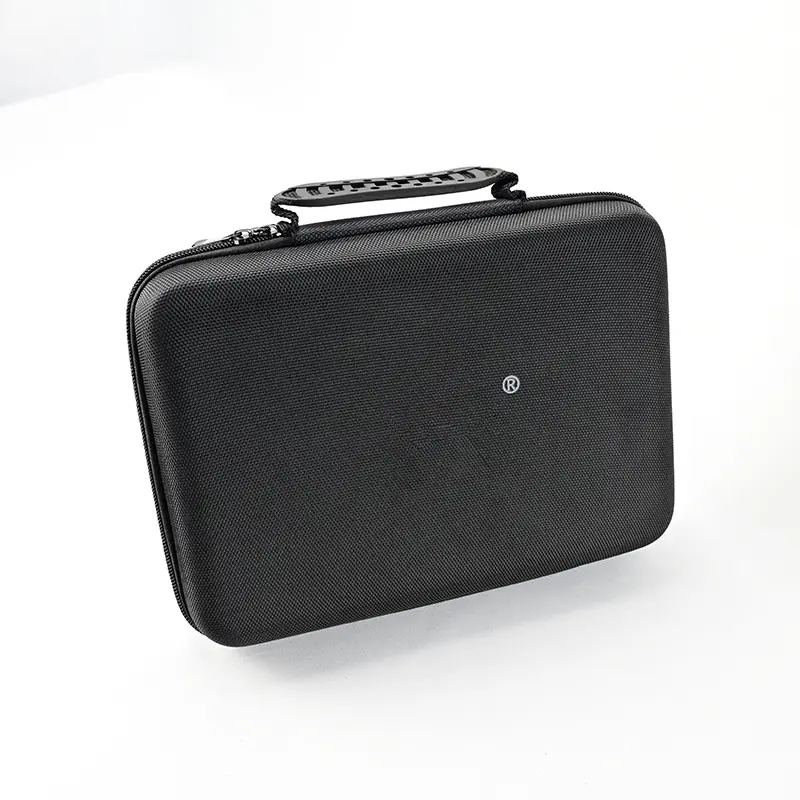
EVA shells protect by crushing and rebounding. When a case hits the ground, the laminated EVA laminate deforms locally, spreading the impact over a longer time window so the peak force reaching the contents drops. A thicker wall gives the shell more material to crush before the foam bottoms out against the product. In practical terms, moving from 2 mm to 3 mm of shell wall noticeably improves behavior in corner and edge impacts, where deformation space is smallest. Below roughly 1.5 mm, the shell relies heavily on the internal foam insert to do the work, and the shell itself may crease or permanently deform after a single hard hit.
However, protection is not linear. Doubling thickness does not double survivable drop height, because the internal foam insert architecture usually becomes the limiting factor first. A 4 mm wall wrapped around a poorly cut foam cavity will still transmit shock straight to the product. This is why thickness decisions should be made together with insert design, never in isolation.
The Cost and Weight Trade-off
Every added millimeter of shell wall costs material, molding cycle time and shipping weight. For a mid-size tool case, moving from 2 mm to 3 mm wall typically adds measurable grams per unit, which multiplies quickly across a container load and can push the packed carton over a courier weight breakpoint. Unit cost rises as well, since thicker sheet requires longer press time and higher material consumption per molded shell. Buyers should quantify this early: request quotation at two or three thickness levels from the factory and compare landed cost per case, not just ex-works price.
- Thin walls around 1.5 mm suit low-mass contents such as cables, adapters and small accessories sold at aggressive retail price points.
- Walls near 2 mm are the volume default for consumer electronics and light tool kits, balancing cost, weight and adequate corner behavior.
- Walls of 3 mm and above are justified for heavy contents, hard-edged metal tools, or programs where field damage claims have real warranty cost.
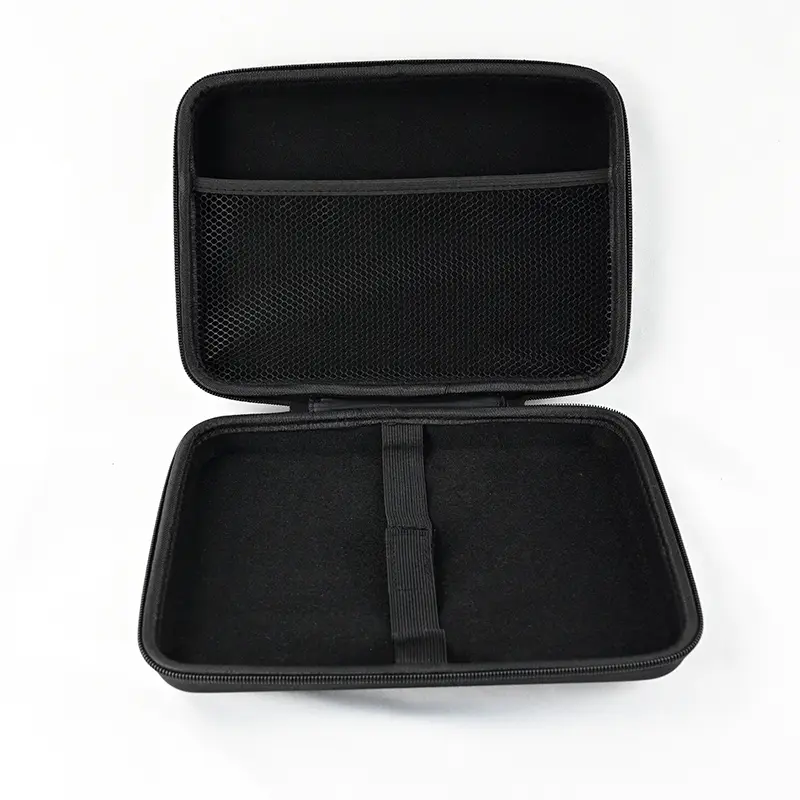
Interior volume is the trade-off buyers forget. Shell thickness eats into the internal cavity. If the product kit was dimensioned around a 2 mm shell and the specification later moves to 3 mm, the molded tray or die-cut foam may no longer fit. Confirm cavity dimensions at the same time as wall thickness, and lock both before tooling.
Matching Thickness to Drop Energy
Do not specify thickness against an abstract “drop-proof” requirement. Instead, work from the content’s fragility and the distribution environment. Estimate the worst realistic drop for your channel: parcel networks generate higher, more frequent impacts than palletized freight. Then ask the factory to propose a shell-plus-insert combination and validate it on physical samples, because paper calculations rarely survive contact with a real laminate stack. During sample validation, inspect the shell after each drop for creasing, delamination at the fold lines and permanent set at the corners. A shell that protects the contents but cracks its own laminate will fail in the field within months.
Weight of contents matters as much as drop height. A light product inside a thin case experiences low peak force; the same case with a dense metal tool inside sees far higher transmitted force, because the insert compresses through its full travel. This is why two cases with identical shells can perform completely differently, and why the specification must always describe the contents mass and geometry, not just the shell.
Where Thickness Is Not the Answer
When a thickening program becomes too heavy or too costly, reinforcement at specific zones is usually more efficient than uniform thickness. Thicker corner lamination, a reinforced base panel, or an internal rigid frame can deliver most of the durability gain at a fraction of the weight penalty. Discuss these options during development rather than after a failed drop round, since structural changes late in the project usually trigger tooling revisions.
- Reinforce corners and the hinge zone before thickening the whole shell.
- Upgrade insert density before upgrading wall thickness when the shell itself is not visibly damaged.
- Check zipper and hardware mounting points, because thicker walls change stitching depth and pull-test behavior.
Tip: Never approve a thickness change after tooling is cut without re-checking internal cavity fit, zipper mounting and packed carton weight in the same revision.
Common Specification Mistakes
The most frequent failure pattern is a buyer who increases wall thickness to fix a damage claim, then discovers the real cause was insert void geometry or a weak corner weld. Audit the returned samples first; thickening a structurally sound shell wastes cost and adds weight for no gain. The second pattern is copying a competitor’s thickness without checking whether your contents are heavier. Reverse-engineer with a purpose: measure the reference case, note its contents mass, and only match the shell if your load profile is comparable. For teams building a full selection framework, our material selection checklist approach pairs thickness with density and insert data so each decision is traceable to a test result rather than a guess.
Frequently Asked Questions
What wall thickness do most tool cases use?
Between 2 mm and 3 mm for typical hand tool and power accessory kits. Below 2 mm, protection depends heavily on the insert; above 3 mm, cost and weight usually demand justification through heavier contents or harsher distribution channels.
Does thicker EVA always mean better drop protection?
No. Once the insert bottoms out, extra shell thickness adds little. Protection improves only when shell thickness, insert density and void design are increased together and verified on physical samples.
Related Pages
- EVA Tool Case Purchase Order Guide
- EVA Tool Case Sample Evaluation Guide
- EVA Case Bulk Order Tips
- EVA Tool Case Custom Inserts Design
Post time: Nov-18-2026