




EVA Case Zipper and Handle Hardware: Durability Specs for Buyers
We supply tool and instrument brand owners, electronics accessory importers, medical and outdoor equipment brands, and industrial distributors who specify protective EVA cases in volume. When a protective case fails in the field, the root cause is very often the hardware rather than the molded shell. From accumulated production and returns experience, zippers, handles, and attachment fittings wear, corrode, or separate long before the EVA body loses its shape. The shell can look perfect while the slider jams, the pull tab snaps, or the stitched handle anchor tears out. Buyers who freeze hardware specs early protect the whole product, because a weak zipper or a loose handle turns a premium case into a returns liability regardless of how refined the interior is.
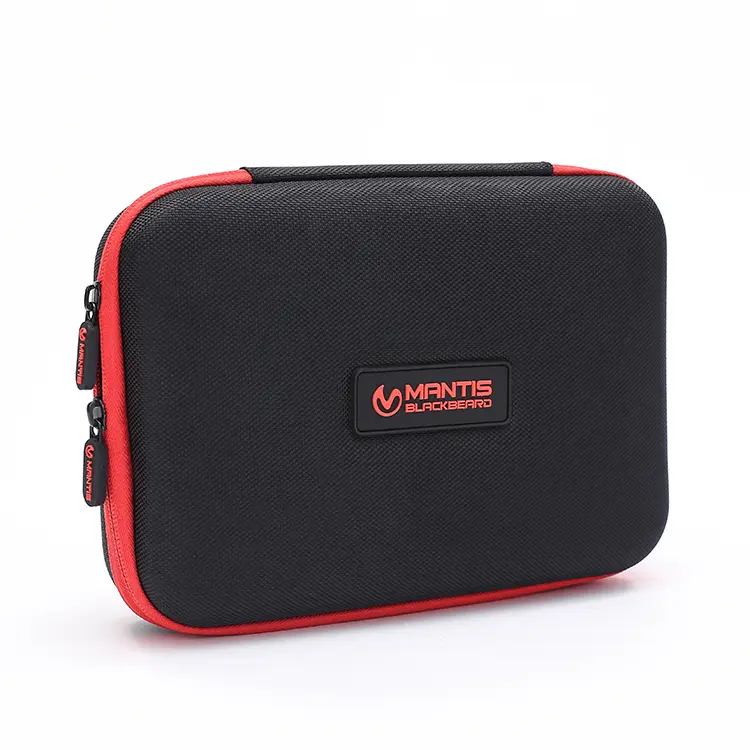
The Zipper System
The zipper is the single most stressed moving part on an EVA case, and it is where most field complaints originate. Selecting the right zipper family is a function of contents value, opening frequency, environmental exposure, and the internal pressure the closed case must resist.
Coil, Injection-Molded and Metal Zippers
Nylon coil zippers use a continuous helical tooth wound from thermoset or heat-set nylon. They are flexible, resist deforming when the case is dropped or squeezed, and they self-align when the slider passes a minor tooth defect. For most tool cases, instrument cases, and consumer electronics sleeves they are the default choice because the coil yields rather than breaks under side load.
Injection-molded zippers, often called plastic or delrin zippers, are formed from a single polymer element. They are stiffer than coil, hold a straighter line on long straight runs, and perform well where the case is opened infrequently but must look clean and uniform. They are more brittle at low temperature than nylon coil, so they are a poorer match for outdoor winter programs unless the resin is specified for cold rating.
Metal zippers, typically brass or nickel-silver, give a premium tactile feel and high single-tooth strength. They are favored on high-value presentation cases and some medical kits. Their weakness is corrosion in humid or salt-spray environments and tooth deformation if the case is crushed. For export programs that face ocean freight and tropical warehouses, metal needs a clear surface-treatment decision.
Zipper Size Numbers and Selection Logic
Zipper size in the industry is expressed by a number that corresponds roughly to the closed chain width in millimeters, so a zipper size number such as #3, #5, #8, or #10 tells the buyer the tooth scale at a glance. A #3 chain is light and used on slim sleeves and pouches. A #5 chain is the workhorse for mid-size tool and instrument cases. An #8 chain suits larger cases and heavier pull loads. A #10 chain is reserved for big equipment cases and cases that must resist internal pressure from packed foam and accessories. The selection logic is not the visual weight but the combination of case perimeter, contents mass, and how often the case is opened in the field.
Slider Types and Opening Configurations
The slider decides whether the zipper stays put under load. An auto-lock slider has a spring pawl that grips the teeth when released, so it will not creep open when the case is dropped or carried by the lid. A non-lock slider moves freely and is only acceptable on low-stress closures. A reverse-opening slider, where the pull sits on the inside, protects the pull from snagging in transit and is common on cases stacked in racks. Double sliders let the case open from either end or create a partial opening for cable pass-through, which matters for powered equipment that stays connected.
Water-Resistant Zippers and Their Limits
A water-resistant zipper is not the same as a waterproof seal. The common approach is a coil zipper laminated or taped to a PU or TPU film on the back of the tape, sometimes paired with a storm flap. This blocks rain and splashes but it still relies on the tape-to-shell weld, and it cannot match an IP-rated tongue-and-groove shell seal. The realistic limit is spray and short exposure; submersion will find the stitch line. Specify water-resistant zipper only when the environment is wet-but-not-submerged, and pair it with a documented tape-bond spec rather than assuming the zipper alone protects the contents.
Zipper Length and Corner Treatment
Long zipper runs need a straight, symmetric tape path. Corners are where most separations begin, because the tape is pulled into a tighter radius than the slider was designed for. A well-built case uses a radiused corner with adequate tape allowance and, on larger cases, a reinforcement patch at the corner stress point. When the zipper turns a sharp corner, the buyer should expect either a stiffened insert at the bend or a segmented zipper with a bonded joint. The specification should state the minimum corner radius and the allowed taper so the factory cannot shortcut the bend.
Hardware Failure Modes
The following list is built from field returns and bench observation. Each entry gives the symptom a buyer sees, the mechanism that produces it, and the control a specification can impose.
Documented Failure Patterns
- Burst open under internal pressure. Tip: never approve a #5 zipper on a case whose foam and contents can push the lid outward, because the chain will separate at the weakest tooth the first time the case is dropped while full. Phenomenon: the two zipper sides separate along the run while the slider is closed. Mechanism: foam compression and packed accessories create outward force that exceeds the tooth interlock at one point. Control: raise the size number, add a lid strap or compression, and require a pressure-hold check in the spec.
- Slider breakage or derailment. Phenomenon: the slider cracks, or the pull runs off the track. Mechanism: thin die-cast slider body, off-axis pull from a stacked case, or a bent tooth forcing the slider sideways. Control: specify slider material and wall thickness, auto-lock type, and a slider-pull alignment test.
- Tape-to-shell weld tear. Phenomenon: the fabric tape pulls away from the EVA edge. Mechanism: weak adhesive or weld at the seam, or the tape was not skived before bonding. Control: define bond width, peel strength input, and a sample destruct check at the corner.
- Tooth misalignment causing jam. Phenomenon: the slider sticks or skips teeth. Mechanism: uneven tape tension during assembly or a deformed tooth from impact. Control: require a full open-close pass on every case at final inspection and a slider-torque limit.
- Long-term UV or low-temperature embrittlement. Phenomenon: the coil or tape cracks after months outdoors or in cold storage. Mechanism: resin not rated for the service temperature or UV exposure. Control: specify grade by service-temperature range and, where relevant, a UV-stabilized tape.
- Corrosion in salt-spray environments. Phenomenon: metal slider or pull shows rust or white oxidation. Mechanism: inadequate plating or base metal exposed at the cut edge. Control: state salt-spray grade and the judgment method, and ban mixed base metals at the closure.
- Pull-tab breakage. Phenomenon: the finger pull snaps at the rivet or hinge. Mechanism: thin stamping, sharp stress notch, or repeated side leverage. Control: define pull material and a pull-loop tensile input, and require radius at the connection.
Handle and Strap Systems
The handle is the part a user touches every time, and it carries the dynamic load of a swinging case. The hardware and its attachment decide whether the case feels premium or fails on the second trip.
Molded, Webbing and Soft-Grip Handles
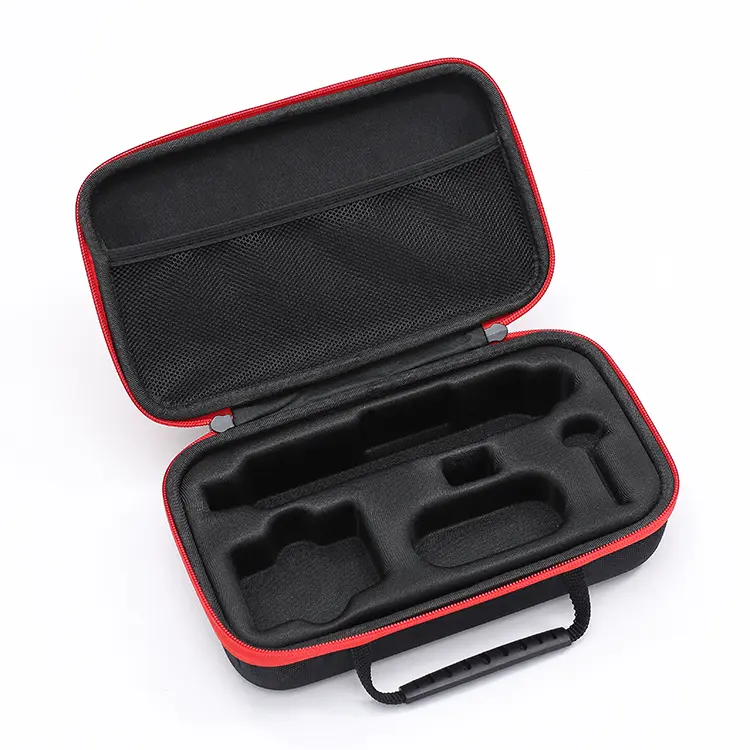
A molded plastic handle is rigid, cheap to repeat, and good for light cases, but it concentrates pressure on the palm and can fracture at the gate if the resin is weak. A webbing handle is a sewn fabric loop, common on soft-sided and hybrid cases, and it is comfortable but depends entirely on the stitch and the anchor. An injection soft-grip handle, usually a TPE or TPU overmold on a rigid core, gives the best palm comfort and the highest perceived quality, and it survives drops better than bare plastic because the elastomer absorbs impact.
Attachment Methods and Their Failure Forms
A molded-in anchor is formed into the case shell during molding, giving the strongest continuous load path with no separate fastener. Its failure form is a resin void or thin wall at the anchor, found by a pull-to-failure sample. A riveted handle uses metal rivets through a backing plate; it can loosen if the rivet is under-set or the plate is too small, and it risks cracking the shell around the hole. A stitched handle relies on thread and tape; it fails by stitch shear or tape delamination, controlled by stitch density and a backing patch. An overmolded or encapsulated attachment buries the fitting in resin, which hides the joint and demands a destructive coupon to verify the wall.
Load Judgment, Grip and Foldability
Load capacity should never be guessed from a photo. The practical judgment method is a static suspended load applied through the actual handle anchor for a defined dwell, inspecting for creep, crack, or anchor shift, then a dynamic swing or drop with the same mass. Grip comfort tracks edge radius and surface hardness: a handle with sharp edges or a hard high-durometer skin will bruise the hand on a long carry. A foldable handle saves shelf space and protects the pull in transit, but every hinge is a wear point, so the buyer should weigh the convenience against one more moving part that can loosen.
Shoulder Strap and Harness Fittings
For larger cases the shoulder strap moves the load off the hand and onto the body, and the fittings are where straps fail.
Strap Width, Padding and Webbing Material
Strap width and padding decide shoulder pressure. A narrow strap concentrates load and becomes uncomfortable fast; a wider strap with foam or a contoured pad spreads the load. Webbing is usually polyester or nylon; polyester resists UV and abrasion better and holds color, while nylon has higher initial strength and elasticity. Breaking strength is expressed as a single value with the test method and condition, for example the strap or the sewn joint rated to a minimum tensile input under a defined grip and pull rate, judged by whether the joint or the webbing fails first and by the elongation at break.
D-Rings, Hooks and Adjusters
The D-ring material and hook body should be specified by base metal and surface finish, with zinc alloy, steel, and POM each suited to different load and corrosion needs. Steel carries higher load but needs coating in wet service; zinc alloy is cost-effective for mid load; POM removes corrosion risk entirely at lower strength. The length adjuster is a frequent complaint source because a poor buckle slips under bounce. The control is an adjuster-slip test: load the strap, set the buckle, apply a cyclic tug, and judge by whether the buckle holds position without the user re-tightening. Single-shoulder carry shifts the case to one side and exposes the D-ring to off-axis pull; a two-shoulder harness centers the load but changes the case center of gravity, so the attachment points must be placed to keep the case upright against the back.
Other Metal and Plastic Hardware
Beyond zipper and handle, several smaller parts decide field survival and should each carry a specification point.
Locks, Hinges, Rivets and Pull Tabs
A lock or combination lock must be specified by latch type, shackle or cam material, and the connection to the shell, because a strong lock on a weak mount is useless. The connection strength is judged by a pull on the locked assembly until the mount or the lock yields, recording which failed first. Hinges and piano hinges appear on flip-top hard peripherals; specify leaf thickness, pin material, and screw or rivet pattern, and check for play after a cycle count. Rivets and washers need a defined diameter, length, and set method, with washers used where the shell could crush. The zipper pull tab itself should be specified by material and loop style so it does not become the weak link described in the failure list above.
Testing and Acceptance Methods
The following methods tell a buyer what to measure, how to judge a pass, and what to write into the specification. None of them promise a fixed cycle count; they set the input parameters and the judgment rule, which the buyer and factory agree before production.
Zipper Reciprocation Life Test
What to test: open and close the assembled zipper under a defined pull force and a defined slider speed. How to judge: stop when the slider jams, the teeth separate, or the tape shows a failure, and record the point of first defect; pass is judged against the agreed input target, not a guaranteed number. Spec note: write the target reciprocations as an input, the pull force, the test rate, and the failure definition.
Slider Torsion and Tensile Test
What to test: apply a twisting moment and an axial pull to the slider body and pull tab. How to judge: measure deformation and record whether the slider cracks, the pawl releases, or the pull detaches before the agreed load input. Spec note: state slider material, wall thickness, and the torque and tensile inputs with the acceptance threshold.
Tape-to-Shell Bond Strength
What to test: peel or pull the zipper tape from the shell at a defined angle and rate, including the corner. How to judge: measure the force at separation and inspect the failure plane; a clean resin tear at the agreed input is preferred over adhesive release. Spec note: write bond width, peel rate, minimum force input, and the required failure mode.
Handle Lift and Static Load Test
What to test: suspend the filled case by the handle for a defined dwell, then apply a dynamic swing or drop with the same mass. How to judge: inspect for anchor creep, crack, or shift against the agreed load input and dwell. Spec note: write the load input, dwell time, cycle or swing input, and the acceptance criteria.
Metal Salt-Spray Test
What to test: expose metal fittings to a salt-spray chamber at a defined concentration and temperature. How to judge: after the agreed exposure input, judge by the salt spray grade and the agreed corrosion limit, recording where oxidation begins. Spec note: write the salt concentration, temperature, exposure input, and the pass criterion.
Low-Temperature Brittleness Test
What to test: condition zipper, handle, and strap fittings at a defined low temperature, then flex or impact them. How to judge: inspect for crack or snap against the agreed service-temperature input. Spec note: write the temperature input, dwell, and the fracture criterion.
Post-Drop Hardware Inspection
What to test: after the case drop program, examine every fitting for looseness, crack, or deformation. How to judge: any opened zipper, loose rivet, or cracked handle is a failure against the agreed drop input. Spec note: write drop height input, orientation count, and the hardware acceptance rule.
Procurement Specification Parameters to Freeze
Before tooling and first production, lock the following parameters in the purchase specification so the factory cannot substitute silently. These are the items a buyer should treat as fixed, not negotiable at the line.
Locked Specification List
- Zipper model and brand or grade level, stated by family and maker.
- Zipper size number and the agreed tolerance for tooth scale.
- Zipper color and the dye-lot or color-match requirement against an approved swatch.
- Zipper tape material, weight, and any water-resistant or PU-backing requirement.
- Slider type and locking requirement, including double-slider rule where needed.
- Handle type and the attachment method, with the anchor wall or stitch rule.
- Stated load requirement for handle and strap, expressed as an input with test condition.
- Webbing width and material for any strap, with the breaking-strength input.
- D-ring and hook material and surface treatment, with the corrosion grade.
- Lock type and the connection strength requirement to the shell.
- Salt-spray grade and the judgment method for all metal fittings.
- Heavy-metal and chemical compliance by the applicable regulation, or subject to the latest standard text where uncertain.
- Rivet, washer, and hinge specification including diameter, material, and set method.
- Service-temperature range covering both low-temperature and UV exposure where relevant.
Common Sourcing Mistakes
These are the errors most often seen in first-time EVA case programs, each of which quietly pushes failure risk onto the hardware.
Mistakes to Avoid
- Choosing zipper size by appearance instead of by internal pressure and contents mass.
- Leaving the slider type undefined, so the factory supplies a non-lock slider on a lid that must stay shut.
- Specifying a comfortable handle but forgetting to define the anchor method and its load path.
- Treating water-resistant zipper as a substitute for a documented shell seal on wet programs.
- Omitting salt-spray grade on metal fittings for tropical or coastal export routes.
- Accepting a strap adjuster without a slip test, then finding it loosens in the field.
- Freezing the interior and foam but leaving all hardware as the factory’s default choice.
Supplier Audit Questions
Use these questions during factory qualification so the hardware claims can be verified, not assumed.
Questions to Ask Your Factory
- Which zipper families and brand grades do you stock, and can you show the maker certificate?
- How do you decide zipper size number for a given case perimeter and contents mass?
- What slider types do you default to, and can you supply auto-lock on request with proof?
- How is the handle anchor formed or attached, and what is your internal pull check?
- What bond method joins the zipper tape to the shell, and what peel input do you target?
- What salt-spray grade can you document on metal fittings, and with which test report?
- What service-temperature range do you rate the zipper and handle materials for?
- How do you verify rivet set, hinge play, and lock mount strength before shipment?
- Can you provide a destruct sample for handle lift and tape bond on each new tool?
- Which compliance documents do you hold for heavy metals and restricted substances?
Frequently Asked Questions
Which zipper size number should a tool brand choose for a mid-size case?
The size number tracks perimeter, contents mass, and opening frequency rather than looks. For a typical mid-size tool or instrument case a #5 chain is the common baseline, moving to #8 when the case is large or the packed foam pushes the lid outward. The buyer should state the size number in the spec and let the factory justify any reduction with a load argument.
Is a water-resistant zipper enough for outdoor equipment programs?
It blocks rain and splashes but it is not a substitute for an IP-rated shell seal, because the stitch or weld line remains a path for water under submersion. For wet-but-not-submerged use, specify the tape bonding method and the backing film. For true water protection, pair the zipper decision with the shell sealing structure rather than relying on the zipper alone.
How should a buyer judge handle load without a fixed number?
Use a defined input method: suspend the filled case by the handle for a stated dwell, then apply a swing or drop with the same mass, and inspect the anchor for creep, crack, or shift. The specification should state the load input, dwell, and the acceptance rule, which keeps the test meaningful across programs without promising a single universal figure.
What metal finish resists corrosion on export shipping routes?
Specify the salt-spray grade and the judgment method rather than a vague “rust-proof” claim, and avoid mixing base metals at the closure. Steel with proper coating, qualified zinc alloy, or non-metal POM each suit different load and environment needs; the right choice follows the route, the climate, and the required load path rather than price alone.
Related Pages
- EVA Tool Case Purchase Order Guide
- EVA Tool Case Sample Evaluation Guide
- EVA Case Bulk Order Tips
- EVA Tool Case Custom Inserts Design
Post time: Oct-23-2026