




EVA Cases for Camera and Audio-Visual Equipment: A B2B Sourcing Guide for Photography Brands and Rental Houses
A photography brand that ships 2,000 mirrorless kits per quarter faces a different protection problem than a tool distributor shipping socket sets. Camera bodies, prime lenses, drone batteries, shotgun microphones and on-camera monitors are dense, fragile and expensive per kilogram. A single 85 mm f/1.2 lens can retail above USD 1,800, while the body it mounts to often exceeds USD 2,500. When a rental house turns that kit over 40 times a month, the case is no longer packaging. It is part of the working asset. This guide explains how B2B buyers should specify EVA cases for camera and AV equipment, with attention to insert engineering, zipper life, load capacity and the inspection steps that protect your margin on every reorder.
Why Camera and AV Gear Needs a Different Case Logic
Tool cases are built to survive drops and rough handling. Camera cases are built to survive handling and then present the gear without a scratch. The difference matters for specification. A socket wrench tolerates 2 mm of internal play. A coated front element does not. Most camera and AV kits also mix shapes: a rectangular body, two cylindrical lenses, a flat monitor, a boxy battery bank and a thin microphone. That mix forces a layered insert rather than a single molded tray. Rental operations add a third constraint. Cases are opened by staff who are not the owner, often in low light, sometimes wet, almost always in a hurry. The case has to make the correct placement obvious and punish mistakes gently. EVA is a strong fit here because the shell is light, the wall can be tuned from 3 mm to 12 mm, and the insert can be re-cut when a kit changes without re-tooling the whole case. A 600 g empty shell keeps the loaded case under airline carry limits that start at 7 kg for many regional carriers.
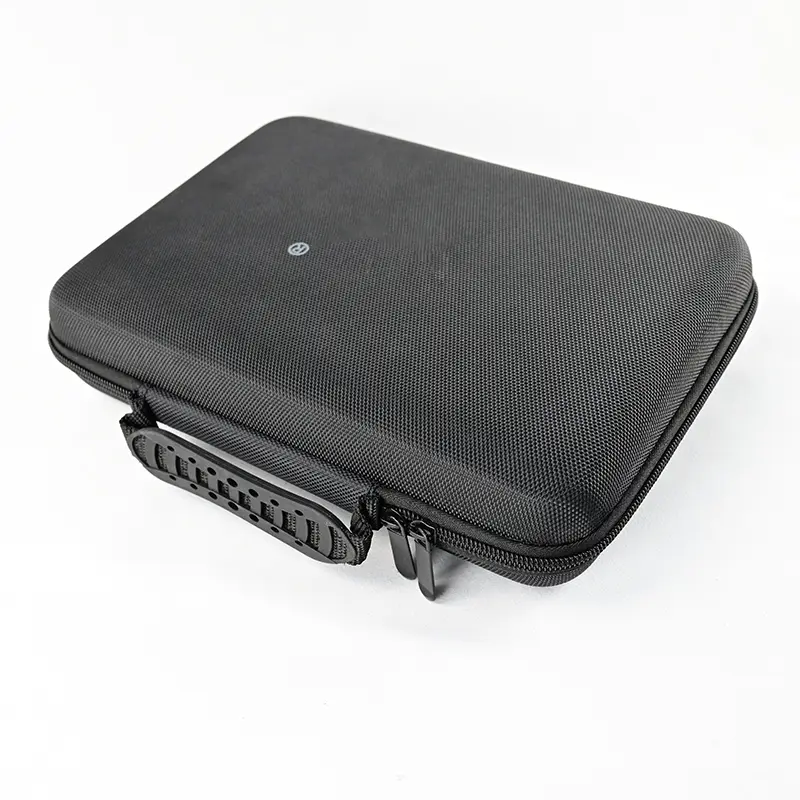
Insert Engineering: Die-Cut EVA vs Foam vs Velvet
Three lining approaches dominate the category, and they are not interchangeable. Die-cut EVA inserts are cut on a steel rule die to a profile supplied as a CAD drawing or a physical sample. They hold shape across thousands of cycles and recover from compression. They are the right choice when the kit is fixed, such as a brand’s standard two-lens bundle. Pluck foam, the pick-and-pull cube style, lets a buyer carve cavities by hand. It is cheap and flexible but sheds particles, compresses permanently after about 6 months of daily use, and looks tired in a rental fleet. Velvet or brushed-fabric lining reduces surface scuffing on lacquered bodies and matte-black lenses, but it hides dust and offers almost no impact isolation on its own. The practical answer for most B2B programs is a die-cut EVA insert with ±0.5 mm tolerance for hard items, backed by a thin velvet top sheet only where glass or coating faces the lid. That combination costs about USD 0.60 more per case than foam and pays back in reduced claim rates within the first 12 months of rental service.
Cut-Out Accuracy and Dimensional Matching
A cut-out that is 1.5 mm too wide lets a lens roll during transit and chip its focus ring. One that is 1 mm too tight forces the lid to bulge and the zipper to strain. For camera gear the buyer should supply actual measured dimensions, not catalog nominal sizes, because many lenses grow 3–4 mm with the hood attached and 6–8 mm with a screw-in filter or protective ring. The standard production tolerance on a steel-rule die is ±0.5 mm, which is tight enough for bodies and short primes. Long telephoto barrels and gimbal heads need ±0.3 mm and a separate clearance lane so the item slides in without rubbing the side wall. Depth matters as much as the outline. A monitor that sits 4 mm proud of the insert will be pressed by the lid every close, and over 2,000 cycles that pressure loosens the screen mount. Specify the cavity depth to leave 2–3 mm of float, then fill the gap with a low-density lid pad. For mixed kits, design a 300 mm × 220 mm × 130 mm internal cavity as a baseline, then sub-divide with 8 mm ribs rather than cutting one giant pocket that lets gear collide. A measured cavity tolerance sheet from the factory should list every pocket at ±0.5 mm before you approve production.
Zipper, Water and Dust Protection Levels
The zipper is the most common failure point in rental fleets, so it deserves a line item in every purchase order. A standard jacket zipper will not do. Specify a YKK #5 reverse coil zipper rated for 8,000 cycles with a double slider and a rain flap that overlaps the seam by at least 15 mm. Reverse coil keeps the teeth inward, which resists grit and reduces the chance a lens cap snags. For true water resistance look for a welded or taped seam at the zipper tape and an IPX4-style rating for splashes, though no soft EVA shell is submersible. Dust is the quieter enemy. Fine silica from outdoor shoots and studio haze work into the slider and grind the coil. A zipper garage at both ends plus a small brush at the rental desk extends life. Note that a fully waterproof zipper adds roughly USD 0.40–0.70 per case and lengthens the close by a second, which matters when a tech opens the case 30 times a shift. A pull tab long enough to grip with gloves is worth the extra 5 mm of webbing on winter location work.
Rental-House Durability: Cycle Life and Stress Points
Rental houses measure cases in open-close cycles, not years. A case that opens four times a day, six days a week, clears roughly 1,250 cycles a year. Over a three-year service life that is 3,750 cycles, and the weak parts fail long before that if they are underspecified. The hinge line where the lid meets the shell takes the most torque, so ask for a 25 mm EVA wall with 2.0 mm knurled aluminum stays along the spine rather than a folded fabric hinge. Pull tabs should be double-stitched with bonded nylon at 8 stitches per inch, and the zipper ends should be anchored to a reinforced patch, not the shell alone. Field data from a mid-size rental operation in Berlin showed that cases with sewn-in stays survived 4.2 times more cycles than cases with a plain folded hinge before the first seam split. Zipper sliders should be metal, not plastic, past 2,000 expected cycles. These are the details that separate a case that looks fine in a showroom from one that survives a working fleet, and they are invisible in a catalog photo.
Handles, Shoulder Straps and Load Capacity
Camera cases are carried more than tool cases and dropped less, but the carry load is concentrated. A loaded two-body, four-lens case with a 15-inch laptop and a battery brick can reach 7–9 kg. The webbing handle must be rated for that, plus a safety factor, and the attachment must wrap around the shell, not merely sit on the surface. Specify a 1.5 kg pull load on the webbing handle as a test point during inspection, and confirm the stitch pattern is a box-and-X at each anchor. A removable shoulder strap helps technicians move three cases at once on a shoot, but the D-rings need to be riveted through a steel washer, not punched through EVA. For kits above 10 kg, add a second handle on the short side so two people can lift without twisting the lid. Remember that a handle that fails at 11 kg in a lab may still rip at 8 kg after 18 months of UV exposure, so request the aged-load test if the cases will sit in a vehicle trunk through summer.
Black or Light Lining: A Visibility Trade-Off
Lining color is not cosmetic for a rental house. A black die-cut insert hides dust, fingerprints and the fine grey scuff of a lens hood, which keeps the case looking clean across a busy week. But black also hides a missing lens cap, a loose battery or a small accessory left at the bottom. A light grey or heather insert makes every cavity obvious at a glance, so a quick inventory takes 10 seconds instead of 40, and a missing item is caught before the case leaves the counter. The cost is maintenance: light linings show every mark and may need a wipe between rentals, adding roughly 90 seconds of labor per turn. Many operations split the difference with a black shell and a light grey lid pad, gaining contrast where it matters without doubling cleaning time. For brand-led photography companies the lining is also a moment of unboxing: a charcoal insert with a single accent ribbon reads as premium, while a bright insert reads as utility. Specify the lining Pantone in the contract so the look is repeatable across reorders and across a 5,000 pcs annual program.
Moisture Control and Desiccant Pockets
Humidity is the slow killer of camera gear, especially for operations shipping to coastal or tropical markets. Condensation forms when a cold case comes into a warm room, and trapped moisture sits against the lens barrel. A purpose-built desiccant pocket on the lid or side wall lets the renter drop in a 10 g–30 g silica gel sachet and swap it weekly. The pocket should be mesh or punched EVA so air passes but the bead cannot escape, and it should sit where it will not press the gear. For long-haul import containers, a silica pocket included at no charge prevents far larger humidity claims than its few cents of cost. Some buyers also request a small humidity indicator card clipped inside the lid, turning the case into its own QA check that a rental tech can read in three seconds. Note that desiccant is a consumable; the case should make replenishment trivial rather than sealed, because a technician will not open a stitched-shut pocket to add a sachet between same-day rentals.
Branding Customization: Logo and Lining Color
For photography brands the case is a moving billboard, and for importers it is a private-label product. Exterior branding is usually a silk-screen or heat-transfer logo on the lid, rated for 200+ gentle wipes, or an embroidered patch sewn to the shell for a higher-end feel. Placement matters: a logo on the lid top survives handling better than one on the side that drags against shelves. Lining color is the subtler brand signal. A charcoal insert with a single accent ribbon reads as premium, while a bright insert reads as utility, and both can be matched to a brand Pantone within a Delta-E of 2.0 if the supplier manages the dye lot. Interior debossing of the model name or a foam-cut brand mark adds recognition at zero recurring cost once the die exists. Keep branding restrained on rental cases, because a house that rents to three competing studios prefers a neutral shell with a small ID window for its own asset tag rather than a supplier logo the renter never asked for.
MOQ, Sampling and Tooling Cost
Custom camera cases carry a tooling cost that amortizes only across volume, so the MOQ decides the unit price. For a mid-size die-cut EVA case, a realistic first order is 500 pcs, with a steel-rule die cost of USD 120–260 depending on the number of cavities and the complexity of the rib structure. Sampling runs two paths: a blank shell sample at USD 25–45 confirms dimensions and hand-feel within 5–7 days, and a full insert sample with your actual gear cut into it costs USD 60–120 and takes 10–14 days. Confirm the 500 pcs first order at USD 9.20 per unit as the price break, then negotiate the second tranche once the die is paid. Lead time for the production run is typically 25–35 days after sample approval, plus 3–5 days for a Pantone lining match and 7–12 days of ocean transit to a US or EU port. Avoid suppliers who refuse to cut a sample against your real equipment; a case that fits the drawing but not the lens is a returned line item and a missed launch date.
Inspection Points Before Shipment
The last defense against a bad batch is the pre-shipment inspection, and for camera cases the checklist differs from tool cases. First, confirm cavity dimensions with a go/no-go gauge at ±0.5 mm on at least 5 pcs per 500. Second, open and close the zipper 50 times on three samples and watch for slider drag or tape separation. Third, check the lid pad float: the monitor or body should sit 2–3 mm below the insert top with no lid pressure. Fourth, verify the logo placement within 3 mm of the spec position and the lining color against the approved swatch. Fifth, drop the filled case from 1.0 m onto a hard floor on each of its three axis faces and confirm no gear movement and no shell crack. These five checks take a third-party inspector about 2 hours per 1,000 pcs and cost roughly USD 0.08–0.15 per unit when bundled. The red flag is a supplier who resists dimensional reports; a measured cavity tolerance sheet should accompany every shipment, not a verbal promise made over email after the container has already left.
Tip: Always request a drop-test video at 1.2 m onto concrete before approving the production run.
FAQ: Sourcing EVA Cases for Camera and AV Equipment
What EVA wall thickness works for a mirrorless body with three lenses?
A 5 mm EVA shell wall with a 6 mm die-cut insert balances weight and protection for a mirrorless kit of a body and three primes up to 85 mm. If the kit includes a 70–200 mm zoom or a gimbal, move to a 7 mm wall and add aluminum stays on the spine. The total assembled weight should stay under 1.1 kg empty so the loaded case remains carryable at 8 kg. Confirm the wall by squeezing a sample; a quality 5 mm wall flexes less than 4 mm under a 5 kg thumb load, and that stiffness is what keeps the body from shifting when the case is tossed into a van.
How many open-close cycles should a rental case zipper survive?
Specify a minimum of 8,000 cycles for a case that turns over daily in a rental house, which covers roughly six years at four opens per day. A YKK #5 reverse coil with a metal double slider typically tests to 10,000–12,000 cycles in lab conditions. Plastic sliders and #3 coil zippers fall to 2,000–3,500 cycles and should be limited to low-turnover brand kits, not fleet work. Ask the factory for the zipper mill’s cycle certificate rather than a verbal claim, and keep a spare slider in the rental kit for a five-minute field repair that keeps a case earning instead of sitting in a shop for a week.
Can the lining color match our brand Pantone exactly?
Yes, within a Delta-E of 2.0 when the supplier controls the dye lot and runs a lining swatch for your approval before cutting. Provide the Pantone code and a physical reference, because screen colors lie under showroom light. Note that a very light lining such as PMS 100 or a pure white shows every mark and may need a wipe between rentals, while darker brand colors hide soiling better and stretch the time between cleanings. Lock the approved swatch in the contract so reorders match the first batch across a multi-year program instead of drifting half a shade each season.
What is a realistic MOQ for a custom camera case?
For a new die-cut EVA case the practical MOQ is 500 pcs, which spreads the USD 120–260 tooling across a sensible unit cost near USD 9.20 on the first tranche. Smaller runs of 200–300 pcs are possible but push the unit above USD 12.00 and rarely justify the die. If you manage several SKUs, pool volume across designs that share a shell size to reach the price break sooner and keep one die in custody. Always keep the die documented and owned by you so a reorder six months later does not restart tooling or shift the cavity dimensions by a millimeter.
Do you provide desiccant pockets for humid markets?
A mesh or punched-EVA desiccant pocket is a low-cost add-on, typically USD 0.10–0.25 per case, positioned on the lid or side wall away from gear contact. It accepts a 10 g–30 g silica sachet and is standard for shipments to tropical or coastal regions where container sweat is a real risk. Pair it with a humidity indicator card clipped inside the lid so the renter knows when to swap the bead without opening every pocket. For container transit, request the pocket on every unit rather than as an option, since retrofitting after production is not feasible and a single missed case can cost more than the whole add-on budget.
Related Pages
- EVA Tool Case Purchase Order Guide
- EVA Tool Case Sample Evaluation Guide
- EVA Case Bulk Order Tips
- EVA Tool Case Custom Inserts Design
Post time: Sep-28-2026