




EVA Tool Case Sourcing Tips for Europe Buyers
EVA tool cases have become a staple across European industries, from professional trades and electronics repair to outdoor maintenance, medical first aid and retail distribution. Their lightweight build, excellent shock resistance, waterproof performance and flexible customization options make them a reliable storage and transport solution for tools, precision devices and portable equipment. For European buyers, sourcing high-quality, compliant and cost-effective EVA tool cases involves more than just comparing prices. It requires careful planning around product specifications, regulatory compliance, supplier evaluation, order management and logistics. This practical guide breaks down every key step to streamline your sourcing process, reduce risks and build stable long-term supply partnerships.
1. Clarify Your Actual Product Requirements First
Before contacting any suppliers, defining clear and detailed product demands is the foundation of successful sourcing. Vague requirements often lead to mismatched products, repeated samples and unnecessary cost losses. You need to sort out core demands based on your target market, usage scenarios and end-user needs.
1.1 Match Specifications with Application Scenarios
Different working environments in Europe set distinct standards for EVA tool cases. Industrial workshops, outdoor construction sites, automotive maintenance and indoor office equipment storage all call for different material hardness, structural designs and functional configurations.
- Daily light-duty use: For small hand tools, charging cables and portable accessories, choose low-density EVA materials. This type of case is lightweight, flexible and easy to carry, suitable for retail sales and daily household use.
- Heavy-duty industrial use: For power tools, precision measuring instruments and heavy hardware tools, prioritize high-density EVA with strong compression resistance. Reinforced shell and thickened inner foam are essential to avoid deformation and tool damage during frequent carrying and stacking. It is recommended to select products that can withstand a 1.2-meter drop test for enhanced safety.
- Outdoor and humid environments: Products used in construction sites, garden maintenance and field operations must have reliable waterproof and dustproof capabilities. Check for sealed zippers and fully enclosed shell designs, and confirm the waterproof rating meets basic industry standards.
Besides protection performance, confirm external dimensions, load-bearing capacity and portability. Calculate the overall size according to the maximum size of stored tools, and reserve a reasonable buffer space. For products that need to be stacked in warehouses or trucks, select cases with flat surfaces and anti-slip grooves on the top to ensure stacking stability without deformation.
1.2 Confirm Customization Demands
Customization is a major advantage of EVA tool cases, and European brands and retailers usually have personalized needs. List all customized items clearly to avoid communication deviations:
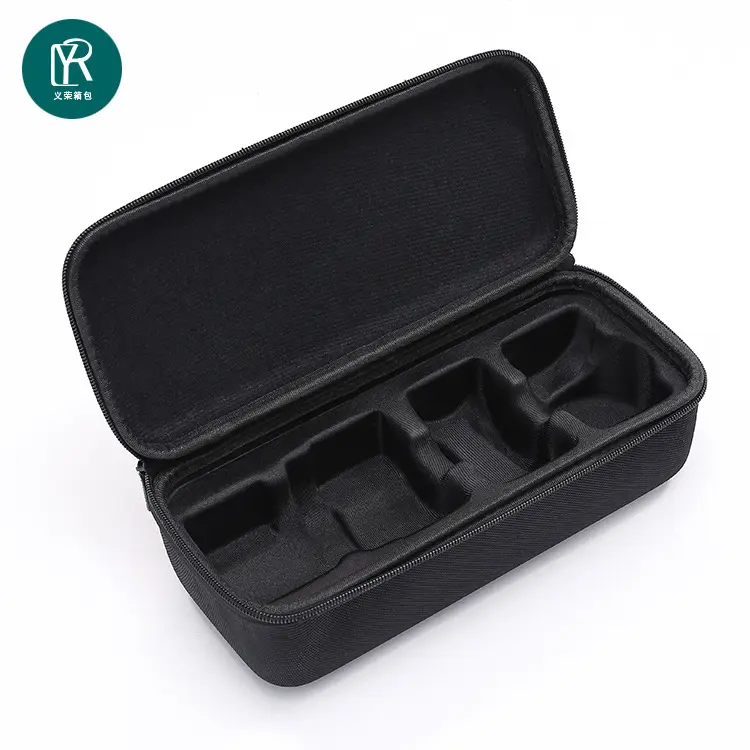
- Inner foam design: Precisely customized grooved liners are widely favored for fixed tool placement. Provide tool size drawings to suppliers, requiring the gap of inner grooves to be controlled within 0.5-1mm, and round the groove edges to prevent scratching precision equipment and tool surfaces.
- Logo and printing: Common customization includes embossed logos, silk-screen printing and heat-transfer patterns. Confirm color, position and size of logos in advance, and check whether the printing material is wear-resistant and will not fade after long-term use.
- Color and appearance: Unify the overall color tone of the case shell, zipper, handle and accessories according to brand style. Carbon fiber texture, matte and frosted surfaces are popular styles in the European market.
1.3 Set Order Quantity and Delivery Cycle
Determine the initial order quantity, replenishment cycle and required delivery time based on sales volume and inventory plan. Many manufacturers support low minimum order quantities, which is friendly for small and medium-sized buyers trying new products. Clarify the production cycle with suppliers in advance to avoid delaying market sales due to prolonged production.
2. Prioritize EU Regulatory Compliance to Avoid Customs Risks
The European market has strict unified regulations on imported goods. Non-compliant EVA tool cases will face customs detention, return or fines, which is the biggest hidden danger in cross-border sourcing. All products must meet EU mainstream safety, environmental protection and quality standards before entering the market.
2.1 Core Certification and Compliance Standards
When selecting suppliers, first verify whether their products have passed the necessary tests and certifications recognized across the European Union:
- CE Certification: A mandatory entry certification for products circulating in the EU market. It proves that the EVA tool case complies with EU safety, health and environmental protection basic requirements. All batches of imported goods must be affixed with standard CE marks.
- REACH Regulation: This regulation restricts harmful chemical substances in products. EVA materials, surface coatings, zippers and adhesives of tool cases must comply with REACH requirements, especially the updated restrictions on carcinogenic, mutagenic and reproductive toxic substances. Ask suppliers to provide relevant chemical testing reports regularly.
- RoHS Directive: Mainly aimed at products matched with electronic and electrical tools, limiting heavy metal content in materials to protect user health and the ecological environment.
- Food-grade related standards (if applicable): If the tool case is used for catering tools and medical auxiliary tools, the materials also need to comply with EU food contact material regulations such as 1935/2004/EC and EU 10/2011.
2.2 Standardize Customs and Document Preparation
All import documents must be standardized to ensure smooth customs clearance in EU member states:
- Confirm HS Code: The correct commodity code directly determines tariff rates and supervision measures. Wrong classification will lead to supplementary tariffs and customs review. For long-term imported products, you can apply for Binding Tariff Information from EU customs to obtain three-year valid unified classification results across member states.
- Complete Supporting Documents: Prepare commercial invoices, packing lists, delivery contracts and supplier’s compliance declaration. The product description, quantity, unit price and other information on all documents must be consistent without discrepancies.
- Register EORI Number: All European importers need to apply for a valid Economic Operators’ Registration and Identification number in advance, which is a necessary credential for EU import customs clearanceDirectorate-General for Trade and Economic Security.
3. Scientifically Evaluate and Screen Reliable Suppliers
A qualified supplier is not only able to produce compliant products, but also stable in production capacity, quality control and after-sales service. When screening suppliers, do not judge solely by price. Conduct comprehensive assessment from multiple dimensions.
3.1 Inspect Production Strength and Qualification
- Factory Qualification and Experience: Give priority to manufacturers with many years of professional EVA case production experience. Mature factories have standardized production lines and rich experience in serving European customers, and are more familiar with EU standards and customization demands.
- Production Capacity: Understand daily output, workshop scale and equipment configuration of the factory. For bulk orders, confirm whether the supplier has sufficient capacity to guarantee on-time delivery and avoid order delays in peak seasons.
- Quality Control System: Ask suppliers about raw material incoming inspection, production process monitoring and finished product testing procedures. Regular third-party quality testing reports can effectively prove the stability of product batch quality.
3.2 Verify Sample Quality in Depth
Samples are the most intuitive basis for judging product quality. Do not arrange bulk orders before confirming samples:
- Initial Sample Confirmation: Check material hand feel, shell hardness, zipper smoothness, firmness of handles and stitching details. Test the shockproof, waterproof and compression-resistant performance of the sample by simulating actual use scenarios.
- Pre-production Sample Confirmation: After confirming the style and customization scheme, require pre-production samples consistent with bulk goods to avoid large-area defects in mass production.
- Batch Sampling Test: For large orders, spot-check goods randomly after production to ensure the quality of bulk products is consistent with samples.
3.3 Assess Service Capability and Communication Efficiency
Cross-border cooperation has regional and time zone differences, so efficient communication is particularly important. Excellent suppliers can respond to demands in a timely manner, actively solve problems such as sample modification and scheme adjustment. Meanwhile, understand the supplier’s after-sales policy: clarify the handling plan for defective products, logistics damage and order errors, to reduce post-cooperation risks.
4. Reasonable Pricing Negotiation and Cost Control
Price is an important factor in sourcing, but European buyers should focus on the total cost of the whole supply chain rather than simply pursuing the lowest unit price. A reasonable negotiation strategy can balance cost and product quality.
4.1 Calculate Comprehensive Cost
The total cost of imported EVA tool cases includes unit price, raw material cost, customized service fee, international freight, EU tariff, logistics insurance and customs clearance fee. Some suppliers offer slightly higher unit prices but include free sample service, integrated packaging or port delivery concessions, which can reduce additional expenses in the later stage. Do not ignore hidden costs for the sake of low unit price.
4.2 Master Practical Negotiation Skills
- Start with Trial Orders: For new cooperative suppliers, place small-batch trial orders first. Verify product quality, delivery speed and service level through trial orders, and then gradually expand the order quantity. This method can effectively reduce the risk of large losses caused by improper cooperation.
- Long-term Cooperation for Preferential Terms: If you have stable purchasing demands, put forward long-term cooperation intentions to suppliers. Most manufacturers will give concessions on unit price, MOQ or delivery cycle for stable regular customers.
- Avoid False Order Commitments: Do not exaggerate order quantity to pursue temporary low prices. Once the actual order is inconsistent with the commitment, it will damage personal credibility and affect subsequent cooperation with suppliers.
- Grasp Negotiation Time Nodes: Suppliers usually have greater preferential space in off-seasons and at the end of months or quarters. You can properly arrange negotiation and order time to obtain more favorable conditions.
5. Order Execution, Logistics and Inventory Management
After completing supplier selection and contract signing, standardized order execution and logistics arrangement can ensure the goods arrive safely and reach the market on time.
5.1 Standardize Contract Terms
The formal purchase contract must clearly mark all agreed contents: product specifications, customization details, unit price, total order quantity, delivery time, payment terms, quality standard, after-sales liability and penalty clauses for delayed delivery. Detailed contract terms are the fundamental guarantee for the rights and interests of both parties.
5.2 Choose Suitable Logistics Solutions
According to order quantity, delivery time and cost budget, select international express, sea freight or air freight:
- Small-batch trial orders and urgent goods: Choose international express, which is fast in timeliness and simple in customs clearance procedures.
- Large-batch bulk orders: Prioritize sea freight to control logistics costs. Book space in advance and cooperate with professional freight forwarders familiar with EU import business to avoid container congestion and customs clearance delays.
During transportation, reinforce product packaging. EVA tool cases should be packed in cartons with anti-collision measures to prevent extrusion and damage during long-distance transportation.
5.3 Reasonable Inventory and Replenishment Plan
Combine European local market sales seasons and consumer demand to formulate inventory plans. Tools and storage products usually have stable demand, but pay attention to peak demand periods such as festivals and construction seasons. Establish a long-term replenishment mechanism with suppliers to realize flexible stock supplement and avoid out-of-stock or overstock.
6. Maintain Long-term Stable Supplier Partnerships
Excellent suppliers are valuable long-term resources for European buyers. Stable cooperative relations can continuously optimize product quality, shorten delivery cycles and obtain more competitive prices.
Keep regular daily communication with suppliers, feedback end-market sales data and customer opinions in a timely manner, and jointly optimize product design and details. When encountering market fluctuations and order adjustments, communicate frankly and negotiate solutions. For suppliers with stable quality and excellent service, maintain long-term cooperation. Mutual trust and win-win cooperation can help both sides adapt to the changing market environment and jointly expand market share.
Final Thoughts
Sourcing EVA tool cases for the European market is a systematic work covering demand sorting, compliance inspection, supplier screening, cost negotiation, order management and post-cooperation maintenance. Starting from end-user demands, taking EU regulatory compliance as the bottom line, selecting reliable manufacturers, and controlling the total cost of the supply chain are the core of successful sourcing.
By following the above tips, European buyers can effectively reduce various risks in cross-border sourcing, select high-quality, market-competitive EVA tool case products, and build a stable and efficient supply system, thus gaining a firm foothold in the local tool and storage product market.
Post time: Jun-17-2026