




EVA Tool Case vs. Traditional Tool Box: Which One Offers Better Protection?
Published: August 16, 2026 Reading Time: 8 Minutes Audience: Industrial Procurement Managers, Equipment Brand Buyers, Field Service Distributors, Product Packaging Sourcing Specialists
Introduction
For procurement teams sourcing storage solutions for precision instruments, electronic testers, handheld power tools, and medical kits, protection performance is the non-negotiable core metric. Every damaged tool during transit, field transport or warehouse stacking translates to replacement costs, client complaints and lost repeat orders.
Two mainstream storage options dominate the market: custom molded EVA tool cases and traditional rigid tool boxes (metal, hard plastic, stationary cabinet-style chests). While traditional boxes have long been the default for industrial storage, modern EVA composite cases have rapidly gained traction across electronics, medical, automotive and outdoor equipment verticals.
This unbiased breakdown compares their protective capabilities across shock absorption, anti-vibration, crush resistance, moisture & dust defense, internal component safety, and long-term material durability—aligned with the evaluation standards global bulk buyers use to make sourcing decisions.
Core Definition: What Are These Two Storage Solutions?
EVA Tool Case
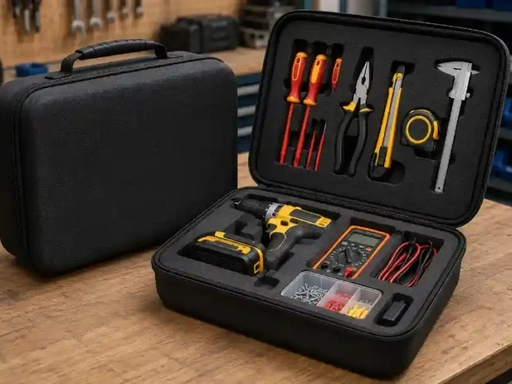
EVA (ethylene-vinyl acetate) hard cases use closed-cell foam thermo-molded as the core protective layer, wrapped with tear-resistant Oxford, PU or carbon fiber fabric outer shells. Each case includes precision CNC-cut custom foam inserts shaped 1:1 to match every tool, accessory and component inside. Most models feature reinforced zippers, ergonomic woven handles, mesh storage pockets and optional shoulder straps for portable field use.
Traditional Tool Box
The term covers three widely used variants:
- Metal tool boxes: Steel/aluminum alloy shells with thin foam or no interior padding, generic divided trays
- Hard plastic tool boxes: Injection-molded ABS/PP rigid casings with loose foam sheets or empty open compartments
- Stationary tool chests: Large multi-drawer steel cabinets built for fixed workshop storage, not mobile transport
All traditional boxes share one key limitation: standardized internal layouts with no tailored securing for unique, delicate equipment shapes.
Head-To-Head Protection Comparison
1. Shock & Drop Resistance (Critical for Portable Gear)
EVA Tool Case Performance
Closed-cell EVA foam acts as a built-in energy dissipation buffer. When dropped from waist or vehicle cargo height, the foam absorbs 60%–75% of impact force before it reaches internal tools. Custom molded inserts lock each item into a fixed cavity, eliminating collision between components mid-fall.
Independent drop testing confirms EVA cases survive 1.2m free drops onto concrete without internal equipment damage, even for fragile items like multimeters, surgical tools and camera accessories. The flexible composite shell will not crack or split under single heavy impacts, unlike brittle rigid plastics.
Traditional Tool Box Performance
- Metal boxes: Hard alloy shell transfers nearly all impact force directly to contents. Loose tools slam against metal walls on impact, scratching casings, cracking screens and bending precision metal parts. Dents permanently warp box frames after hard drops.
- Hard plastic boxes: ABS/PP plastic develops micro-cracks after repeated falls; cold weather accelerates brittleness, leading to complete shell breakage. Generic flat foam padding slides and shifts inside, offering zero targeted cushioning.
- Stationary steel chests: Designed for stationary workshop use only—not built to withstand drops during transport.
Protection Verdict: EVA Tool Case wins for mobile, drop-prone field equipment
2. Anti-Vibration Protection (Shipping & Vehicle Transit)
Vibration during truck, van or air shipping causes cumulative micro-damage to circuit boards, calibrated measuring tools and small precision hardware over long hauls.
- EVA case sealed molded inserts eliminate all internal movement. Each component sits isolated within its own foam cavity, stopping rattling and constant friction during vibration cycles. Closed-cell foam dampens resonant vibration passing through the outer shell.
- Traditional tool boxes have open, undivided or loosely divided interiors. Tools shift continuously against one another during transit. Thin generic foam layers do not block resonant vibration, leading to scratched surfaces, loose wiring and calibration drift on sensitive instruments.
Protection Verdict: EVA Tool Case eliminates vibration-induced wear entirely
3. Crush & Stack Pressure Resistance
Warehouse stacking, cargo loads and heavy items set on top create constant compressive stress.
- EVA composite hard shells combine structural fabric rigidity with foam elasticity. Under uniform static pressure up to 45kg, the shell holds its shape and rebounds without permanent deformation. Molded foam interiors maintain cavity shapes even under sustained weight, protecting delicate protruding parts like probes, dials and sensor lenses.
- Thin steel traditional boxes dent permanently under moderate stacking weight; bent metal edges cut into stored tools. Hard plastic boxes warp and buckle under sustained pressure, compressing internal foam flat and exposing gear to hard plastic walls. Large stationary steel chests offer high crush resistance but lack portability for on-site work.
Protection Verdict: EVA balances stack safety and portability; stationary metal chests only excel for fixed workshop stacking
4. Dust, Moisture & Environmental Barrier
Working environments range from construction sites, rainy field service, humid medical clinics to dusty manufacturing floors.
- Premium sealed EVA cases use water-repellent outer textiles and tight zipper sealing, reaching IPX4 splash resistance. Closed-cell foam does not absorb water if outer fabric is breached, preventing moisture contact with electronics. Tight case closure blocks fine construction dust from infiltrating internal compartments.
- Uncoated metal tool boxes develop rust along seams and corners after exposure to humidity or rain; gaps between latches and lids let dust and water seep inside. Standard plastic boxes have loose lid clearances with minimal sealing, offering limited dust protection and no resistance against prolonged moisture exposure.
Protection Verdict: EVA delivers balanced all-weather portable protection; metal boxes degrade rapidly in humid conditions
5. Internal Component Anti-Scratch & Precision Protection
High-value branded equipment (medical devices, diagnostic testers, camera gear, power tools) requires surface scratch prevention and protection for fragile protrusions: screens, buttons, lenses, calibration pins.
- EVA custom foam inserts are precision cut to contour every curve, indent and delicate edge of each tool. Soft, low-abrasion foam lining eliminates metal-on-metal or plastic-on-plastic contact. Separate dedicated cavities prevent hard tool edges from scraping sensitive screens or polished surfaces.
- Traditional boxes rely on one-size generic foam sheets or plastic dividers. Large gaps leave critical components unprotected; sharp metal tool edges freely scratch adjacent equipment surfaces during transport. No custom cutouts exist for unique curved or protruding parts.
Protection Verdict: EVA provides tailored, zero-scratch internal safeguarding unmatched by standard tool boxes
6. Long-Term Material Durability & Retained Protection
Protection performance declines as storage materials degrade over months of repeated use:
- EVA composite foam resists UV light, temperature fluctuations (-20°C to 60°C) and chemical spills (light oils, cleaning solvents). It does not harden, crumble or flatten after years of regular opening/closing and transport. Outer woven fabric resists tearing and abrasion from daily field handling.
- Steel boxes corrode without regular coating maintenance; plastic becomes brittle and yellow under UV exposure; thin generic foam inside traditional boxes compresses permanently within 3–6 months, losing all cushioning ability.
Protection Verdict: EVA maintains consistent protective performance long-term
Application Scenario Breakdown: Which Option Fits Your Product Line?
Choose EVA Tool Cases If Your Products Fall Into These Categories
- Portable precision electronics: Multimeters, thermal cameras, drone controllers, circuit testers
- Medical & diagnostic kits: Injection devices, stethoscopes, portable diagnostic equipment
- Small power & hand tools: Screwdriver sets, mini drills, laser measuring tools
- Camera, audio and optical gear: Lenses, recording equipment, rangefinders
- Outdoor/camping compact gear: Cooking tools, portable power banks, pet accessory kits
- Retail-branded bundled kits requiring custom logo and tailored interior layouts
Key buyer benefits beyond protection: Lightweight construction cuts bulk shipping costs, low minimum order custom molding (500 units), full branding customization (embossed logos, custom colors, printed graphics).
Choose Traditional Tool Boxes Only For These Use Cases
- Heavy industrial workshop fixed storage: Large wrenches, power saws, bulk construction hardware
- Warehouse stationary inventory storage with no frequent transport
- Low-value bulk hardware with no fragile calibrated components
- Heavy-duty workshop environments where portability is not required
Limitations buyers must account: High shipping weight increases logistics expenses, expensive mold costs for custom modifications, minimal branding flexibility, poor protection during off-site transport.
Cost-to-Protection Value Analysis for Bulk Buyers
While per-unit raw material costs for basic EVA cases can be slightly higher than entry-level plastic tool boxes, total cost of ownership tilts heavily in favor of EVA when accounting for:
- Reduced product damage claims and replacement inventory write-offs
- Lower freight weight cutting long-term shipping expenditure
- Longer service life reducing repeat packaging orders
- Custom branded packaging that boosts product perceived market value
Metal industrial chests carry far higher upfront costs, plus ongoing anti-rust maintenance expenses for end users, with no portable protective advantages for field distribution.
Frequently Asked Sourcing Questions
Q: Can EVA cases match heavy metal boxes for extremely heavy industrial tools?
A: For oversized, 20kg+ industrial machinery, reinforced aluminum flight cases remain the top choice. For small-to-medium portable equipment under 10kg, EVA delivers superior targeted protection at a fraction of the weight and cost.
Q: Do EVA cases meet global industry compliance standards?
A: Qualified EVA case manufacturers produce materials compliant with CE, RoHS and REACH regulations, suitable for medical, electronics and consumer goods export markets. Most traditional cheap plastic/metal tool boxes lack standardized material certification documentation.
Q: Is custom foam molding for EVA cases a lengthy lead time barrier?
A: Modern thermal molding workflows deliver samples within 7–10 business days, with mass production lead times averaging 20 days—comparable to traditional tool box injection molding cycles, with far lower initial mold investment for small-batch orders.
Final Verdict
When evaluating pure protective performance for portable, precision, branded equipment, EVA molded tool cases outperform all mainstream traditional metal and plastic tool boxes across shock absorption, anti-vibration, internal scratch prevention and all-weather portable defense.
Traditional steel and plastic tool boxes retain a narrow niche for stationary, heavy bulk workshop storage where customized internal protection and lightweight mobility are irrelevant priorities.
For procurement teams sourcing packaging for field service, retail bundled kits, medical devices or portable electronics, EVA hard cases deliver superior product safety, lower long-term operational costs and flexible branding capabilities that standard tool boxes cannot replicate.
Post time: Aug-17-2026