




EVA Tool Cases for Automotive Diagnostic Tools: A Complete Buyer’s Guide
Automotive diagnostic equipment sits at the core of modern vehicle repair, servicing everything from standard OBD‑II scanners to advanced tablet‑style scan tools, sensor testers, and supporting cables and adapters. These devices combine sensitive circuit boards, touch‑screen displays, and precision connectors. Without proper storage, drops, workshop grime, moisture, and cable tangles can lead to costly device failures, downtime for repair shops, and negative end‑user experiences.
While basic fabric pouches and bulky metal toolboxes are widely available, custom‑molded EVA tool cases have grown to become a preferred middle‑ground solution for diagnostic tool brands, distributors, and repair‑focused procurement buyers. They balance hard‑shell‑grade protection, light weight, portability, and custom‑fit internal layouts that generic containers cannot match. This guide breaks down how EVA cases perform for automotive diagnostic gear, what key specifications to evaluate, common use‑case scenarios, critical comparison points against alternative packaging, and practical procurement considerations for buyers.
Why Automotive Diagnostic Tools Need Purpose‑Built Storage
Automotive technicians operate in unpredictable working environments. Workshops have oil residue, metal shavings, dust, and occasional liquid spills. Tools travel between service bays, customer vehicles, job‑site calls, and storage cabinets. Diagnostic kits contain mixed‑form factor components: a main scanner unit, multiple OBD‑II cables, USB charging cords, power adapters, SD cards, instruction documents, and sometimes auxiliary testing modules.
Generic bags create recurring pain points:
- Components shift freely during transport; screens and connector ports receive knocks that cause intermittent hardware faults.
- Cables become knotted, wearing down connector sheaths and creating time‑wasting untangling for technicians.
- Thin fabric offers almost no defence against compression when stacked with other workshop gear.
- There is no branded, unified presentation for retail‑ready tool kits sold to end‑user mechanics.
A well‑engineered EVA tool case solves most of these pain‑points by locking each piece of equipment into dedicated cut‑outs, absorbing physical shock, and shielding contents from dust and light moisture.
Core Advantages of EVA Cases for Automotive Diagnostic Gear
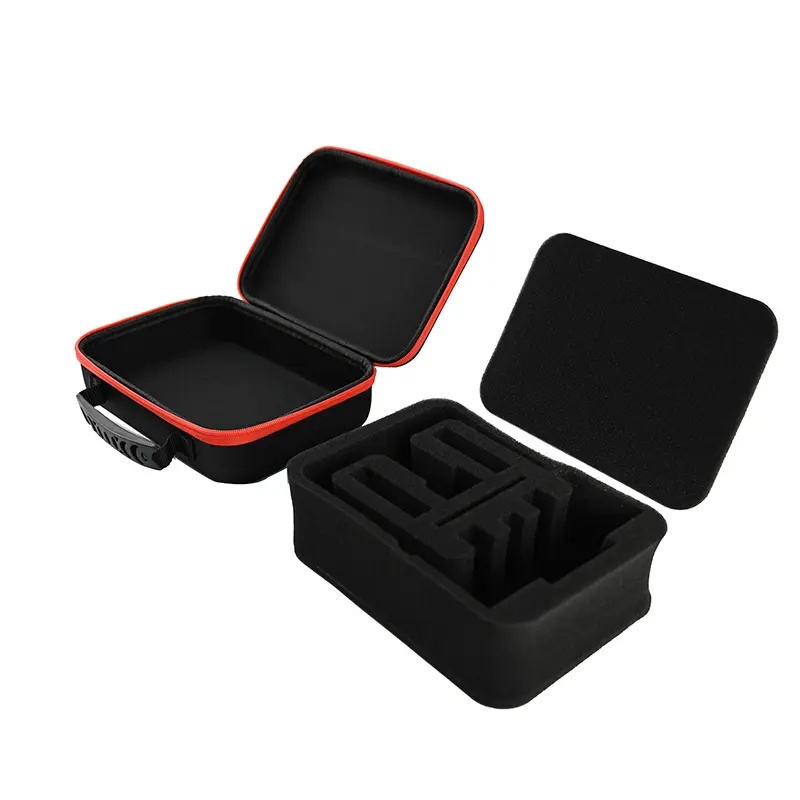
EVA (Ethylene‑Vinyl Acetate) is a closed‑cell foam material that can be thermoformed into rigid‑but‑light outer shells, paired with precision CNC‑cut foam inserts for internal part positioning. For automotive diagnostic tools, these are the most impactful benefits:
Superior Shock and Compression Absorption
Unlike rigid plastic boxes, EVA foam dissipates impact energy across the entire shell and foam liner. If a case slips off a workbench or slides inside a service van, the molded foam cradles the scanner tablet and fragile connectors, greatly lowering the risk of cracked screens and bent ports. Closed‑cell foam also resists permanent crushing under moderate stacking weight, a frequent occurrence in busy repair shop storage spaces.
Optimized Internal Organisation for Mixed‑Component Kits
The biggest differentiator versus off‑the‑box containers is custom‑molded foam interiors. Buyers can specify exact cut‑outs for the main diagnostic scanner, separate recesses for OBD‑II cables, adapter pieces, power bricks, and mesh zipper pockets for manuals or small memory cards. Every item stays fixed in its own position. This eliminates cable tangling, stops parts scratching against each other, and allows technicians to quickly inspect whether all accessories are present before heading out to a job site.
Field‑Ready Environmental Resistance
High‑quality laminated EVA cases resist workshop dust, splashed oil, and light rain or road‑side dew. While they are not fully submersible waterproof containers, they offer far better moisture defence than uncoated fabric bags. Select laminate fabrics can be specified to stand up to repeated exposure to grease and temperature swings common inside vehicle trunks across hot summer and cold winter conditions.
Balanced Portability
Full‑size metal hard cases deliver maximum impact resistance, yet they add considerable weight. EVA tool cases keep overall unit weight low. Integrated carry handles, optional detachable shoulder straps make it easy for mobile technicians to carry complete diagnostic kits from vehicle to repair bay without excessive fatigue.
Branding and Retail‑Ready Presentation
For OEM tool brands and resellers, the outer shell supports multiple branding options: silk‑screen printing, embossed or debossed logos, woven patches, and custom colour matching. A cohesive branded case elevates the perceived value of diagnostic tool kits, whether sold through retail channels or supplied as bundled kits to professional repair chainsMade-in-Ch….
Comparing EVA Cases vs Other Storage Options for Diagnostic Tools
Every storage format carries trade‑offs. The table below summarises performance against the real‑world requirements of automotive diagnostic tool buyers:
| Storage Type | Shock Protection | Cable & Part Organisation | Weight | Workshop Durability | Brand Customisation | Best‑Fit Scenario |
|---|---|---|---|---|---|---|
| Custom‑molded EVA Case | Very Good | Excellent (custom foam cutouts) | Light‑Medium | Good (with quality outer laminate) | Full custom colour, logo, inserts | Mobile technicians, retail tool kits, field service fleets |
| Nylon/Fabric Soft Pouches | Poor | None; items shift loosely | Light | Fair; vulnerable to tearing and liquid | Limited printing only | Spare accessory cable storage only, not for main scanner units |
| ABS Hard Plastic Case | Excellent | Average (generic compartments, limited custom foam) | Medium‑Heavy | Very Good | Limited branding options | Heavy‑duty stationary workshop storage; less convenient for frequent field trips |
| Aluminium Metal Toolbox | Outstanding | Requires aftermarket foam modification | Heavy | Outstanding | Engraved branding only | Stationary shop use, high‑value lab diagnostic equipment, rarely transported in vehicles |
Key takeaway: EVA tool cases hit the sweet spot for most automotive diagnostic tool projects where frequent on‑site transport, neat kit organisation, and reasonable weight are high‑priority goals. If your workflow is almost entirely fixed‑location in‑shop storage, rigid plastic or metal boxes may be worth evaluating instead.
Key Specs to Evaluate When Sourcing EVA Cases for Diagnostic Tools
When drafting requirements for custom‑manufactured EVA tool cases, focus on these critical technical and design details to avoid under‑performing finished products.
Outer Shell & Laminated Fabric
The base EVA shell hardness can be tuned. For automotive tools, medium‑firm EVA shell provides enough rigidity while retaining some shock‑absorbing give. The outer lamination fabric determines real‑world durability:
- 1680D Oxford / Ballistic nylon: Preferred for heavy‑duty workshop environments, high abrasion, oil‑splash resistance.
- PU carbon‑texture laminate: Premium retail look, good scratch resistance; less ideal for constant greasy workshop exposure.
Internal Foam Insert
Two common insert styles are available:
- CNC precision cut foam: Recommended for diagnostic kits with multiple unique‑shaped components. Each part gets its own precise cavity. This is the standard for OBD‑II scanners, diagnostic tablets and their full accessory sets.
- Pick‑pluck foam: More budget‑friendly, pre‑diced foam that users carve out themselves. Not suitable for finished retail OEM kits; better for in‑house workshop one‑off use.
Foam density matters. Too‑soft foam compresses permanently after repeated use. Too‑hard foam risks scratching the finish of your diagnostic device. For typical automotive scan‑tool kits, medium‑density closed‑cell foam delivers stable long‑term cushioning without surface abrasion.
Hardware: Zippers, Handles, Stitching
These small components are common failure points in field‑used cases:
- Zippers: Choose heavy‑duty metal or reinforced large‑teeth coil zippers. Thin lightweight zippers quickly jam or break under workshop use.
- Handles: Sewn‑in woven webbing handles outperform glued‑on plastic handles. For heavier diagnostic tablet kits, reinforced bar‑style carry handles are an upgrade option.
- Stitching: Double‑stitched seams at stress points (handle attachments, zipper edges) extend service life significantly.
- Optional shoulder strap anchors: If end‑users are mobile technicians, built‑in strap attachment points are a practical add‑on.
Compliance and Material Certifications
For cross‑border supply chains, confirm material compliance documentation: REACH, RoHS for restricted substances. If supplying to automotive OEM repair networks, additional social compliance audit documentation (BSCI, SEDEX) may be required by your downstream customers.
Common Real‑World Use‑Cases for Diagnostic‑Tool EVA Cases
- OBD‑II handheld scanner kits: Compact EVA cases for code readers, storing the main scanner unit plus OBD‑II cable and USB charging cord. Popular for retail consumer‑grade and entry‑level professional scan tools.
- Tablet‑size automotive diagnostic systems: Larger format EVA cases for touch‑screen diagnostic tablets, with dedicated compartments for VCI communication modules, multiple vehicle‑interface cables, power adapters and documentation.
- Specialty automotive testing equipment: Sensor testers, battery analysers, and auxiliary diagnostic modules. Custom foam profiles hold irregular‑shaped testing hardware securely.
- Fleet technician field kits: Durable EVA cases for service‑van fleets. Must withstand temperature cycling inside vehicle trunks, repeated loading/unloading.
- Retail‑bundled complete kits: OEM‑branded cases sold together with diagnostic hardware, improving unboxing experience and reducing accessory loss for end‑user technicians.
Potential Limitations to Plan For
EVA tool cases are not a universal perfect solution. Be mindful of these limitations during your project planning:
- They are not fully waterproof. Heavy submersion will penetrate seams and zippers. If your use‑case includes exposure to heavy rain or complete liquid immersion, sealed hard‑plastic cases are more appropriate.
- Very‑heavy multi‑instrument kits: For extremely heavy multi‑part diagnostic sets, EVA shells can flex under extreme weight. In these scenarios hybrid EVA‑reinforced frames or hard plastic should be considered.
- Custom‑molded tool cases require tooling and minimum‑order volumes. Unlike off‑the‑shelf bags, you cannot buy one‑off finished custom‑foam‑insert cases. Most manufacturers require sample development followed by production minimum order quantities, commonly starting at 500 units for fully custom projects.
Procurement Best Practices for Buyers
- Provide physical sample hardware to your case manufacturer. To get perfectly‑fitted foam inserts, sending in your actual diagnostic scanner, cables and adapters is far more reliable than only supplying dimension drawings.
- Prioritise prototype sampling before bulk order. Test the pre‑production sample with real‑world handling: open‑close zipper cycles, confirm the case closes smoothly with all accessories inside, check foam fit, test handle strength.
- Clarify environmental requirements up‑front. Communicate to your supplier whether end‑users will operate in hot vehicle trunks, greasy repair shops, cold winter field work. This guides their selection of foam density, outer fabric and hardware grade.
- Align branding requirements at sample phase. Confirm logo method (print, emboss, patch), colour‑match references during sampling to avoid revision costs after mass‑production starts.
- Clarify testing expectations. For high‑volume projects you can request validation: drop test simulation, humidity cycle testing to validate case performance for field automotive conditions.
Final Thoughts
For most modern automotive diagnostic tool programs, custom‑built EVA tool cases deliver a compelling balance of impact protection, organised storage, portability, and brand value. They directly address many of the real‑world pain‑points that technicians face moving sensitive scan‑tool hardware between workshops and job sites.
Success depends not only on the base EVA material itself, but thoughtful design of foam inserts, durable outer fabric and reliable hardware components matched to the harsh automotive workshop environment. By evaluating use‑case requirements early and validating physical samples before mass production, buyers can source EVA tool cases that extend equipment service life and improve end‑user satisfaction.
Post time: Aug-28-2026