




Retail-Ready EVA Case Packaging: Shelf and Parcel Specs
When buyers source EVA cases from an OEM/OBM manufacturer, most of the technical negotiation focuses on the case itself: foam density, shell thickness, zipper hardware, and logo methods. Yet the packaging around that case decides how efficiently it moves through warehouses, how well it sells on a shelf, and how profitably it ships as a single parcel. A well-engineered packaging system protects a molded EVA case through ocean freight, keeps dimensional weight low for direct-to-consumer orders, and presents the product cleanly at retail. This guide covers the specifications brand owners, importers, and distributors should lock down before mass production begins.
Shelf Display vs. E-Commerce Parcel: Two Different Design Targets
Retail and online selling impose conflicting requirements on the same product. A shelf-ready EVA case package needs visual merchandising value: printed graphics, product visibility, and peg-compatible hardware. An e-commerce parcel needs the opposite: a plain, compact, crush-resistant box that survives sortation belts with minimal void space. Trying to force one package to do both jobs usually produces a compromise that fails both.
The practical solution is a modular packaging hierarchy. The inner presentation layer carries the branding and shelf appeal, while the master carton and shipping layer handle transit protection. Brands running hybrid channels can specify a standard printed inner box that doubles as the parcel box for DTC orders, with the master carton reserved for bulk replenishment to retail DCs. Decide your channel mix first, then write the packaging spec around it — not the reverse.
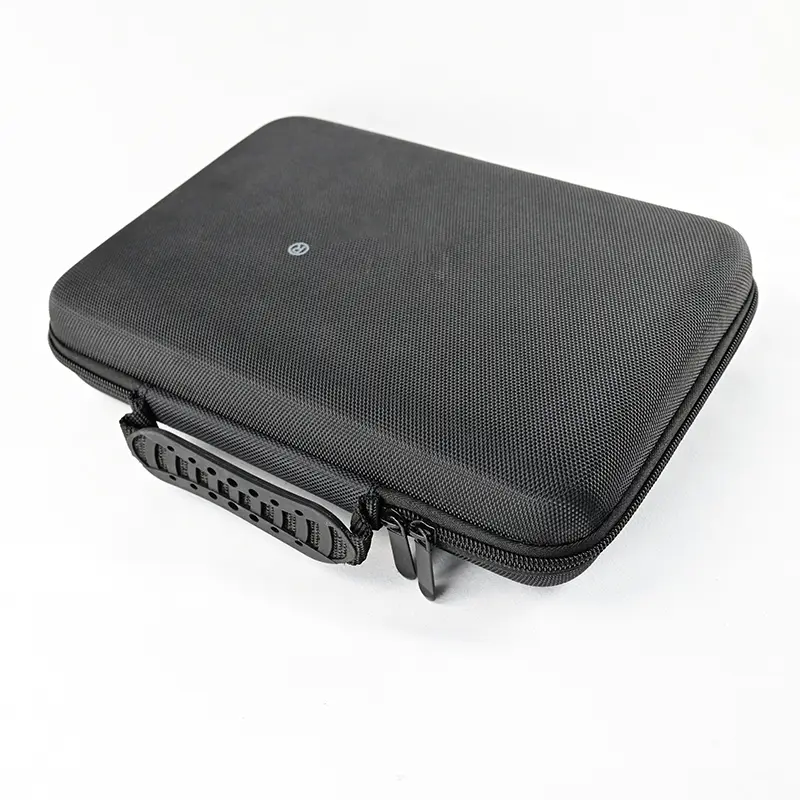
Retail-Ready Carton Specs: Polybag, Inner Box, Master Carton
A complete EVA case packaging system has three tiers, and each one needs its own written specification:
- Polybag or sleeve: a clear PE bag (typically 0.04–0.06 mm) that protects the case surface from scuffing and zipper abrasion. Retail-bound bags must carry suffocation warnings and barcode labels per the destination market’s regulations.
- Inner box: a printed folding carton, usually 350–450 gsm coated paperboard or a small E-flute corrugated box, holding one case or a matched set. This is the consumer-facing unit with graphics, compliance marks, and scannable UPC/EAN codes.
- Master carton: a corrugated outer case (B/C/BC flute) holding 10–30 inner units, sized to pallet modules (typically 1200 x 1000 mm or 48 x 40 in) with a maximum packed weight of 15–18 kg so warehouse staff can handle it safely.
SpecifyECT or bursting-strength values, carton moisture content (below 14 percent for ocean freight), and whether the master carton ships with plastic strapping or tape only. Vague carton specs are one of the most common causes of transit damage claims on first orders — write ECT values, moisture limits and closure methods into the purchase order, not into a verbal agreement.
Dimensional Weight and Parcel Optimization for DTC Shipping
For direct-to-consumer orders, carriers charge on the greater of actual weight or dimensional weight — calculated as length x width x height divided by a divisor (often 139 for inches/pounds or 5000 for centimeters/kilograms). Because EVA cases are molded with fixed internal cavities and cannot compress, an oversized retail box directly inflates the shipping cost of every single order.
Optimization starts at the case design stage. A box that fits the case with 5–10 mm of clearance on each side, rather than a generic “one size fits several SKUs” carton, can cut dim weight by 15–25 percent. Specify whether the inner box can ship alone (requiring stronger board and a printed exterior) or needs an additional mailer. Request that your supplier provide actual packed dimensions and volumetric weight calculations per SKU in the quotation, so landed cost modeling reflects reality. Also confirm inner-box orientation — a case lying flat versus standing changes which panel needs reinforcement.
Hang Tags and Header Cards for Retail Pegs
Hardware and accessories retailers merchandising through pegboard walls require packages that hang. For EVA cases, there are three standard options, each with cost and durability trade-offs:
- Header card: a printed card folded and stapled over a polybag or integrated into the top of the inner box. Economical and easy to retrofit, but it concentrates hanging stress on a narrow seal line.
- Die-cut hang hole: a reinforced round or delta hole punched directly in the inner box. Cleaner shelf presentation and stronger load bearing, best for cases under 1 kg.
- Blister-style blister board or printed sleeve: for smaller EVA pouches and accessory cases, combining a hang hole with full graphic coverage.
Specify the hole diameter (typically 5–7 mm round or a 30 x 8 mm delta slot), its position relative to the case’s center of gravity, and the card stock weight (250–350 gsm). A hang hole placed off-center makes the package tilt on the peg and looks unprofessional on the wall. Always request a peg-board mock-up photo with the packed unit hanging before approving header card artwork.
Window Boxes and Product Visibility
EVA cases have tactile appeal — the molded shell texture and color are part of the brand story, and buyers at retail want to see and touch the product before purchasing. Window boxes solve this: a die-cut opening in the inner box covered with a clear PET or PVC film (0.1–0.2 mm), framed so the case, zipper, or a key branding detail shows through.
From a specification standpoint, define the window shape and position against the case’s strongest visual features, the film material and thickness, and whether the film is glued or trapped in the carton structure. Keep window area under roughly 30 percent of the panel surface to preserve stacking strength. Note that window boxes complicate recycling declarations in some markets — PET film laminated to paperboard is harder to repulp — so confirm requirements with your retailer’s packaging compliance team if sustainability claims matter to your program.
Carton Drop Test and Stacking Requirements
Packaging validation is separate from case validation. Even if the EVA case itself passes internal drop tests, the packaged unit must survive its own transit sequence. Standard practice references ISTA procedures: ISTA 1A/2A for non-simulation parcel testing of individual boxes, and ISTA 3A for e-commerce parcels moving through small-parcel networks. For master cartons, specify a compression (stacking) test — commonly calculated as stacked height x safe load factor — and sequential drops from heights scaled to package weight, typically 460–760 mm for cartons in the 10–20 kg range.
Agree in advance on who runs the test: the factory’s in-house lab, a third-party facility, or your nominated inspection agency, and require a photographic test report as a condition of shipment approval for the first production run.
Tip: Ask your supplier to run the ISTA test on the packed master carton at maximum stacking height — five cartons high is a common warehouse scenario — not just on single-box drops. Stacking failure at the bottom carton is the most frequently missed failure mode.
Branding Consistency Between Case and Packaging
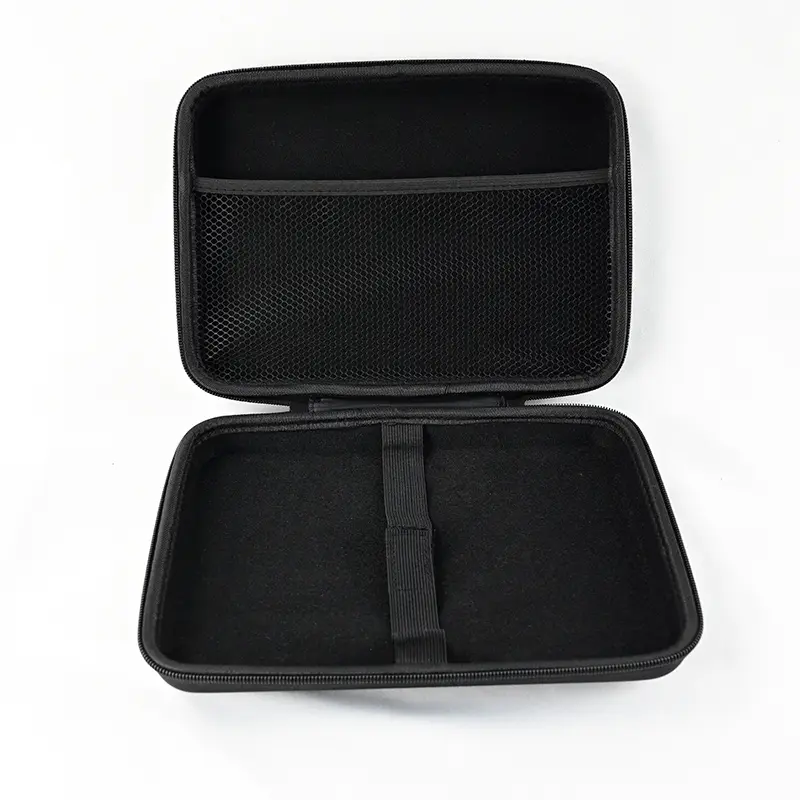
The packaging is the first thing a buyer’s customer sees; the case is what they keep. When the two are designed by different teams at different times, the result is a Pantone-matched charcoal EVA shell shipped in a box printed in a slightly different gray with mismatched typography. Distributors notice, and so do retail buyers reviewing your line.
Build a single packaging artwork pack alongside the case spec sheet — logo files in vector format, approved Pantone references for both molded EVA color and printed ink, font licenses, and placement callouts. Share the same artwork pack with the molding line and the printing vendor so both pull from one source of truth. Also verify finish consistency — a matte-laminated carton next to a glossy soft-touch case reads as two different brands. Request a printed packaging pre-production sample held side by side with the approved case sample before signing off.
MOQ and Lead Time Implications of Packaging Customization
Packaging decisions carry their own minimums, independent of the case order. Printed inner boxes typically start at 1,000–3,000 units per design and colorway; window-box die-cutting adds tooling cost and a longer setup; header cards and custom polybags have smaller MOQs but longer proofing cycles when artwork is complex. A brand running six SKUs with six different box designs multiplies every one of these minimums.
Lead time for packaging usually runs 7–14 days for standard printing and 2–3 weeks for laminated, foil-stamped, or windowed structures — and it runs in parallel with case production only if artwork is finalized early. Late artwork changes are the single most common cause of shipment delays on custom packaging programs. Plan color proofs, barcode verification, and retailer artwork compliance checks (many big-box buyers have their own approval portals with 1–2 week queues) into the schedule from day one.
FAQ
Can one inner box work for both retail shelves and DTC parcels?
Yes, if it is designed for it from the start. Specify heavier board (E-flute or double-sided coated kraft), exterior printing with the shipping label zone, and ISTA 3A pre-testing. Retrofitting a shelf-style box for parcel networks usually fails compression testing.
What carton strength grade should I specify for ocean freight?
For master cartons of EVA cases shipped by sea, BC-flute double-wall corrugated with a minimum of 32 ECT is a reliable baseline for stacked container loading, combined with moisture-resistant board and desiccants if the route crosses humid climates.
How much does window-box packaging add to unit cost?
Expect a modest per-unit increase from the die-cut window and PET film, plus one-time die tooling. The larger cost is MOQ exposure: window structures often carry higher printing minimums, which matters most for low-volume SKUs.
Do hang tags and header cards delay production?
Marginally. The hardware itself is simple; the schedule risk sits in artwork proofing and, for stapled header cards, an extra assembly step at the factory. Approve card artwork two weeks before the case production completion date to keep the timeline intact.
Related Pages
- EVA Tool Case Purchase Order Guide
- EVA Tool Case Sample Evaluation Guide
- EVA Case Bulk Order Tips
- EVA Tool Case Custom Inserts Design
Post time: Nov-06-2026