




Specifying EVA Cases for Medical and Diagnostic Equipment: A B2B Guide to Cleaning, Sterilization and Compliance
For medical device OEMs, diagnostic equipment makers and the importers and distributors who serve them, the enclosure around an instrument is no longer a passive accessory. A case that ships a portable ultrasound, a point-of-care analyzer or a surgical navigation module is part of the device ecosystem, and regulators, hospital procurement teams and infection-control departments increasingly treat it that way. Selecting an EVA (ethylene-vinyl acetate) case for a clinical or diagnostic product means balancing physical protection against chemical resistance, cleanability, traceability and a documented quality system. This guide walks procurement and engineering buyers through the specifications that actually matter when a case leaves the consumer-accessories category and enters the medical-supply chain.
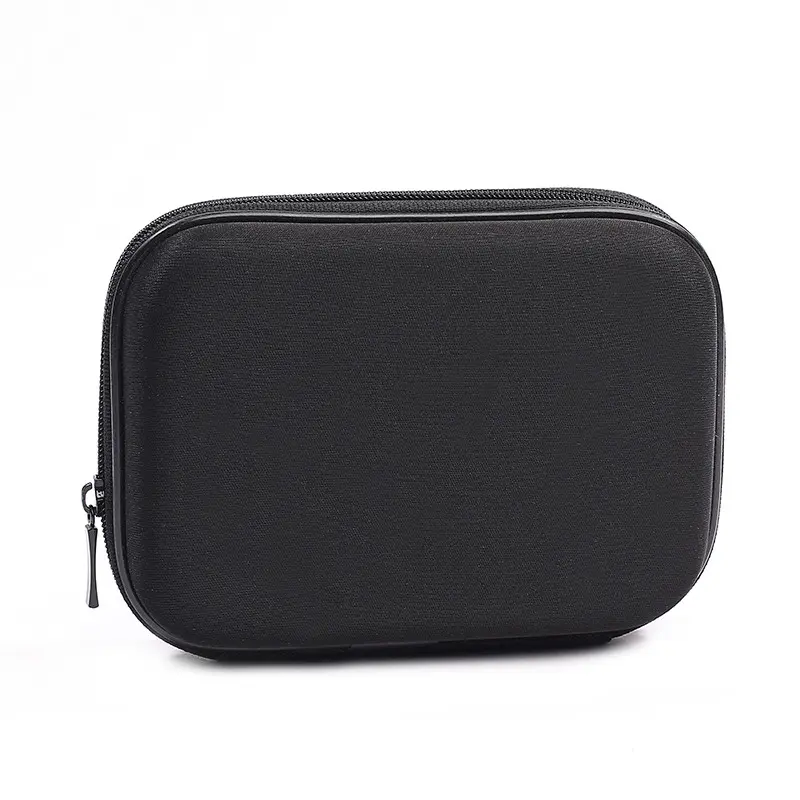
Cleaning and Disinfectant Compatibility: The First Spec to Lock Down
In most healthcare settings the exterior of a reusable device case is wiped between patients with the same agents used on the equipment inside it. That means the molded EVA shell, the fabric lamination, the zipper tape and the lining must survive repeated exposure without swelling, crazing, delamination or color transfer. The practical question is not “is it wipeable” but “how many wipe cycles before the surface changes.”
Two chemistries dominate routine disinfection in hospitals and clinics. The first is 70% isopropyl alcohol, used for fast evaporation and broad antimicrobial activity. The second is quaternary ammonium compounds (quats), commonly found in ready-to-use wipes such as those based on benzalkonium chloride or didecyl dimethyl ammonium chloride. Both are generally tolerated by closed-cell EVA and by PU- or TPU-laminated fabrics, but the weak point is usually the adhesive between layers and the printed graphics.
What a wipe-compatibility test should cover
A credible supplier qualification report should document, at minimum, the following protocol rather than a vague “passed cleaning test” claim:
- Agent and concentration: 70% IPA, a quat-based ready-to-use disinfectant, and optionally a peroxide or chlorine-based agent for high-risk areas.
- Application method: saturated non-woven wipe, manual rubbing at defined pressure, allowed to air dry.
- Cycle count: a minimum of 50 to 200 wipe cycles depending on the intended use frequency.
- Evaluation criteria: no delamination, no tackiness, no cracking, no transfer of dye, no odor retention, and less than one MacAdam step of color shift on the exterior.
- Post-test verification: zipper function and seam integrity checked after the cycle count is complete.
For diagnostic instruments that see daily clinic traffic, specify the case to a 100-cycle minimum with a quat agent and a 70% IPA agent separately, because the two chemistries attack different components. Documented results in this range give infection-control committees and hospital ECRI-style evaluations concrete evidence rather than a marketing statement.
Tip: Always request the supplier’s disinfectant wipe test as a dated report with agent, cycle count and pass or fail criteria, never as a one-line compliance claim.
Sterilization Method Adaptation: When the Case Enters the Sterile Pathway
Most EVA cases are not placed inside a sterilizer with the instrument; they are cleaned and disinfected, not sterilized. However, some reusable kits require the case or its removable insert to tolerate a low-temperature sterilization cycle, and specifying the wrong method will destroy the material within a single run. The two low-temperature methods relevant to sensitive electronics are ethylene oxide (EO) sterilization and hydrogen peroxide plasma sterilization.
EO exposure and EVA behavior
EO operates at temperatures around 37 to 55 degrees Celsius with humidity and a dwell time of several hours, followed by aeration. Closed-cell EVA handles EO gas reasonably well because it does not absorb significant gas into its matrix, but residual EO aeration must be planned and the case must not contain materials that trap gas, such as open-cell foams or certain adhesives. Expect a validated aeration window of 8 to 48 hours depending on load and chamber design, and require the supplier to confirm that laminates and inks are EO-compatible.
Plasma and vaporized peroxide limits
Hydrogen peroxide plasma runs at lower temperatures, typically 45 to 55 degrees Celsius, but the oxidative chemistry is harsher on organic materials and on certain metals and inks. Many standard EVA laminations and dyed fabrics show surface oxidation or discoloration after even a few plasma cycles. If the case must be plasma-compatible, this must be designed in from the start: specified film, specified adhesive and a validated cycle count, normally 5 to 25 cycles for a reusable accessory rather than indefinite reuse.
The realistic B2B rule is to keep the case out of the sterilizer whenever possible and design the instrument tray or insert as the sterilizable element, with the EVA shell acting only as a transport and storage enclosure.
Removable and Washable Liners for Infection Control
The interior lining is where contamination concentrates: spills, biological residue and dust collect in foam cutouts that cannot be wiped effectively when they are permanently bonded. A practical infection-control design uses removable EVA foam liners or a lined tray that can be extracted, washed and re-inserted. This converts a single-use-dispose problem into a cleanable, auditable process.
- Design the liner with a pull tab and positive location features so it seats consistently after washing.
- Specify a smooth, non-porous lining surface rather than open-cell foam where fluid contact is expected.
- Define a wash protocol: typically a mild detergent at 30 to 60 degrees Celsius, manual or low-agitation machine wash, then air dry.
- Set a replacement interval, for example every 6 to 12 months in high-use clinical settings, and document it in the user manual.
For diagnostic kits that move between patient rooms, a two-part system, a sterilizable or washable inner tray plus a protective EVA outer case, is usually the most defensible specification and the easiest to validate for infection-control files.
UDI, Labeling and Traceability Requirements
Under FDA UDI and the EU MDR EUDAMED framework, a device case that is marketed as part of a kit, or as a reusable accessory integral to a device, can carry labeling obligations. Even when the case is a separate accessory, distributors and OEMs want UDI (Unique Device Identification) alignment so the enclosure is traceable through the supply chain and service loop. At minimum, specify:
- A permanently bonded label or laser-etched marking with a readable DI (device identifier) portion.
- Both a human-readable line and a machine-readable code, typically a Data Matrix or QR symbology.
- Resistance of the marking to the disinfectant agents in the cleaning section above, validated for at least the 50 to 100 wipe cycle range.
- Lot or date code that matches the production record so a field complaint can be traced to a specific production run.
- Change-control linkage so that any label artwork revision is versioned and approval-recorded.
For importers serving regulated markets, request the supplier’s label artwork in editable form and confirm the symbology meets the relevant standard, for example GS1 allocation for the identifier, before first production.
ISO 13485 Supplier Qualification and Change Control
A medical-grade enclosure is only as trustworthy as the quality system behind it. When the case is a documented component of a regulated device, the supplier should operate a quality management system certified to ISO 13485:2016 or an equivalent standard, and that certificate should be current and scope-appropriate. Procurement should treat the following as non-negotiable documentation:
- A valid ISO 13485 certificate with the correct scope, plus the most recent surveillance-audit summary.
- A documented material specification sheet listing base polymer, laminate film, adhesive, zipper and foam with REACH and RoHS declarations where applicable.
- A change-control procedure that requires customer notification before any substitution of material, tooling or production site.
- First-article inspection (FAI) records and a defined incoming inspection plan at the OEM or distributor side.
- Corrective-action responsiveness documented through CAPA records on prior issues.
Change control deserves particular attention. A seemingly harmless switch from one EVA grade to another, or a new adhesive from a second source, can alter disinfectant resistance or outgassing behavior. A robust supplier contract states that no such change ships without a revised qualification report and a formal engineering approval, with a notice period typically 30 to 90 days.
Transport Validation for Medical Devices: ISTA 2A and 3A
Diagnostic instruments are frequently shipped as a case-plus-device unit through parcel and mixed-load distribution. Transport validation translates field abuse into a repeatable lab test so the buyer knows the product will arrive functional. The two relevant profiles from ISTA are ISTA 3A for individually packaged products in parcel delivery and ISTA 2A for packaged products in less-than-truckload and combined transport.
What a 3A or 2A validation program should include
- Drop testing across the defined face, edge and corner sequence, commonly 10 to 18 drops from heights of 410 to 760 mm depending on packaged weight.
- Vibration testing, random or mixed-mode, typically 30 to 60 minutes per axis to simulate vehicle and handling vibration.
- Compression or stacking load where the case may sit under other cartons in distribution, often a defined static load for 60 minutes.
- Atmospheric conditioning optionally applied before testing for temperature and humidity exposure.
- A functional check of the instrument and an inspection of the case, liner and closure after the sequence.
For a B2B buyer, the value is not the certificate on the wall but the test report tied to the exact case configuration, foam density, instrument mass and carton used. A case validated at 1.5 kg empty behaves differently at 4 kg loaded, so the validation must reflect the real shipment.
Putting the Specification Together: A Practical Checklist
When issuing a request for quotation to a case manufacturer for a medical or diagnostic program, combine the points above into a single controlled document. A well-structured RFQ reduces iteration and protects the device dossier:
- Define the device mass, dimensions and the fragile interfaces that need cutout support.
- State the disinfectant agents and the required wipe-cycle count, with pass or fail criteria.
- Declare whether any low-temperature sterilization is required, and which method and cycle count.
- Specify liner removability and the wash protocol and replacement interval.
- Require UDI or traceability labeling with chemical resistance and a defined symbology.
- Demand ISO 13485 scope evidence and a written change-control clause.
- Request ISTA 2A or 3A validation against the actual loaded configuration.
Buyers who hand a supplier this level of detail receive comparable, auditable quotations instead of decorative brochures, and the resulting case passes both the shipping dock and the hospital infection-control review.
FAQ
Can an EVA case be disinfected with 70% isopropyl alcohol every day?
For a properly specified closed-cell EVA shell with a compatible laminate, daily wiping with 70% IPA is generally acceptable, but the realistic specification is a documented 50 to 200 cycle wipe test with defined pass criteria. The vulnerable parts are the printed graphics, the zipper tape and the adhesive layers, so the qualification must cover those components, not just the shell.
Is an EVA case suitable for ethylene oxide or plasma sterilization?
EVA tolerates EO gas reasonably well and can be designed for low-cycle plasma exposure, but it is not a typical sterilizer load. The safer B2B design keeps the EVA shell as a transport and storage enclosure and makes the inner tray or insert the sterilizable element, with material choices validated for the chosen method and cycle count.
Do we need UDI labeling on the case itself?
It depends on whether the case is marketed as part of the device kit or as a regulated accessory. Even when not legally required, a permanent, disinfectant-resistant traceability label with lot and date code is strongly recommended for OEMs and distributors because it supports complaints handling, recalls and service loops.
What ISO 13485 documentation should we request before ordering?
Request the current certificate with correct scope, a material specification sheet with REACH and RoHS declarations, the change-control procedure, first-article inspection records and evidence of CAPA responsiveness. The change-control clause is the item most often missing and the one most likely to cause a later compliance gap.
Which ISTA test applies to a diagnostic kit shipped by courier?
For individually packaged diagnostic kits moving through parcel delivery, ISTA 3A is the relevant profile, while ISTA 2A covers less-than-truckload and combined transport. Either way, the validation must use the actual loaded mass and carton, because test outcomes shift significantly with package weight and configuration.
How often should the interior liner be replaced?
For high-use clinical environments, a documented replacement interval of 6 to 12 months is typical for removable liners, supported by a defined wash protocol. The interval should be written into the user manual so infection-control audits have a clear, auditable standard.
Related Pages
- EVA Tool Case Purchase Order Guide
- EVA Tool Case Sample Evaluation Guide
- EVA Case Bulk Order Tips
- EVA Tool Case Custom Inserts Design
Post time: Sep-21-2026