




Why Material Choice Decides Your Carrying Case Margins
Buyers at tool brands, camera and electronics companies, and outdoor or fishing gear labels often treat the carrying case as an afterthought. That mistake shows up later as higher returns, heavier freight bills, and weak shelf presence. The three dominant materials on the market each serve a different buyer job. EVA case wholesale programs win on light weight and print-friendly surfaces. Hard shell lines built from ABS or PP win on crush resistance. Soft bags made from nylon or canvas win on capacity and packability. Choosing wrong means paying for protection you do not need or losing the protection your product actually requires.
The Three Materials and Where They Sit in the Market
EVA, short for ethylene-vinyl acetate, is a closed-cell foam pressed between fabric layers and heat-molded into shape. It sits in the middle of the price and performance curve and is the default for private label accessories. Hard shell cases use injection-molded ABS, PP, or polycarbonate and target the top of the protection range. Soft cases use woven nylon, polyester, or canvas with padding and dominate the everyday carry and travel segment.
For a sourcing manager, the first question is not which material is best but which failure mode your product cannot survive. A torque wrench that rusts after a damp trailer ride needs a different case than a mirrorless camera that shatters on a two-foot drop.
EVA: Lightweight, Moldable, and Print-Ready
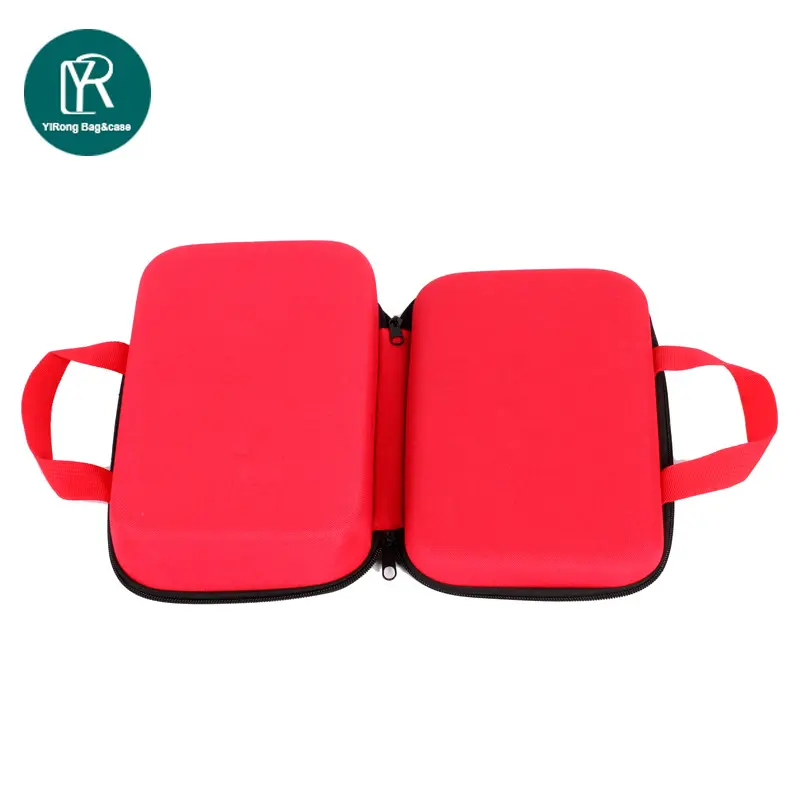
EVA cases are formed in matched aluminum or steel tooling. The foam core is cut and the outer fabric is heat-pressed around it, producing a semi-rigid shell that holds its shape yet weighs a fraction of plastic. For brands, the biggest advantage is surface. The smooth fabric takes screen printing, debossing, and woven labels cleanly, so your logo reads the same on every unit.
Tool and outdoor buyers use EVA for screwdriver kits, soldering sets, fishing lure boxes, and drone accessory packs. The material absorbs vibration and resists light rain, and because it is lighter than hard plastic, it keeps per-carton freight down on air shipments. A hard case supplier will charge more for the same internal volume because the resin and the mold are heavier and costlier.
Hard Shell: Maximum Crush and Weather Defense
When the product inside is expensive or mission-critical, hard shell wins. Injection-molded ABS and PP cases handle stacked pallets, conveyor drops, and submerged conditions far better than foam. Many carry an IP rating and a pressure-equalization valve, which matters for sensitive instruments shipped by air.
The trade-off is weight and cost. A hard shell of equal size can weigh two to three times an EVA unit, and the tooling is more expensive. Branding is limited to labels, pad printing, or molded inserts rather than full-surface graphics. Brands that sell professional tool systems, medical devices, and surveying equipment still choose hard shell because a single crushed unit costs more than the case upgrade.
Soft Case: Capacity, Packability, and Lower Unit Cost
Soft cases built from 600D nylon, 1680D ballistic polyester, or waxed canvas deliver the largest internal volume per dollar. They compress flat for storage and ship in dense, low-profile cartons. For consumer electronics, makeup kits, and gym or fitness accessories, a soft case bag is often the right call because the product itself is not fragile under normal handling.
The limit is structure. Soft cases protect against scratches and light bumps but offer little against a direct impact or a heavy stack. Outdoor and fishing brands use them for apparel, lures, and line rather than for reels that need rigid support.
Protection Performance: Drop, Vibration, and Water
Drop protection favors hard shell first, EVA second, soft last. A one-meter drop onto concrete will likely crack a hard shell corner but spare the contents, while EVA dents and recovers and a soft bag transfers the shock inward. Vibration damping favors EVA, whose foam core is designed to absorb resonance during transit, which is why electronics and instrument brands prefer it for padded inserts.
Water resistance depends less on material and more on closure. Hard shells with gaskets reach real IP ratings. EVA with a zipper and reinforced seam resists splashes and brief rain. Soft cases rely on water-repellent coating and are the weakest against immersion. Custom carrying case material selection should start from the worst environment the case will face, not the average one.
Weight and Logistics: The Hidden Cost Driver
Air freight is billed on chargeable weight, the greater of actual and volumetric weight. Hard shell cases inflate both. A 40 by 30 by 15 centimeter hard case can push a carton into a higher weight tier versus the same EVA design. For cross-border ecommerce sellers moving goods through air express, that difference compounds across thousands of units.
Sea freight is billed on volume, so the gap narrows, but EVA and soft cases still pack denser and survive compression better in a stacked container. Outdoor and tool brands shipping full containers should model landed cost per unit, not ex-works price, before locking a material.
Branding and Customization by Material
EVA leads on surface branding. Full-color screen print, rubber patches, and debossed logos all sit flat on the molded face, and Pantone-matched fabric is standard at most factories. Hard shell supports pad printing, engraved plates, and custom foam inserts but struggles with large graphics. Soft cases take embroidery, woven labels, and heat-transfer print, which suits lifestyle and outdoor labels that want a textile feel.
For a private label program, EVA also allows EVA vs hard shell hybrid thinking: a hard inner tray inside an EVA shell gives structure where it matters and light weight everywhere else. That combination is increasingly common for drone and camera kits.
Unit Price Ranges and MOQ Reality
Soft cases are the cheapest, typically a few dollars at volume with low minimums. EVA cases sit in the mid range, with tooling amortized across a production run and MOQs from a few hundred to a couple thousand units depending on complexity. Hard shell cases carry the highest unit and tooling cost, with longer lead times because injection molds take weeks to cut and sample.
Buyers should ask for a fully loaded quote that includes insert foam, zipper grade, and print setup. A low headline price often hides a cheap zipper that fails in the field and triggers warranty claims.
Use-Case Map: Match Material to Product
Tool kits and socket sets do well in EVA or hard shell, with EVA for field service techs who carry daily and hard shell for warehouse or jobsite stacking. Cameras and drones need EVA with custom-cut foam or hard shell with padded dividers. Fishing and outdoor gear splits by item: lures and line in soft bags, reels and electronics in EVA or hard. Makeup and fitness accessories almost always land in soft or EVA because the product tolerates handling.
Bundle Selling: Case Plus Main Product
A proven cross-border tactic is to ship the main product with a branded case as a bundle. A cordless tool with a fitted EVA insert, a camera with a protective sleeve, or a fishing combo with a lure roll bag lifts perceived value and lifts average order value. The case becomes a permanent billboard in the customer’s hands. Buyers who plan the bundle early can design the insert and print together, avoiding a second tooling round.
Frequently Asked Questions
Which material is best for a fragile electronics kit?
Use EVA with a die-cut foam insert for vibration damping and light weight, or hard shell if the kit ships through rough handling and needs an IP rating. Match the closure and foam to the drop height your logistics actually see.
Is EVA waterproof enough for outdoor use?
EVA resists splashes and brief rain but is not immersion rated. For boats, kayaks, or monsoon markets, specify a gasket-sealed hard shell or a coated soft case with welded seams.
How much does tooling cost for a custom EVA case?
EVA tooling is far cheaper than injection molding, often a fraction of a hard shell mold, and lead time is shorter. Exact cost depends on size, cavity count, and whether you need a custom insert.
Can I mix materials in one product line?
Yes. Many brands run EVA for daily-carry SKUs and hard shell for pro SKUs, then soft pouches as add-ons. Keep print and color consistent so the line reads as one brand.
What MOQ should I expect from a China case factory?
Soft cases start low, EVA typically runs a few hundred to a couple thousand units, and hard shell is highest due to mold cost. Confirm whether the MOQ is per color and per insert design.
Does case weight really change freight cost?
On air freight, yes, materially. Chargeable weight and carton density both move with case material, so model landed cost per unit before choosing.
Which case is easiest to brand at low volume?
Soft and EVA cases accept labels and print at lower minimums than hard shell. For a first private label run, EVA with a woven label is the fastest path to a branded shelf item.
Related Pages
- EVA Tool Case Purchase Order Guide
- EVA Tool Case Sample Evaluation Guide
- EVA Case Bulk Order Tips
- EVA Tool Case Custom Inserts Design
Tip: Always request a fully loaded quote that includes zipper grade, foam insert, and print setup, because a low headline price usually hides the component that fails first in the field.
Ready to source the right EVA, hard, or soft case for your tool or outdoor brand? Contact Dongyang Yirong Case Co., Ltd. at https://www.dyyrevacase.com to start your custom carrying case program.
Post time: Sep-09-2026